
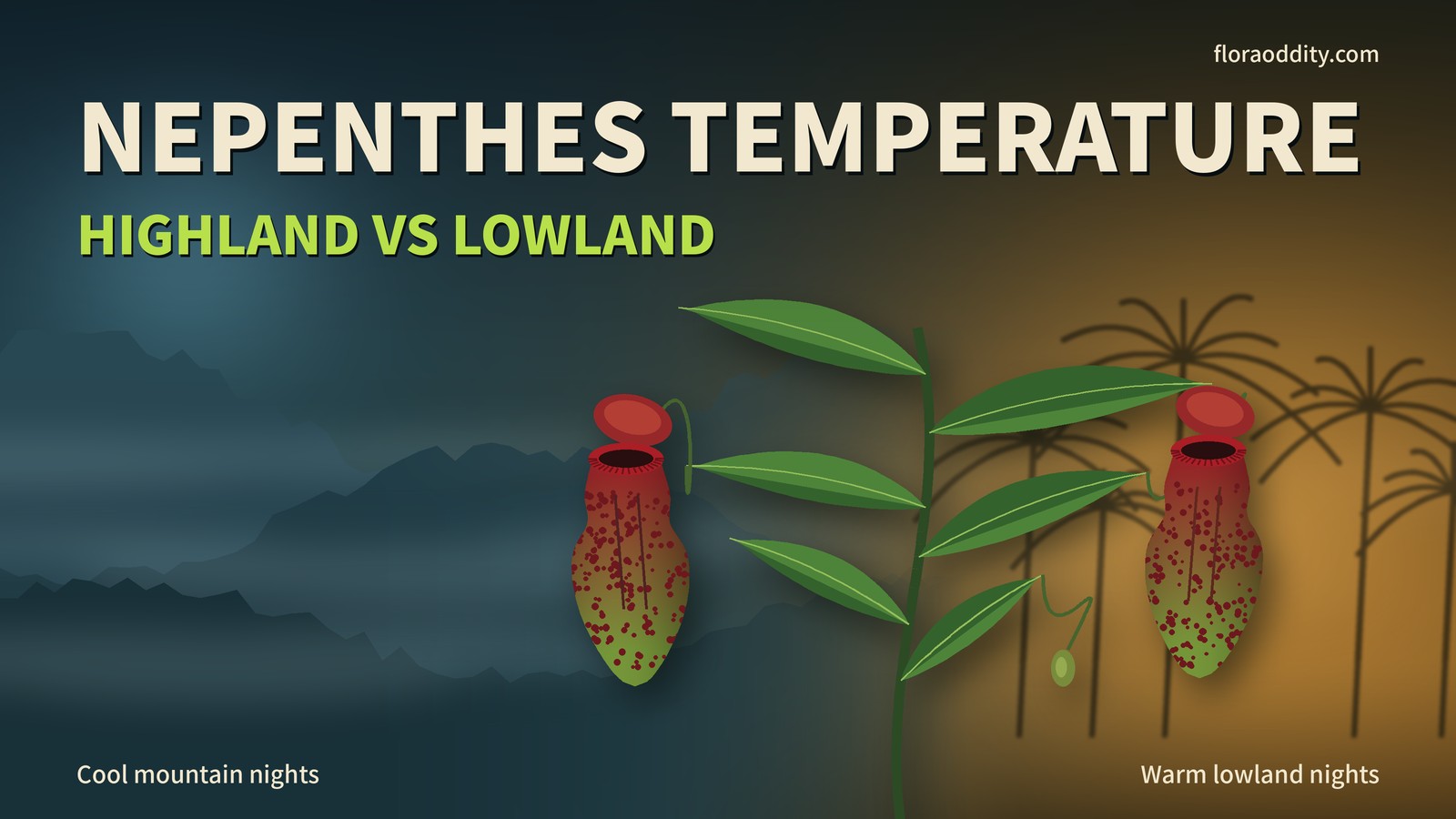
Ask three reputable sources about Nepenthes temperature and you will get three different answers. Clemson Extension says highland species want nights of 50 to 60°F. NC State Extension says the low 60s. A Royal Botanic Gardens Victoria reference puts highland daytime temperatures cooler than either American guide, at roughly 18 to 21°C (64 to 70°F).
None of these sources is wrong. They describe different plants, they were written for different climates, and they draw the line between highland and lowland in slightly different places. Once you see why the numbers disagree, you can stop hunting for the one correct figure and ask two more useful questions instead: what kind of Nepenthes do you actually have, and what happens to the temperature around it at night?
The Short Answer
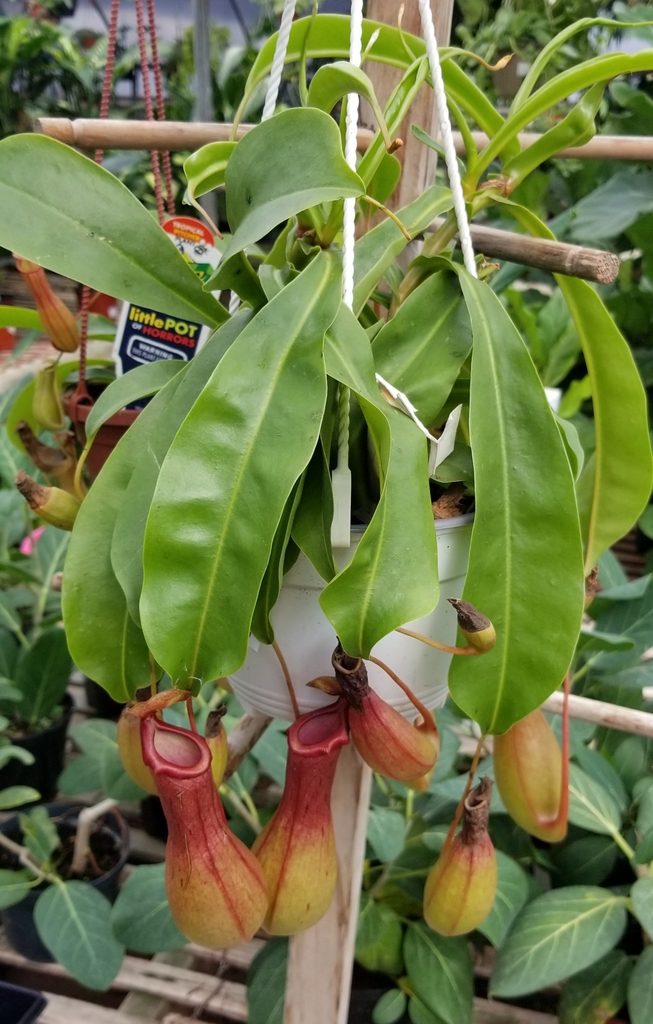
If you bought a typical Nepenthes from a garden center or an online nursery, you almost certainly have a hybrid. NC State Extension notes that most plants sold today are hybrids propagated from tissue culture or cuttings, and Clemson Extension describes many commercial hybrids as more temperature tolerant than wild species.
For those plants, ordinary home temperatures are usually workable. Carnivero, a specialist carnivorous plant nursery, describes days of 70 to 90°F (21 to 32°C) and nights of 50 to 70°F (10 to 21°C) as generally safe for the genus.
If you grow a named species, especially a true highland or lowland one, the safe range narrows. In that case the most important number is usually not the daytime high. It is the overnight low.
Highland, Intermediate, and Lowland: What the Labels Actually Mean
The labels come from elevation. Nepenthes grow from warm coastal swamps to cool mountain forests, and growers group them by the altitude of their wild habitat.
Lowland species come from low elevations where days are hot and nights stay warm. Highland species come from mountains where days are warm but nights turn noticeably cool. Intermediate plants sit between the two, and many popular hybrids behave like intermediates because they combine parents from different elevations.
Where exactly the line falls depends on the reference. Several nurseries use about 3,000 feet, which is roughly 900 m. Royal Botanic Gardens Victoria uses 1,000 m. That gap sounds small, but it is enough to move some species from one group to another depending on which guide you read.
For indoor growers, an older system can be more practical. In a 1987 article for Carnivorous Plant Newsletter, the journal of the International Carnivorous Plant Society, grower David E. Butler sorted Nepenthes by minimum night temperature instead of elevation. Cool growers needed nights below 55°F (13°C). Intermediate growers tolerated minimums of 55 to 65°F (13 to 18°C). Warm growers needed at least 65°F (18°C) at night. That framing points straight at the variable you can actually measure at home.
The categories are also less rigid in nature than they look on a care sheet. A 2020 study in Scientific Reports notes that N. ampullaria and N. rafflesiana, both treated as lowland species, have occasionally been recorded in highland environments. In the same study, the highland species N. minima was the only highlander able to grow well under the researchers’ lowland greenhouse conditions.
Why Every Source Gives You a Different Number
Here is how several respected references describe the main groups. Celsius conversions are rounded.
| Source | Highland days | Highland nights | Lowland |
|---|---|---|---|
| Clemson Extension | 70 to 80°F (21 to 27°C) | 50 to 60°F (10 to 16°C) | 70 to 95°F (21 to 35°C) |
| NC State Extension | 75 to 85°F (24 to 29°C) | Low 60s°F (about 16 to 17°C) | 70 to 95°F (21 to 35°C) |
| New England Carnivorous Plant Society | 70 to 80°F (21 to 27°C) | 40 to 60°F (4 to 16°C) | Days 80 to 90°F (27 to 32°C), nights 60 to 80°F (16 to 27°C) |
| Carnivero | The 70s°F (about 21 to 26°C) | The 50s°F (about 10 to 15°C) | 70 to 90°F (21 to 32°C) |
| Royal Botanic Gardens Victoria | 18 to 21°C (64 to 70°F) | At least about 13°C (55°F) | Days 27 to 38°C (81 to 100°F), nights at least 21°C (70°F) |
Carnivero also lists intermediate plants separately, with days of 75 to 85°F (24 to 29°C) and nights in the 60s°F (about 16 to 21°C).
Several things explain the spread:
- Different dividing lines. A plant counted as highland under one elevation cutoff can be intermediate under another.
- Different home climates. Clemson Extension states that its recommendations are written for South Carolina conditions. A guide written for the American South and one written for southern Australia will naturally frame temperature differently.
- Species versus hybrids. Ranges written for wild species are narrower than what most nursery hybrids tolerate.
- Locality. A species can grow across a wide elevation range, and plants collected from different populations do not always behave identically. The New England Carnivorous Plant Society notes that N. ventricosa, technically a highland species, does very well even in lowland conditions.
Look past the disagreements and the sources line up on three points. Lowland plants need warm nights. Highland plants need nights that are clearly cooler than their days. Hybrids and intermediates tolerate the widest range of all.
How to Tell Which Type Your Nepenthes Is
Before adjusting anything, identify the plant. A few minutes here can save months of solving the wrong problem.
Start with the full name on the label
A name such as N. ampullaria points to a single species with a known habitat. A name containing a multiplication sign, or a cultivar name in quotation marks such as N. ‘Bloody Mary’, signals a hybrid.
For hybrids, look at the parents
Clemson Extension lists N. ‘Bloody Mary’ as N. ventricosa crossed with the lowland N. ampullaria. NC State Extension describes N. ‘St. Gaya’, which has N. khasiana, N. ventricosa, and N. maxima in its parentage, as cold tolerant. When a hybrid combines a warm lowland parent with one from cooler conditions, growers commonly find that it handles a broader range than either extreme.
For species, look up the elevation
For a species, find its natural elevation range in a reputable reference. Butler’s warm growers included N. ampullaria, N. bicalcarata, N. gracilis, and N. rafflesiana. He described the N. alata complex and N. ventricosa as intermediates that do well indoors, while mountain species such as N. edwardsiana and N. villosa belonged to his cool group.
If there is no label
Treat it as a hybrid and observe it. An unlabeled plant from a general retailer is most likely a common hybrid, and steady growth in your ordinary conditions is good evidence that its temperature needs are already being met.
Night Temperature Is the Number That Matters Most
Daytime highs get most of the attention, but the overnight low usually decides whether a highland or lowland plant is comfortable.
Highland plants are adapted to cool mountain nights. California Carnivores, a carnivorous plant nursery, advises a night drop of about 10 to 20°F for highland plants. Lowland plants need the opposite. In Butler’s indoor setup, where winter nights fell to around 55 to 60°F (13 to 16°C), the warm-growing lowland species gradually lost vigor, while intermediate species and hybrids kept growing.
Warm nights can be just as limiting for highland plants. One grower in South Florida described summer nights that stayed around 78 to 80°F (26 to 27°C) for months. In that greenhouse, species from roughly 700 to 1,100 m survived but slowed down and stopped pitchering for four to five months each year, while species from higher elevations suffered or died. Growth picked up again once autumn nights cooled. That is one grower’s greenhouse rather than a controlled study, but it illustrates the pattern clearly.
A quick note on converting temperature differences
If you read care sheets in Fahrenheit but think in Celsius, or the reverse, be careful with drops and differences. Converting a temperature uses the familiar formula with 32. Converting a difference does not. A difference only needs to be multiplied by 5/9.
So the 15°F day to night difference that Carnivorous Plant Nursery recommends is about 8°C, which is the figure the nursery gives alongside it. A 10 to 20°F drop works out to roughly 6 to 11°C.
Measure the Temperature Where the Plant Actually Grows
Your thermostat measures one point in the room, usually away from windows, lamps, and vents. Your Nepenthes may be living somewhere quite different.
A minimum and maximum thermometer placed at leaf level is the most useful tool here, because it records the overnight low while you sleep. Leave it beside the plant for a week and check it each morning. Several spots in a home can differ sharply from the thermostat reading:
- Windowsills can run much colder than the room at night, especially in winter, and much warmer on sunny afternoons.
- Grow lights add heat to shelves and cabinets. Our guide to how much light a Nepenthes needs covers lamp distance and heat management.
- Vents and heaters create local streams of hot or cold air that the rest of the room never feels.
- Terrariums and enclosures can hold heat under lights long after the room has cooled.
If you already use a hygrometer, keep it in the same spot. Temperature and relative humidity move together, as our Nepenthes humidity guide explains.
Signs Your Nepenthes Is Too Cold
Cold stress usually builds slowly, and Butler’s account of it is unusually detailed. His plants spent one winter in an unheated basement where temperatures fell to around 50°F (10°C). Growth first slowed, which he expected. Then, after about six weeks below 60°F (16°C), the plants suddenly lost vigor and wilted while their leaves were still green, even though the potting medium stayed moist. Nearly half of the collection died. The lowland species were the most vulnerable, while hybrids and intermediates proved more resilient.
He also noticed a slower version of the same problem: warm growers kept too cool for long periods declined gradually, with the lower leaves yellowing first before rot set in. Our guide to Nepenthes leaves turning yellow explains how to tell cold damage from other causes.
Short cold spells are a different matter. Butler’s established warm and intermediate plants came through about three days near 45°F (7°C) without lasting harm. At the colder end, California Carnivores warns that even highland plants can be damaged or killed by temperatures below the low 40s°F, around 5°C.
Be careful about diagnosing cold from symptoms alone. Yellowing, slow growth, and wilting can also come from the root zone, so check your watering routine and your potting mix before deciding the room is to blame.
Signs Your Nepenthes Is Too Warm
Heat stress in highland plants tends to look like stalling rather than dramatic damage. Growth slows and new pitchers become scarce, particularly during long stretches of warm nights. In the South Florida report above, the plants resumed normal growth once nights cooled, which is a useful clue: if a plant stalls every summer and recovers every autumn, temperature deserves a close look.
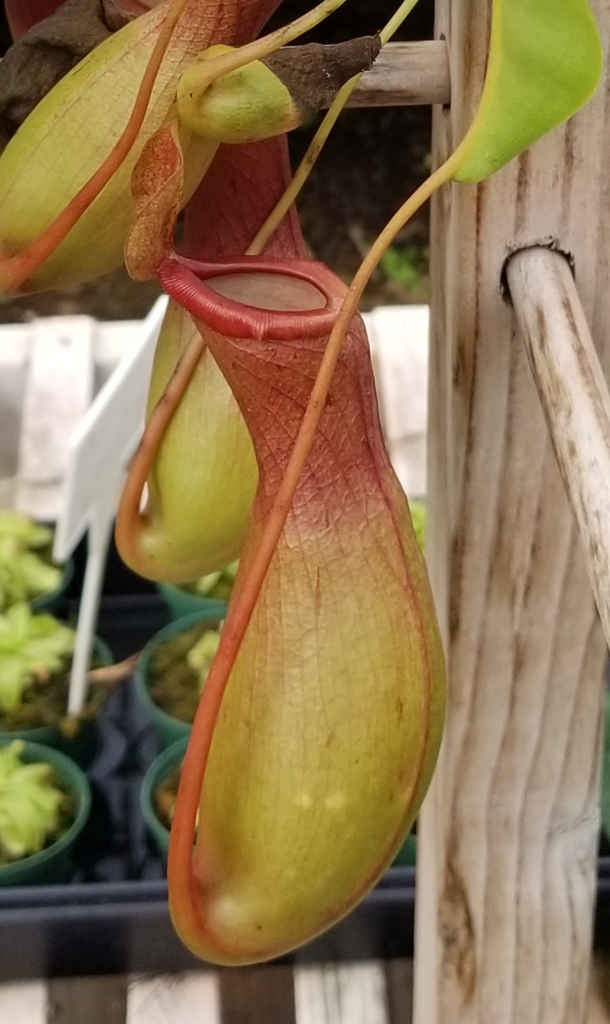
Heat also changes the air around the plant. As the temperature rises, relative humidity falls unless more moisture is added, so a hot spot can also be a dry spot for developing pitchers.
Sudden swings matter as well. Clemson Extension notes that an abrupt environmental change, including a change in temperature, can cause several older pitchers to dry out at once.
How to Adjust Temperature at Home
When your home is too cold
- Move plants back from cold glass on winter nights, or at least leave a gap between the leaves and the window.
- Keep plants out of direct heater airflow. Warmth helps, but a hot, dry stream of air is a separate problem, as our guide to why a Nepenthes stops producing pitchers explains in its section on drafts.
- For a collection, consider gentle supplemental heat inside an enclosure. After his losses, Butler used soil heating cables and a plastic curtain around the growing area, which kept winter days near 70°F (21°C) with nights of around 55 to 60°F (13 to 16°C).
- Choose plants that suit the house. A cool home in winter favors highland, intermediate, and hybrid plants over strict lowlanders.
When your nights stay too warm
- Favor intermediate species and hybrids. The New England Carnivorous Plant Society notes that these give windowsill growers the best chances of success.
- Look for the coolest stable spot you have at night rather than the brightest spot by day, then make sure that spot still gets adequate light.
- Run grow lights during the day so their heat does not eat into the overnight drop.
- For highland plants in terrariums, Clemson Extension notes that reusable ice packs may be needed to cool the temperature at night. In cooler climates, some growers simply use unheated rooms; the New England Carnivorous Plant Society mentions members growing highland plants in unheated basements.
Keep changes gradual
Change one thing at a time and give the plant several weeks to respond. If it was recently repotted as well, stable conditions matter even more while the roots settle, as covered in how to repot a Nepenthes.
Temperature Works Together With Light, Water, and Humidity
Temperature rarely acts alone. A warm, brightly lit plant dries its pot faster than a cool one in dim light, so a temperature change can quietly change your watering rhythm. Warmer air lowers relative humidity. A powerful lamp can raise leaf temperature on a shelf that feels cool to you. Even the right potting mix depends on the room: a moisture-retentive mix that suits a warm, airy spot can stay wet for too long in a cool one.
This is why a pitcher problem should not automatically be blamed on temperature. If you are troubleshooting a plant that grows leaves but no pitchers, work through the full sequence in Why Is My Nepenthes Not Producing Pitchers? before changing several conditions at once.
Common Mistakes
Trusting the thermostat instead of the plant’s spot
A comfortable living room can still have a freezing windowsill or an overheated grow shelf. Measure at leaf level.
Buying a highland species for a home with warm nights
A true highlander may survive but sulk for months. If your nights rarely cool down, an intermediate plant or hybrid is a far easier match.
Converting a temperature drop the wrong way
A 15°F drop is about 8°C, not the result you get from the standard temperature formula. Multiply differences by 5/9.
Treating one source’s range as a hard rule
Published ranges disagree for good reasons. Use them to understand the direction your plant prefers, then let its growth confirm whether your conditions work.
Blaming temperature for every problem
Light, roots, watering, and recent changes produce many of the same symptoms. Check them before rebuilding your heating or cooling setup.
FAQ: Nepenthes Temperature
What is the best temperature for a Nepenthes?
It depends on the type. Most nursery hybrids grow well at ordinary home temperatures, roughly 70 to 90°F (21 to 32°C) by day and 50 to 70°F (10 to 21°C) at night. True lowland species need warm nights, while highland species need nights that are clearly cooler than their days.
How do I know if my Nepenthes is highland or lowland?
Check the full name on the label. For a species, look up its natural elevation range. For a hybrid, look at its parents. An unlabeled plant from a general retailer is most likely a hybrid with fairly broad tolerance.
Do highland Nepenthes really need a night temperature drop?
True highland species generally do. Nursery guidance commonly suggests a night drop of about 10 to 20°F (roughly 6 to 11°C). Growers report that highlanders kept under consistently warm nights tend to slow down and produce few pitchers.
Can a Nepenthes survive 50°F (10°C)?
Highland plants regularly experience nights in this range. Lowland plants are far less tolerant of sustained cool nights, although established plants can come through a short cold spell. Duration matters as much as the number.
Can lowland Nepenthes grow indoors in a cold climate?
Yes, but they need a reliably warm spot or a heated enclosure through winter. If your home runs cool, a hybrid or an intermediate plant will be much easier to keep happy.
Will a heat wave kill my Nepenthes?
A few hot days are rarely the main threat to a common hybrid. The bigger risk for highland plants is a long run of warm nights, which tends to cause slow growth and fewer pitchers rather than sudden collapse. Keep the plant out of direct sun through hot glass and watch the overnight lows.
The Bottom Line
Nepenthes temperature guides disagree because they describe different plants, climates, and dividing lines, not because one of them is careless. Underneath the disagreement, the message is consistent: lowland plants want warm nights, highland plants want cooler nights, and hybrids tolerate the most.
So start with identification, then measure the overnight low where the plant actually sits. If the two match, you can stop worrying about temperature and focus on light, water, and patience. If they do not, it is usually easier to choose a plant that fits your home than to rebuild your home around the plant.
Sources & Further Reading
- Clemson Extension: Tropical Pitcher Plants (Nepenthes spp.)
- NC State Extension Gardener Plant Toolbox: Nepenthes
- Royal Botanic Gardens Victoria, Horticultural Flora: Nepenthes
- New England Carnivorous Plant Society: Basic Cultivation of Nepenthes
- New England Carnivorous Plant Society: Highland Nepenthes
- Butler, D. E. (1987). A Rainforest in the Basement: Nepenthes Cultivation Under Lights. Carnivorous Plant Newsletter 16: 83 to 87
- Wong et al. (2020). A comparative eco-metabolomics approach reveals temperature adaptation of four Nepenthes species. Scientific Reports
- Carnivero: Nepenthes Care Guide
- California Carnivores: Tropical Pitcher Plants (Nepenthes) Growing Tips
- Carnivorous Plant Nursery: Growing Tips for Nepenthes
- TerraForums: grower discussion of highland Nepenthes under warm summer nights
Final articles are editorially reviewed and factual claims are checked against cited sources. Last reviewed: October 2026.
10 Comments