
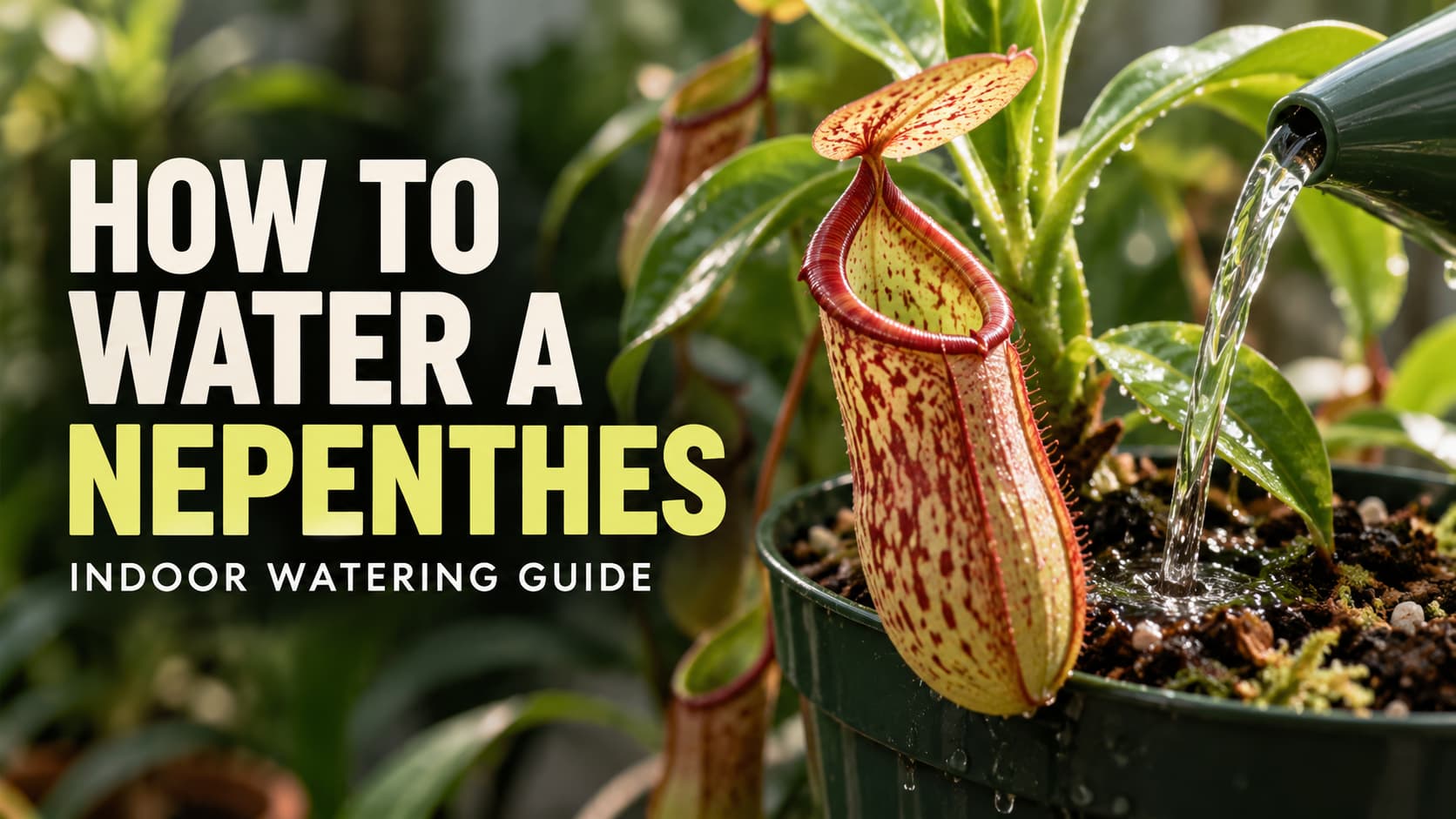
Learning how to water a Nepenthes is less about following a rigid calendar and more about learning what the pot and growing environment are telling you. Tropical pitcher plants like Nepenthes want dependable moisture, but they also need an airy root environment rather than stagnant, permanently saturated media.
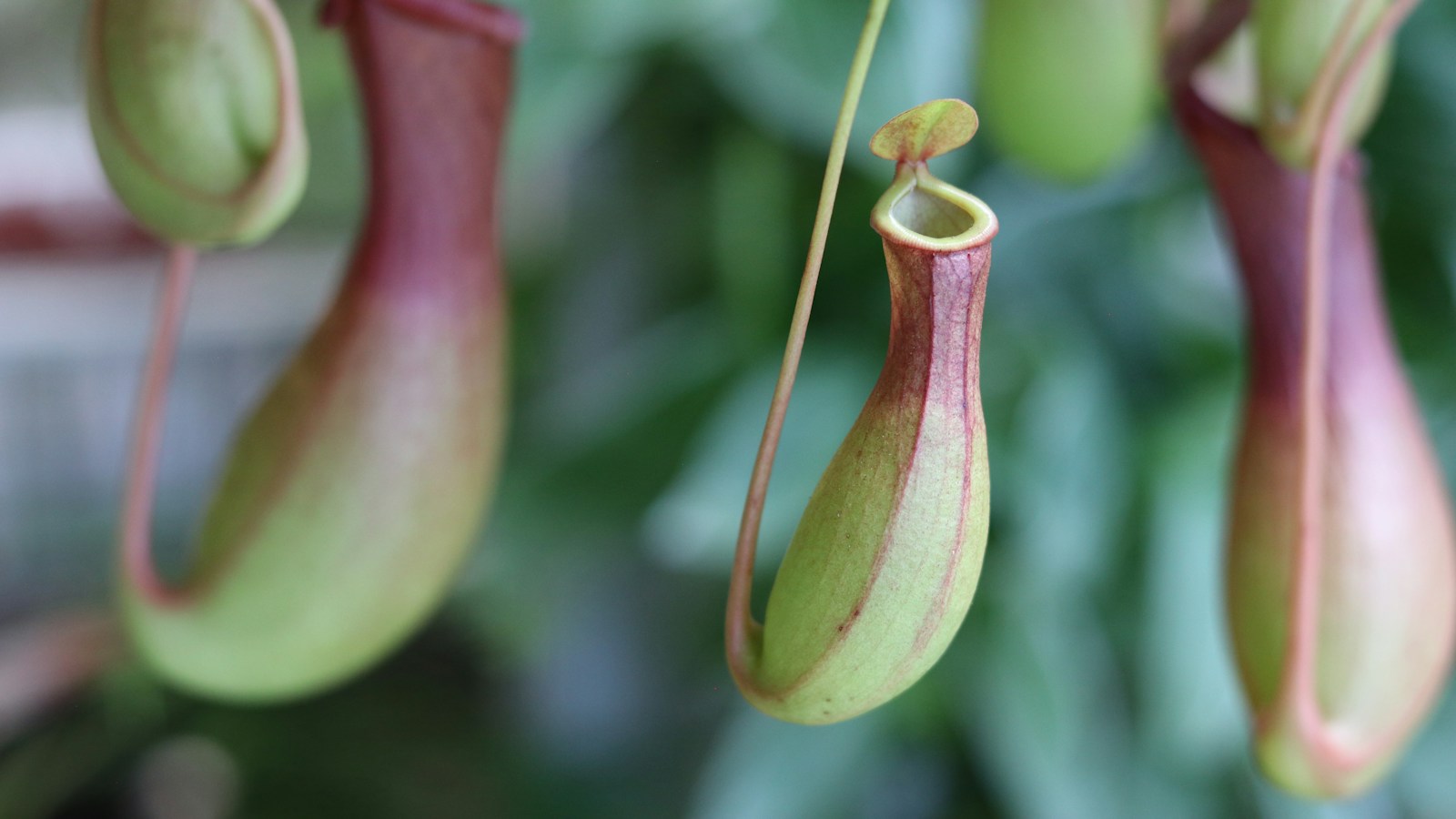
For most indoor growers, the basic routine is simple: use low-mineral water, soak the growing medium thoroughly, let excess water drain freely, and water again when the medium has begun to dry but before the plant becomes genuinely dry. The exact timing can change with light, temperature, humidity, pot size, and substrate.
This guide breaks that routine down so you can stop guessing and start reading your plant.
What Kind of Water Should You Use for a Nepenthes?
Water quality is one of the easiest Nepenthes-care variables to overlook. Carnivorous plants evolved in environments where available nutrients and dissolved minerals can be low, and several botanical and horticultural sources recommend avoiding ordinary mineral-heavy tap water for Nepenthes.
For indoor care, the safest everyday choices are rainwater, distilled water, or reverse-osmosis (RO) water. Clemson Extension specifically recommends rainwater or distilled water when possible, while NC State Extension advises using distilled or rainwater and notes that Nepenthes do not tolerate tap water well. The United States Botanic Garden similarly recommends rainwater or distilled water for carnivorous plants and identifies Nepenthes as a group that benefits from an open, moisture-retentive medium.
That does not mean every drop of tap water will immediately kill a Nepenthes. The bigger concern is repeated exposure to unnecessary dissolved minerals. Water chemistry varies enormously from one location to another, so a plant that appears fine with local water is not proof that the same water is suitable everywhere.
Common pitcher-plant advice also warns that ordinary household filters are not the same thing as reverse osmosis. A filter that improves taste does not necessarily remove the dissolved minerals that carnivorous plants are sensitive to.
Best water choices at a glance
| Water source | For routine Nepenthes care | What to know |
|---|---|---|
| Rainwater | Good choice | Collect and store it cleanly; avoid contaminated runoff. |
| Distilled water | Good choice | Convenient and consistent for indoor growing. |
| RO water | Good choice | Useful when you grow several carnivorous plants. |
| Tap water | Use caution | Mineral content varies by location; routine use can be problematic. |
| Bottled mineral water | Generally avoid | It is intentionally mineralized, which is the opposite of what you need here. |
How Often Should You Water a Nepenthes?
This is where many new growers get trapped by the idea that there must be a universal answer such as “every two days” or “twice a week.” There isn’t one reliable schedule for every Nepenthes.
A plant in bright artificial light, a small plastic pot, and a warm room may dry noticeably faster than a plant in a cooler room with lower light. A chunky, airy mix behaves differently from compact media. A large hanging basket can hold moisture differently from a small nursery pot.
Instead of watering by date alone, watch the condition of the growing medium. For most indoor Nepenthes, you want the medium to remain moist while still draining well. Clemson Extension describes the requirement as keeping Nepenthes moist, while Carnivero recommends thorough watering followed by allowing the substrate to slightly dry between waterings.
In practice, that means you generally should not wait until the entire pot has become dry and the plant is wilting. But you also should not assume a permanently waterlogged pot is automatically healthier.
A practical indoor rule
Check the pot every day or two, especially while learning how quickly your setup dries. Lift the container, feel the surface and upper layer of the mix when accessible, and notice how long the plant stays evenly moist after a full watering. Over time, you’ll build a watering rhythm that is specific to your room rather than borrowed from somebody else’s greenhouse.
How to Water a Nepenthes Properly
For most indoor setups, top watering is the most straightforward method. Carnivero recommends top watering Nepenthes by applying water to the growing medium until water exits the drainage holes.
Here’s the basic process:
- Use rainwater, distilled water, or RO water.
- Pour the water slowly over the growing medium around the base of the plant.
- Continue until the medium is thoroughly saturated and water runs freely from the drainage holes.
- Let the pot drain completely.
- Return the plant to its normal position and observe how quickly the medium begins to dry.
The point is not to give the plant a tiny splash every time you remember it. A thorough watering wets the full root zone and reduces the chance that part of the medium stays chronically dry while another part remains saturated.
At the same time, drainage matters just as much as the amount of water you pour in. Nepenthes are often grown in loose mixes built around sphagnum, perlite, bark, coco chips, or other porous materials. NC State Extension describes Nepenthes as preferring moist, well-drained media, while the United States Botanic Garden notes that Nepenthes generally prefer a more open mix.
Should You Bottom Water a Nepenthes?
Yes, it can work, but it is not the only method and it should be used carefully.
Bottom watering means placing the pot in a tray or saucer so water can move upward through the drainage holes. Some growers use this approach successfully, but recommendations for Nepenthes are not as uniform as they are for bog-adapted genera such as Sarracenia or Venus flytraps.
Carnivero says Nepenthes can be bottom watered but does not recommend leaving them sitting in water; its guidance is to remove remaining water from the tray after about an hour. The same guide recommends top watering as the default method.
That distinction is useful. Bottom watering is a tool, not a rule. It may be convenient for a collection of small pots, but a tray full of standing water can make it harder to judge how wet the root zone really is and may conflict with the drainage needs of your particular substrate.
For a new indoor Nepenthes, top watering is usually easier to understand because you can directly see that water is reaching the entire medium and leaving the pot.
Should Nepenthes Sit in Water?
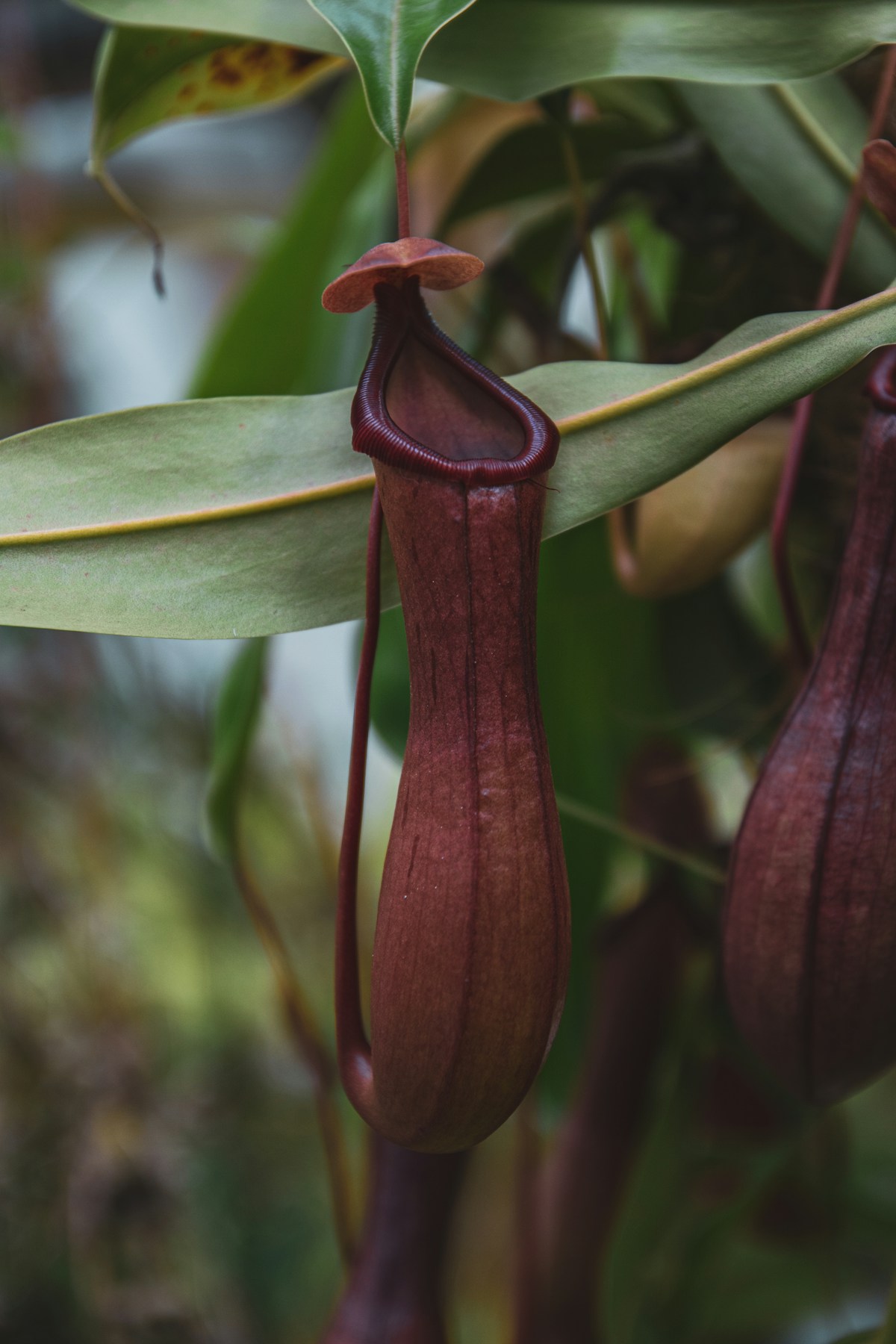
This is one of the biggest differences between Nepenthes care and some other carnivorous plants.
Nepenthes need moisture, but that does not automatically mean their pots should remain permanently submerged or standing in a deep tray. RHS guidance for Nepenthes specifically describes keeping the soil moist while avoiding sitting in water, and Carnivero likewise recommends removing residual tray water when bottom watering.
That does not mean the root zone should become dry between every watering. Think of the target as moist and oxygenated, not “wet at all costs.” A loose medium can hold enough moisture while still leaving air spaces around the roots.
This becomes particularly important in small indoor pots where evaporation is limited. A mix that stays wet for a long time may be telling you that the light, temperature, pot size, or substrate structure needs attention, not that the plant simply needs even more water.
What Does Overwatering a Nepenthes Actually Mean?
“Overwatering” is often misunderstood as “giving too much water in one session.” For a well-drained Nepenthes, thoroughly soaking the medium and letting the excess drain is normal.
The problem is usually watering too frequently for the conditions or keeping roots in a persistently saturated, poorly aerated medium. Carnivero defines overwatering in this context as watering too frequently so the plant does not get enough drying time between sessions.
Watch for a combination of warning signs rather than treating one symptom as a diagnosis. A plant that grows slowly may have several possible causes. Roots that stay in a soggy medium for too long are more concerning when the substrate has collapsed, drainage is poor, or the plant is declining at the same time.
Possible signs your setup is staying too wet
- The medium remains saturated for an unusually long time after watering.
- The mix has become compact, mushy, or difficult to drain.
- Water collects in a decorative outer pot or saucer and is routinely left there.
- The plant is declining even though the medium never seems to dry slightly.
- You are watering on a fixed schedule even when the pot is still very wet.
These signs point toward checking the entire setup rather than simply reducing water quantity.
What Happens If a Nepenthes Dries Out Too Much?
Going too far in the opposite direction can also cause trouble. Nepenthes generally prefer a consistently moist root environment, and repeated drying can stress the plant.
One useful distinction is between slightly drier and fully dry. Allowing an airy substrate to lose some moisture is not the same as letting the root zone become bone dry. A plant that repeatedly reaches severe dryness can struggle to maintain healthy growth, particularly in warm or brightly lit indoor conditions.
Newly shipped or recently repotted plants deserve extra attention. Their watering needs can change as they move from a greenhouse, grow tent, nursery bench, or shipping box into a different room. Carnivero’s acclimation guidance specifically recommends thorough watering followed by complete drainage and warns against keeping acclimating plants standing in water because of rot risk.
Do You Need to Put Water Inside Nepenthes Pitchers?
Usually, you do not need to treat pitcher fluid like a water reservoir that you must refill every time it drops.
Healthy Nepenthes can produce their own digestive fluid. Barry Rice’s Carnivorous Plant FAQ notes that growers do sometimes add a little purified water to pitchers, especially on newly purchased plants, but the source does not present this as a routine requirement for established plants.
That distinction matters because a pitcher that contains little visible fluid is not automatically proof that the whole plant is underwatered. Pitcher development and fluid production are influenced by the plant’s overall growing conditions. If your Nepenthes is losing pitchers or refusing to make new ones, look at the larger picture, especially light, temperature, humidity, acclimation, and root conditions.
For a broader troubleshooting checklist, see Why Is My Nepenthes Not Producing Pitchers? 8 Causes and How to Fix It.
Watering, Light, and Humidity Work Together
A watering routine cannot be separated completely from the rest of the environment. More usable light can increase plant activity and change how quickly the pot dries. Warm air can increase evaporation. A small, open pot may dry faster than a large enclosed container.
That is why “water every three days” is a weak universal recommendation. The same Nepenthes can need a different rhythm after moving from a dim shelf to a strong LED setup.
Light is especially important when you are troubleshooting a plant that stays wet for a long time or produces leaves without pitchers. FloraOddity’s guide on How Much Light Does a Nepenthes Need? Indoor Grow Light Guide explains how window exposure, PPFD, photoperiod, and grow-light placement affect indoor Nepenthes care.
Do You Need a Moisture Meter?
A moisture meter can be useful, but it is not essential. Cheap meters are not equally reliable in every substrate, and a Nepenthes mix full of chunky bark, sphagnum, perlite, or coco products can make readings inconsistent.
For most growers, the more useful skill is learning the physical behavior of the pot. Lift it before and after watering. Notice when the container becomes lighter. Observe whether the surface dries faster than the center. Look at the drainage holes and the condition of the substrate.
Think of the goal as building a small feedback loop: water thoroughly → let excess drain → observe drying → water again before the plant reaches severe dryness.
A Simple Nepenthes Watering Routine for Beginners
Here is a routine you can use while you learn your particular plant:
- Start with the right water. Use rainwater, distilled water, or RO water for routine care.
- Water thoroughly. Saturate the growing medium until water exits the drainage holes.
- Do not leave the pot standing in water. Empty a saucer or outer container after drainage, especially for indoor Nepenthes.
- Check the pot regularly. Learn how quickly your substrate loses moisture in your actual room.
- Water again when the mix has begun to dry. Do not wait for severe wilting or a completely dry root zone.
- Adjust for conditions. Temperature, light, airflow, humidity, pot size, and substrate all change watering frequency.
After a few weeks, the routine should become predictable. You may discover that your Nepenthes needs water every few days in one season and less often in another. That is normal.
What Growers Report
These are single growers’ results in their own conditions, not rules.
- An indoor grower with most plants on an open shelf under lights, in a very chunky mix of long-fiber sphagnum, lava or granite chips and bark, used no water tray and needed to top water only “once a week”. (Brian_W, Terraforums, December 2005)
- In a thread about standing Nepenthes in trays, one grower agreed that N. rafflesiana and N. bicalcarata tolerate it, but lost two N. truncata kept the same way. (schloaty, Terraforums, August 2006)
- A grower in Cornwall, England, keeps lowland species such as N. globosa, N. madagascariensis and N. rowanae very wet but never standing in water, because when they dry out “the leaves dry very quickly”. Some highland plants in the same collection cope with being left for a while, and the grower checks each plant’s water use by lifting the pot after watering and again two days later. (Derek, Carnivorous Plants UK forum, January 2010)
- A grower using tap water of around 100 ppm replaces the whole potting mix every 2 to 3 years because some species start to decline, and sees salt deposits on the saucers and pot edges after about six months. Heavy overhead watering or a heavy downpour helps flush the minerals out. (Cindy, Terraforums, June 2008)
Our takeaway: these growers set their routine by their own pots, mix and species rather than a calendar, and mineral-rich tap water left visible build-up. If you are unsure about your tap water, try our water checker.
Common Nepenthes Watering Mistakes
1. Watering by the calendar
A fixed schedule is convenient but can become dangerous when conditions change. Check the plant and pot first.
2. Giving tiny sips every day
Frequent little splashes can leave some parts of the substrate unevenly wet. Thorough watering followed by free drainage is easier to manage.
3. Assuming “more water” fixes everything
If pitchers are disappearing, growth is slow, or leaves look unusual, water may not be the only issue. Light and the growing environment matter too.
4. Letting a decorative cachepot collect water
An attractive outer pot can quietly turn into a reservoir. Check it after watering and empty trapped water when needed.
5. Treating all carnivorous plants the same
Nepenthes are tropical plants with different watering habits from bog-adapted carnivorous genera. A routine that works for a Venus flytrap or Sarracenia is not automatically the right routine for a Nepenthes.
FAQ: Watering Nepenthes Indoors
How often should I water a Nepenthes indoors?
There is no universal interval. Water when the growing medium has begun to dry but remains within a moist range, and adjust the frequency to your light, temperature, humidity, pot, and substrate.
Can I use tap water for my Nepenthes?
It depends on the mineral content, but routine use is generally not the safest choice. Rainwater, distilled water, or RO water is preferred by major horticultural sources for Nepenthes and other carnivorous plants.
Can I bottom water a Nepenthes?
Yes, but use it carefully. Carnivero recommends top watering as the default and says that bottom watering can be used provided excess tray water is removed rather than leaving the pot standing in water.
Should Nepenthes soil stay wet all the time?
The substrate should remain moist, but it should also drain well and retain air around the roots. Permanently saturated, poorly aerated media can create problems.
Should I mist my Nepenthes instead of watering it?
No. Misting the leaves or tendrils is not a substitute for watering the root zone. Sarracenia Northwest specifically discourages misting Nepenthes as a routine strategy for improving pitcher production.
Should I add distilled water to every pitcher?
It is generally not necessary for an established plant. Nepenthes can produce their own pitcher fluid, and watering the root zone correctly is more important.
The Bottom Line
Good Nepenthes watering is a balance, not a stopwatch. Use low-mineral water, soak the medium thoroughly, let the pot drain, and learn how long your particular setup stays moist.
The most useful habit is simple: watch the plant and the pot, not the calendar. Once you understand how your Nepenthes responds to its light, temperature, humidity, pot, and substrate, watering becomes one of the easier parts of keeping it healthy.
Sources & Further Reading
This guide was checked against horticultural and specialist growing references, including:
- Clemson Extension: Tropical Pitcher Plants (Nepenthes spp.)
- NC State Extension Gardener Plant Toolbox: Nepenthes
- United States Botanic Garden: Cultivating Carnivorous Plants
- Carnivero: Nepenthes Care Guide
- Carnivero: Plant Watering Guide
- Barry Rice, The Carnivorous Plant FAQ: Water in pitcher leaves
- RHS: How to grow carnivorous plants
Final articles are editorially reviewed and factual claims are checked against cited sources.
12 Comments