
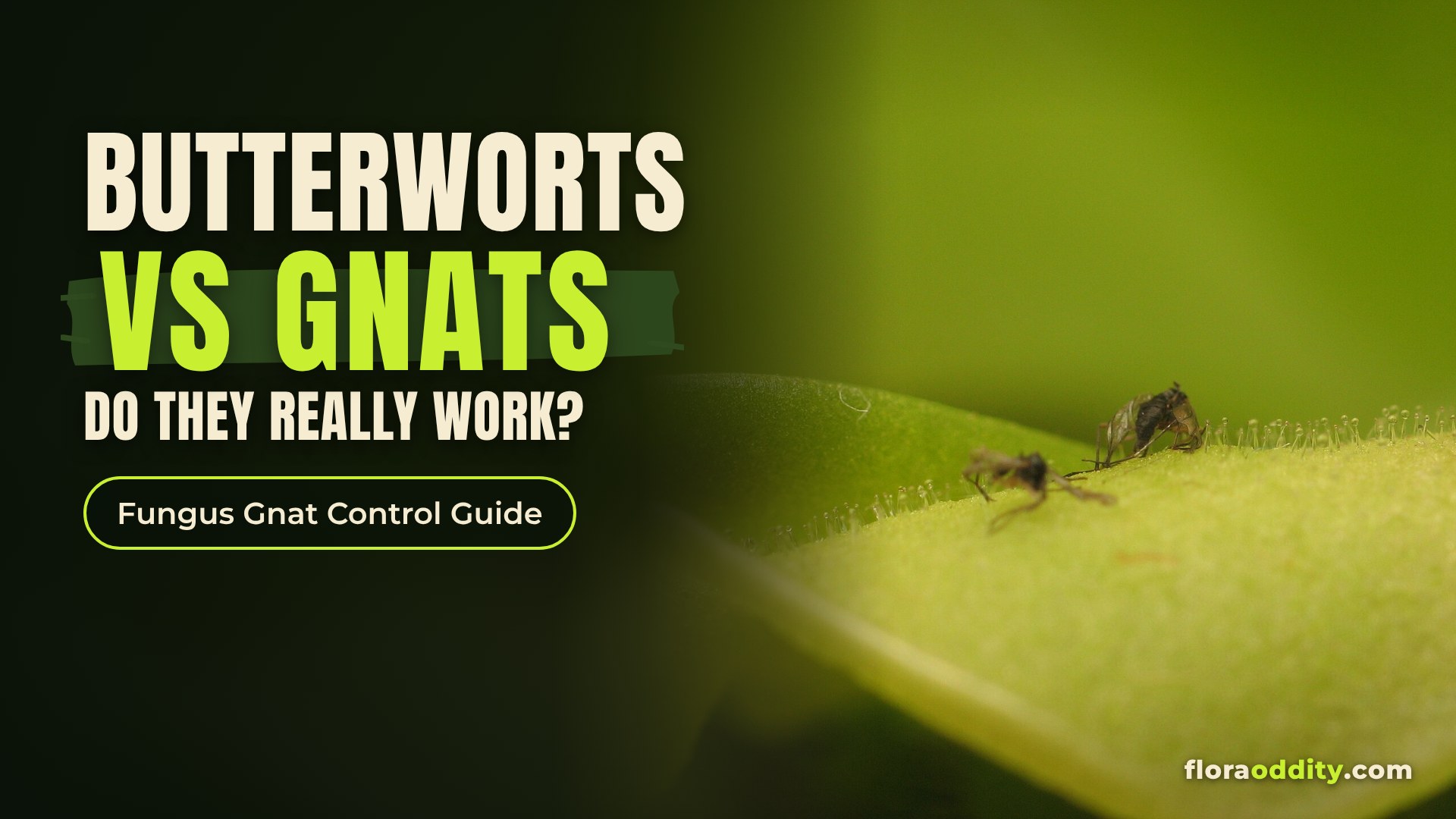
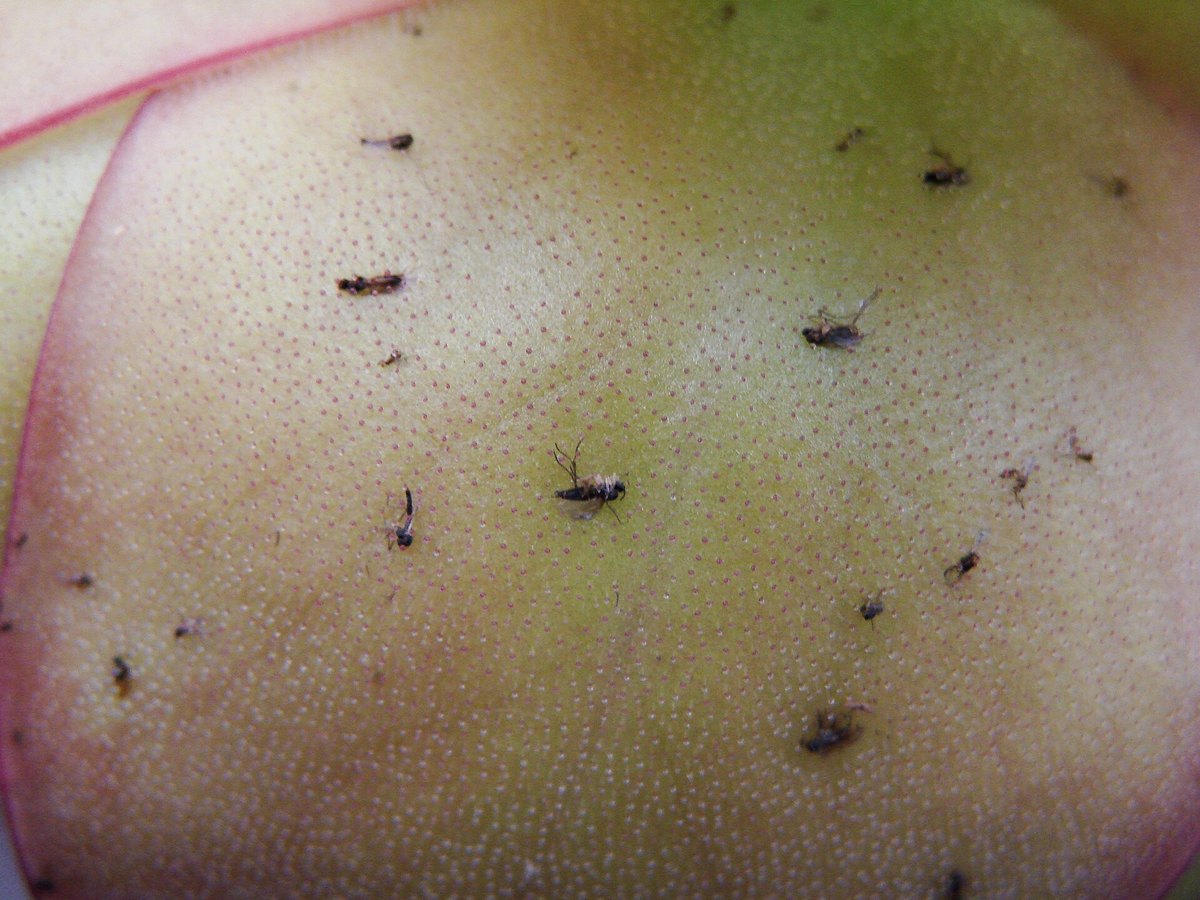
Put a Mexican butterwort on a windowsill where fungus gnats are flying, and its leaves can end up speckled with tiny black flies. The International Carnivorous Plant Society (ICPS) shows exactly that in its own growing guide, with a photo captioned “Pinguicula gigantea and a Pinguicula hybrid snacking on fungus gnats.” So the plant does catch them. The harder question is whether it solves the problem.
The short version of butterwort fungus gnats advice is that the plant is a good living sticky trap and a poor cure. This guide, part of our Butterwort series, explains how the leaves catch gnats, which butterworts do it best, where to put them, and what else you need to do about the larvae in the soil. For general care of the plant, start with our butterwort care guide.
The Short Answer
Yes, butterworts catch adult fungus gnats, often in large numbers. Sarracenia Northwest says that on a windowsill, butterworts “are remarkably good at catching small insects on their own,” fungus gnats included. But the adults are only part of the problem. The ICPS warns that “where you find adults, usually larvae follow,” and the larvae live in the soil, out of the plant’s reach. Barry Rice, author of the Carnivorous Plant FAQ, says orchid growers who keep butterworts against gnats are using them less as a control than as “sentinals,” an early warning that gnat numbers are rising.
Use a butterwort to catch and count adults, and fix the soil at the same time: let the surface dry between waterings, add a thin layer of coarse sand, and, if needed, treat the larvae with Bti. Wisconsin Extension says it “may take three to four weeks” of changed watering and a sand or gravel layer to get gnats in check.
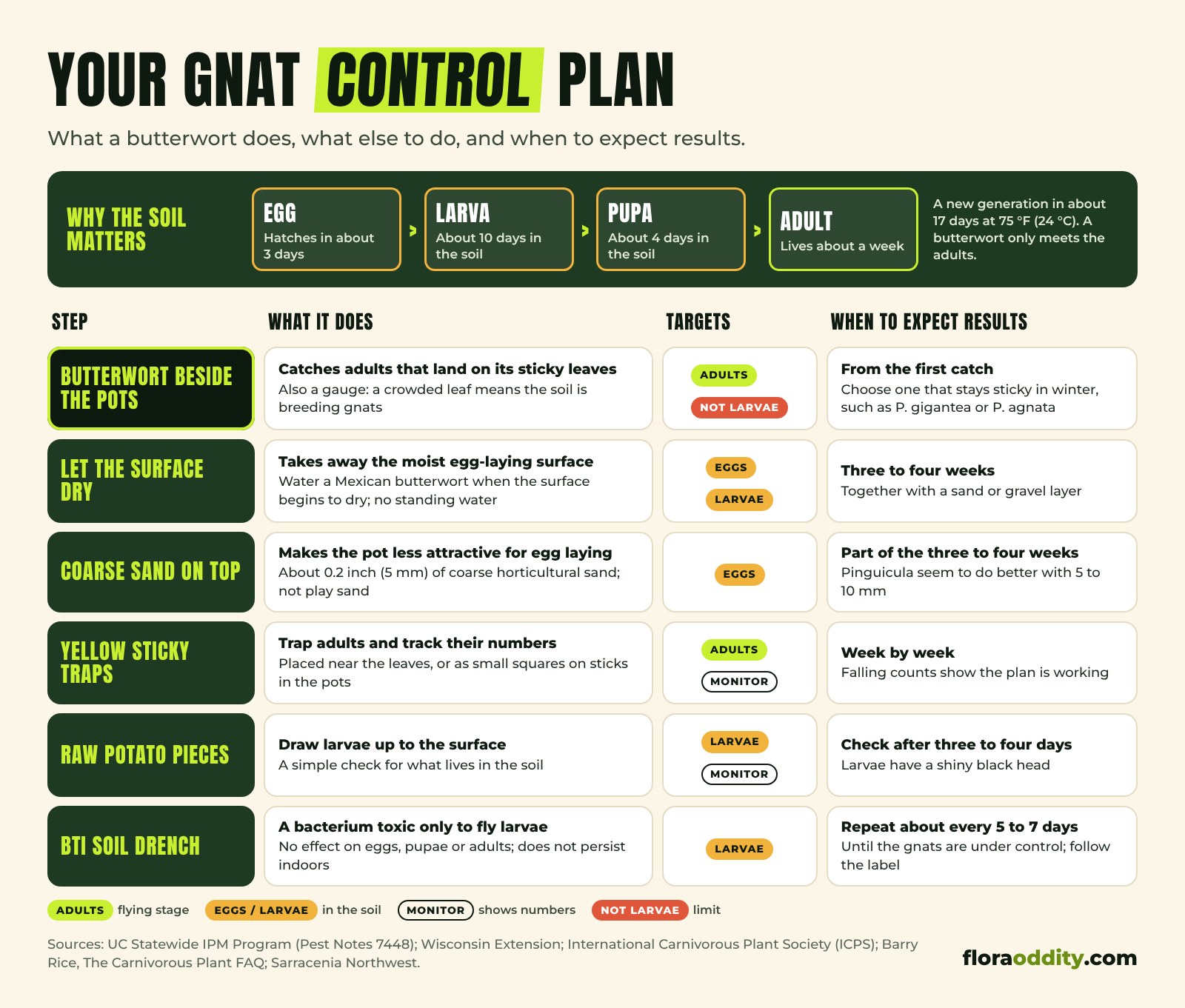
| Step | What it does | What it targets | When to expect results |
|---|---|---|---|
| A butterwort near the affected pots | Catches adults that land on its sticky leaves; shows whether numbers are rising or falling | Adults only | Catches start as soon as gnats land; it does not reach eggs, larvae or pupae in the soil |
| Let the soil surface dry | Removes the moist surface where females lay eggs | Eggs and larvae | Wisconsin Extension: three to four weeks together with a sand or gravel layer |
| A layer of coarse sand | Discourages egg laying; the ICPS uses about 0.2 inch (5 mm) on carnivorous plant pots | Eggs | Part of Wisconsin Extension’s three to four weeks; the ICPS says Pinguicula seem to do better with 0.2 to 0.4 inch (5 to 10 mm) |
| Yellow sticky traps | Catch adults and let you track numbers over time | Adults | Count the catch week by week |
| Raw potato pieces | Draw larvae to the surface so you can see them | Larvae (monitoring) | Wisconsin Extension checks the slices after three to four days |
| Bti soil drench | A bacterium that kills fly larvae; it does not touch eggs, pupae or adults | Larvae | Needs repeat applications, about five to seven days apart, until the gnats are under control |
| Sources | Rice, Sarracenia Northwest, ICPS, UC IPM, Wisconsin Extension |
How Butterwort Leaves Catch Gnats
A butterwort leaf is flypaper. Rice explains that the leaf surface carries two kinds of glands. The stalked glands are “always ready to capture prey” with a sticky droplet on top, while flat sessile glands release fluid loaded with digestive enzymes and may do most of the digesting.
The leaves also seem to lure gnats in. Rice writes that they sometimes give off a faintly fungal scent, and that while the musty smell does not attract pollinators, “gnats find the funk from the leaves to be irresistible.” Illinois Extension horticulture educator Christina Lueking describes the same odour and says this flycatcher method is “great for smaller insects such as gnats or thrips.”
Fungus gnats are easy prey for a plant that cannot move. The University of California Statewide IPM Program (UC IPM) describes them as “relatively weak fliers” that often stay near potted plants and run across or rest on the soil and foliage. UC IPM puts most adults at about 1/16 to 1/8 inch (1.5 to 3 mm) long, and Sarracenia Northwest notes that a small leaf “can digest only a small meal,” so tiny flies suit it well.
What a Butterwort Can and Cannot Do
A butterwort only catches gnats that land on it. That is useful, but most of a fungus gnat’s life happens where the plant cannot reach. UC IPM says “most of the fungus gnat’s life is spent as a larva and pupa in organic matter or soil,” and that the most effective controls target those stages “rather than attempting to directly control the mobile, short-lived adults.”
The numbers explain why. At 75 °F (24 °C), UC IPM says eggs hatch in about 3 days, larvae take about 10 days to pupate, and adults emerge about 4 days later, so a new generation can appear in about 17 days. Wisconsin Extension says a female can lay up to 200 eggs, and that adults live only about a week. A butterwort that catches a few adults a day removes some egg layers, but the generations already in the soil keep coming.
Those larvae can hurt the butterwort itself. The ICPS says fungus gnat larvae damage seedlings and “Pinguicula plants with leaves touching the soil surface,” and that they have been shown to spread root fungi. Its Mexican Pinguicula guide adds that while a butterwort “can get covered in adult fungus gnats” during an outbreak, the larvae “could be doing considerable damage to small plants.”
Rice is blunt about scale. He notes that orchid growers sometimes keep “a few flats of large Mexican Pinguicula” among their orchids against fungus gnats, and concludes that the butterworts “are not serving as a very important control method.”
So think of a butterwort as two things: a living sticky trap that thins out the adults, and a gauge. A leaf crowded with gnats tells you the soil is breeding them.
Which Butterworts Catch Gnats Best
Mexican butterworts and their hybrids
For an indoor gnat catcher, the sources point to Mexican butterworts. The ICPS says they “make great house plants in a bright sunny window or under lights,” and Rice says the Mexican hybrids “are often easier to grow than pure species.” Our pillar guide explains how to tell which butterwort you have.
Choose one that stays sticky in winter
Timing matters more than species name. Most Mexican butterworts are heterophyllous: the ICPS says that with proper light cues most species carry carnivorous leaves “from mid spring through fall,” then “succulent, non-carnivorous leaves” from winter through early spring. A plant in its succulent stage catches little. Yet Wisconsin Extension says gnats are often worst in autumn, when infested houseplants come back indoors after summer.
Two species barely change. Rice says P. agnata and P. gigantea “are barely heterophyllous,” and their winter leaves are “only marginally smaller” than their summer ones. The ICPS says P. gigantea “does not form succulent leaves in the winter,” calls it “a great window sill plant,” and pictures it catching fungus gnats. Sarracenia Northwest adds that hybrids in particular “may show only a subtle change” in winter. Based on these sources, P. gigantea, P. agnata or a hybrid that keeps its sticky leaves is the safest choice if your gnat season runs into winter. Our butterwort dormancy guide covers the winter stage in detail.
Temperate and southeastern US butterworts
These are poor choices for an indoor gnat problem. Cold temperate species such as P. vulgaris spend winter as a resting bud and need real cold. Southeastern US species stay in leaf but, as California Carnivores puts it, should be “grown permanently wet on the tray system.” Wet, peaty soil is exactly what the ICPS calls the preferred substrate for gnat larvae, so a pot that must stay wet works against the rest of your plan.
Where to Place Butterworts and How Many to Use
Placement
Put the butterwort where the gnats already are. UC IPM says adults often stay near potted plants and rest on soil and foliage, and that they are drawn to light, so “you first might notice these pests flying near windows indoors.” A butterwort on the same bright windowsill as the affected pots sits right in their path.
That windowsill also has to suit the butterwort. Sarracenia Northwest recommends “several hours of gentle direct sunlight each day,” often from an east-facing window, without intense afternoon sun in summer, and says a lack of sticky leaves during active growth “can also indicate insufficient light.”
How many
None of the sources we read gives a number of butterworts per pot or per room. They describe groups, not single plants: Rice’s orchid growers keep a few flats, and one grower in What Growers Report below put a few plants around his tomatoes. More plants catch more adults, but no number of plants reaches the larvae.
Butterworts Compared With Other Gnat Controls
Letting the surface dry
Both extension sources put this step first. Wisconsin Extension calls changing the growing conditions “the single most important step in managing this insect” and suggests “allowing the top inch of the soil to dry out before you water,” or watering from below so the surface stays dry. UC IPM agrees: “Allow the surface of container soil to dry between waterings,” improve drainage, for example with more perlite or sand in the mix, and clean up standing water.
For a Mexican butterwort, this fits its own needs. Sarracenia Northwest’s advice is to water when “the surface of the soil begins to feel dry,” keep the soil “lightly moist rather than constantly wet,” and never leave it sitting in water. In a reader case, the nursery read gnats as a symptom: “If you have a problem with fungus gnats (or springtails), the soil of your butterwort is too wet.” Use pure, low-mineral water; Illinois Extension says not to use tap or well water, and our water checker helps you test what you have.
A layer of sand
A dry, coarse top layer makes the pot less attractive for egg laying. The ICPS uses about 0.2 inch (5 mm) of medium to coarse horticultural sand, not play sand or builder’s sand, and says Pinguicula “actually seem to do better” with 0.2 to 0.4 inch (5 to 10 mm) on top. Wisconsin Extension suggests a deeper 1/2 to 1 inch (1.3 to 2.5 cm) of coarse sand or fine gravel for houseplants in general.
Sticky traps and potato slices
Yellow sticky traps do for the adults what a butterwort does, without needing care. Wisconsin Extension uses them near the plant’s leaves both to catch adults and to “keep track of the number of fungus gnats” over time, and UC IPM suggests cutting them into small squares on sticks placed in pots. To check for larvae, both sources use pieces of raw potato on the soil; Wisconsin Extension looks for larvae on the slices after three to four days.
Bti for the larvae
Bti, the bacterium Bacillus thuringiensis subspecies israelensis, attacks the stage a butterwort cannot. UC IPM describes it as toxic “only to fly larvae” and notes that it “does not reproduce or persist indoors,” so a soil drench usually has to be repeated; Wisconsin Extension spaces applications five to seven days apart until the infestation is under control. UC IPM also warns that the Bt sold for caterpillars “is not effective against fly larvae.” The ICPS calls Bti “relatively safe” for carnivorous plant growers, but prefers changing growing conditions first. Stronger insecticides are a different matter: UC IPM says they are “rarely warranted” against these flies in homes, and the ICPS says chemical pesticides are “best avoided” unless you are a trained commercial grower.
A Gnat Control Plan, Step by Step
- Confirm they are fungus gnats. Wisconsin Extension describes delicate dark flies about 1/8 inch (3 mm) long with a Y-shaped wing vein, often mistaken for fruit flies.
- Change the watering. Let the soil surface dry between waterings and empty standing water from trays.
- Top-dress with coarse sand, about 0.2 inch (5 mm) on carnivorous plant pots.
- Place a sticky-leaved butterwort beside the worst pots on a bright windowsill; add yellow sticky traps for a cleaner count.
- Check for larvae with potato pieces after three to four days, and if they persist, treat with Bti as a soil drench, repeating as the label directs.
- Judge progress over weeks. With a new generation in about 17 days at 75 °F (24 °C), give the plan three to four weeks. Fewer gnats on the butterwort each week is a good sign.
Keeping the Butterwort Healthy While It Hunts
A gnat catcher only works while it is alive and sticky. The basics are in our pillar’s common problems section; these points matter most among gnat-infested pots.
- Keep its own soil from breeding gnats. The ICPS says larvae eat Pinguicula leaves that touch the soil and damage small plants, so give the butterwort a sand top layer too and do not let its pot stay wet.
- Repot if larvae get into the roots. In one TerraForums thread, a grower found worm-like creatures on the roots and lower leaves of a Mexican butterwort, which another member identified as likely fungus gnat larvae; the advice was to repot into a mix with less peat. Sarracenia Northwest’s own mix is about 1 part sphagnum peat to 2 parts perlite.
- Do not feed it extra. Sarracenia Northwest says supplemental feeding “is usually unnecessary” for a windowsill butterwort.
- Keep chemicals off the leaves. The ICPS says “Do NOT ever use any kind of fungicide on Pinguicula,” and treats chemical pesticides with caution. Bti goes into the soil as a drench, not onto the leaves.
Butterworts and Sundews as Gnat Catchers
Sundews are the other common choice, and the two genera work in different ways. Rice describes sundews as sticky flypaper too, but with tentacles that bend toward a catch and, in many species, a leaf that “coils around the prey” over minutes or hours. Butterwort leaves hardly move; Rice notes only a slight dimpling under prey and, mostly in temperate species, rolled edges. Rice’s own choice for an occasional housefly is “a few Drosera capensis plants.”
The bigger difference for gnat control is water. Sarracenia Northwest told one reader that sundews “are fine sitting in water,” but Mexican butterworts “will get root rot if kept like this for long periods.” A sundew on a wet tray keeps the soil moist, which is what the larvae need, while a Mexican butterwort can be grown on the drier side, in step with the rest of your gnat plan. Our sundew care guide covers how to grow them.
What Growers Report
These are single growers’ experiences, not tested rules.
- A few plants among the tomatoes. One grower put “a few pings down around the base of the tomato plants” in a bright, solarium-like entry, and wrote that “they get the gnats like pro’s,” adding that his butterworts had some of their best flowers two summers earlier. (Michael, TerraForums, April 2008)
- Fine for small numbers only. Answering a grower whose house was overrun, another member wrote that “Drosera and Pinguicula only work for a small infestation and will keep them under control if the population is small and steady,” and recommended treating the larvae as well. (nepenthes gracilis, TerraForums, February 2004)
- The larvae did the damage. In the same thread, a grower said the larvae had destroyed his entire collection of Mexican butterworts and “seem to like to eat the leaves.” After he stopped using the tray system and let his pots get drier than usually suggested, he wrote, “I haven’t seen one since.” (Vertigo, TerraForums, February 2004)
- A clue in the webbing. A reader kept a P. ‘Pirouette’ under LED lights for about 17 hours a day, in a water tray, and misted it daily. The webbing in the photos turned out to be a harmless spider “likely feasting on fungus gnats,” and the nursery’s answer was that the soil was too wet. (Reader question answered by Jeff Dallas, Sarracenia Northwest Q/A #20, January 2022)
Our takeaway: growers are happy with butterworts as gnat catchers when numbers are low, but the reports that end well also change the watering.
Where Sources Differ
| Topic | One view | Another view | Context the sources give |
|---|---|---|---|
| Do adult gnats matter? | Rice: leave fungus gnats alone unless you grow seedlings; his terraria are “filled with healthy plants” | ICPS: “there is no excuse for encouraging the adults,” because larvae follow | The ICPS stresses small plants, seedlings and Pinguicula leaves touching the soil |
| Depth of the sand layer | ICPS: about 0.2 inch (5 mm); 0.2 to 0.4 inch (5 to 10 mm) for Pinguicula | Wisconsin Extension: 1/2 to 1 inch (1.3 to 2.5 cm) of coarse sand or fine gravel | The ICPS writes for carnivorous plant pots; Wisconsin writes for houseplants in general |
| How to keep the surface dry | Wisconsin Extension: let the top inch dry, or water from the bottom | Sarracenia Northwest: top-water Mexican butterworts until runoff, never leave them sitting in water | The ICPS grower keeps his pots in about 0.4 inch (1 cm) of water from spring to fall, with a sand layer on top |
| Humidity for butterworts | Illinois Extension: “Pings” need high humidity; use the tray method | Sarracenia Northwest: normal household humidity is usually enough; stop misting | Illinois writes about P. gigantea; Sarracenia Northwest about Mexican butterworts in general and links wet, humid conditions with rot |
Common Mistakes
- Expecting the butterwort to end an outbreak alone. It catches adults; the larvae in the soil need drier conditions, sand or Bti.
- Keeping the soil wet to “help” the plant. Constantly wet soil breeds gnats and rots Mexican butterwort roots.
- Buying a gnat catcher in autumn that goes succulent in winter. Choose P. gigantea, P. agnata or a hybrid that stays sticky.
- Spraying insecticide or fungicide on the butterwort. The ICPS warns against fungicides on Pinguicula and advises caution with pesticides.
- Judging the result after a week. Allow three to four weeks for a new watering routine to work.
FAQ: Butterwort Fungus Gnats
Will one butterwort get rid of fungus gnats?
Not on its own. It will catch adults that land on it, but the ICPS and UC IPM both point out that the larvae in the soil are the real source. Rice says butterworts kept for gnats work more as early warning “sentinals” than as an important control.
What is the best butterwort for fungus gnats?
A Mexican butterwort that keeps its sticky leaves all year is the most useful indoors. The ICPS says P. gigantea does not form succulent winter leaves and pictures it catching fungus gnats, and Rice says P. agnata barely changes in winter.
Can fungus gnats harm a butterwort?
The adults do not, but the larvae can. The ICPS says they damage Pinguicula plants with leaves touching the soil, and one TerraForums grower lost a whole collection of Mexican butterworts to them.
Can I use Bti in a pot with a butterwort?
The ICPS describes Bti as a relatively safe soil drench, though it prefers changing growing conditions first, and UC IPM says it kills only fly larvae. Apply it to the soil, not the leaves, and follow the label.
The Bottom Line
Butterworts really do catch fungus gnats, and a Mexican butterwort that stays sticky all year, such as P. gigantea, P. agnata or a vigorous hybrid, makes a handsome living sticky trap on a bright windowsill beside the affected pots. What it cannot do is reach the larvae. Pair it with a drier soil surface, a layer of coarse sand and, if needed, Bti, keep the butterwort’s own pot from turning into a gnat nursery, and give the plan three to four weeks.
Sources & Further Reading
- International Carnivorous Plant Society: Fungus Gnat Larvae
- International Carnivorous Plant Society: Growing Mexican Pinguicula
- International Carnivorous Plant Society: Growing cold temperate Pinguicula
- Barry Rice, The Carnivorous Plant FAQ: Pinguicula, the butterworts
- Barry Rice, The Carnivorous Plant FAQ: Heterophyllous species of Mexico and Central America
- Barry Rice, The Carnivorous Plant FAQ: Will carnivorous plants control my bug populations?
- Barry Rice, The Carnivorous Plant FAQ: How do I kill bug XXX?
- Barry Rice, The Carnivorous Plant FAQ: Introduction to the sundews
- UC IPM: Pest Notes, Fungus Gnats (UC ANR Publication 7448)
- Wisconsin Horticulture, Division of Extension: Fungus Gnats on Houseplants
- Illinois Extension: Bugged by houseplant pests? Give carnivorous plants a try
- Sarracenia Northwest: How to Grow Tropical Butterworts (Pinguicula)
- Sarracenia Northwest: Q/A #20, Spider Mite Web?
- California Carnivores: Butterworts (Pinguicula) Growing Tips
- TerraForums thread: Fungus Gnats (2004)
- TerraForums thread: Fungus Gnat Infestation (2008)
- TerraForums thread: help butterwort pest? (2017)
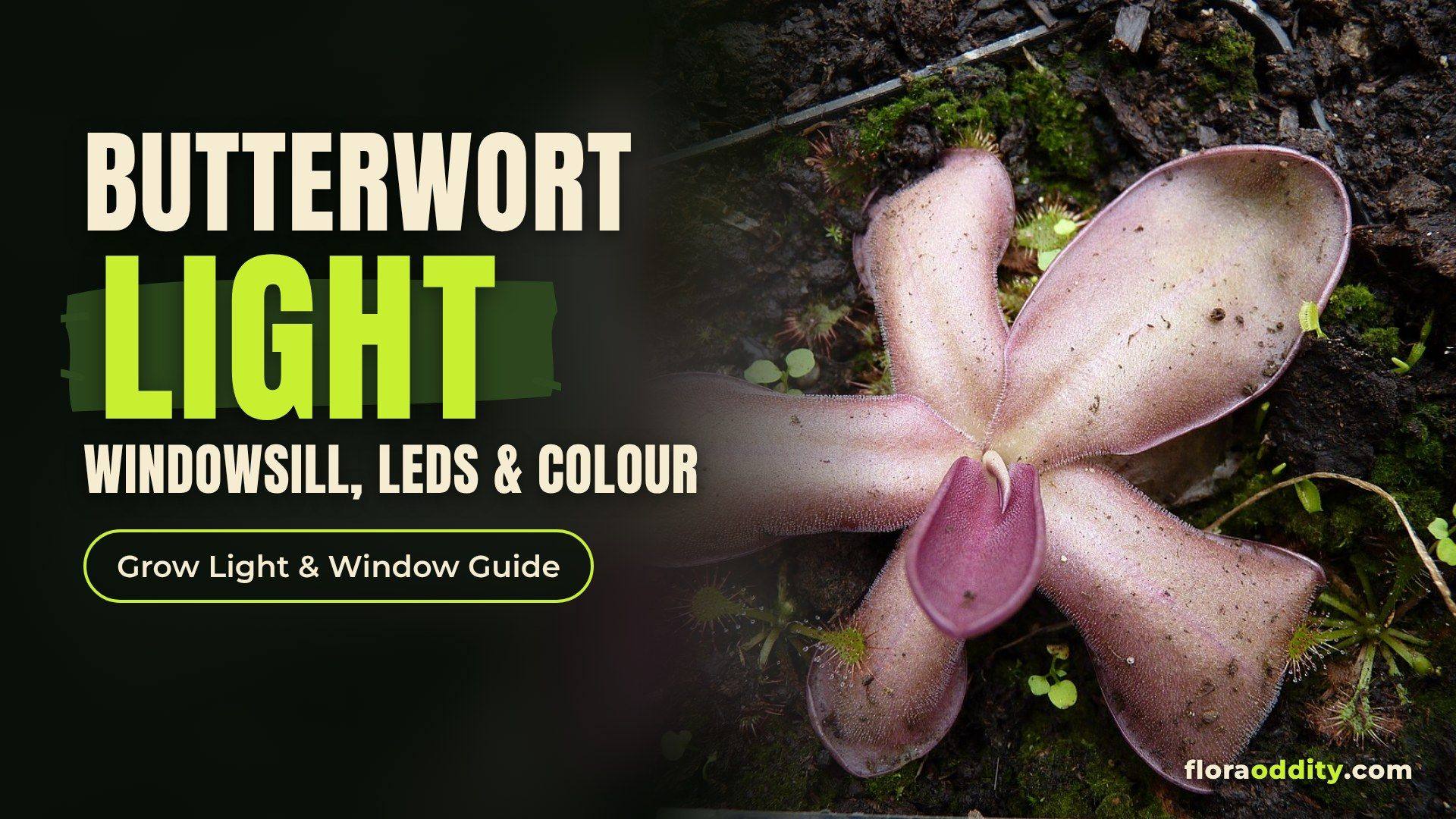
Featured image based on a photo of a butterwort (Pinguicula) leaf with trapped flies by Petr Dlouhý via Wikimedia Commons, CC BY-SA 3.0, cropped with a dark gradient and typography added by FloraOddity; the adapted image is offered under the same licence.
Final articles are editorially reviewed and factual claims are checked against cited sources. Last reviewed: October 2026.

One Comment