
Barry Rice, author of the Carnivorous Plant FAQ, admits that Cephalotus “may limp along in cultivation, and then suddenly die for no obvious reason.” The good news is that many plants that look finished are not. Carnivorous Plant Nursery advises: “Do not discard a seemingly dead plant,” because Cephalotus often regrows from its rhizome.
When a Cephalotus dying back has you worried, first work out which kind of trouble you are looking at. Old pitchers die naturally, new plants drop leaves while settling in, and a plant can make only flat leaves for months without being sick. Real emergencies look different: a blackened crown, wilting new growth, pitchers that die while still green. Our Cephalotus care guide gives a short overview of common problems; this guide goes symptom by symptom, with what the sources say causes each one and what to do about it.
The Short Answer
Look at the growing points first. If the newest growth in the centre of each crown is firm and green, browning outer pitchers are usually just old age, transplant stress or the winter rest. If new growth is wilting or turning black, act quickly: the International Carnivorous Plant Society (ICPS) says to unpot a collapsing plant, save the good stems as cuttings, cut off black or rotting parts, and repot what is left in fresh soil, well above any water level.
Most serious problems trace back to wet, airless soil, long spells of heat (especially warm nights), stagnant humid air, or too much disturbance or food. Flat leaves usually mean winter, low light or soil fertilizer, and a plant that sulks after repotting needs time, not more changes. The chart below matches each symptom to its likely cause.
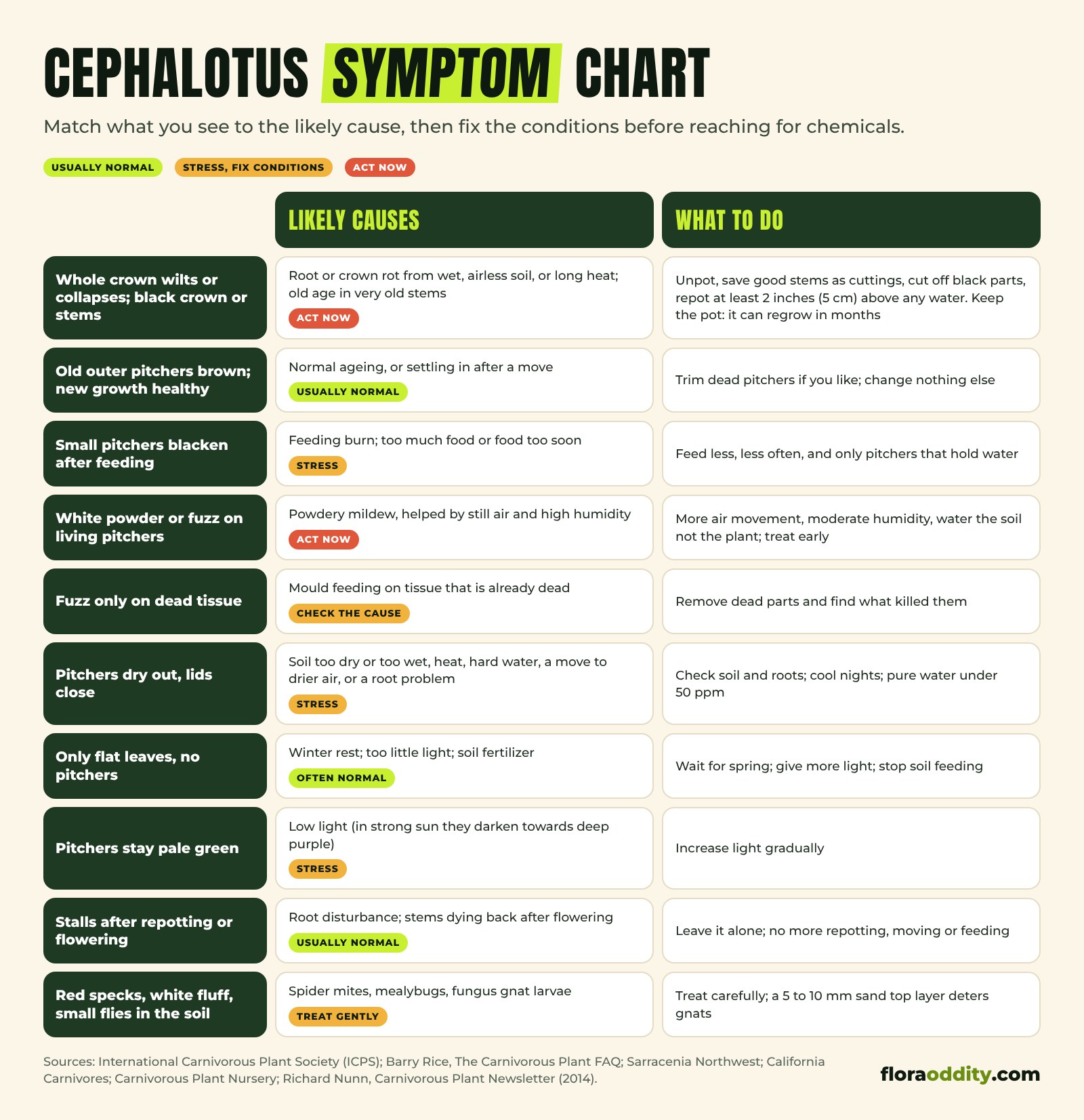
| Symptom | Likely causes | What to do | Source |
|---|---|---|---|
| Whole plant wilts or collapses; crown or stems turn black | Root or crown rot from wet, poorly aerated soil, or long spells of heat; old age in very old stems | Unpot, save healthy stems as cuttings, cut off black parts, repot in fresh soil at least 2 inches (5 cm) above any water; keep the pot in case it regrows | ICPS, Carnivorous Plant Nursery, Barry Rice |
| Old outer pitchers brown and dry; new growth healthy | Normal ageing, or settling in after a move | Remove dead pitchers if you like; change nothing else | Barry Rice, ICPS |
| Small pitchers blacken after feeding | Feeding burn; too much food or food too soon | Feed less often, with smaller amounts, and only pitchers that hold water | California Carnivores, ICPS |
| White powder or fuzz on living pitchers and leaves | Powdery mildew, encouraged by still air and high humidity | More air movement, moderate humidity, water the soil not the plant; treat early | ICPS, Sarracenia Northwest |
| Grey or white fuzz only on dead tissue | Mould feeding on tissue that is already dead | Fix whatever killed the tissue; killing the mould alone does not help | Barry Rice |
| Pitchers dry out, lids close, no fluid inside | Plant out of balance: soil too dry or too wet, heat, or a root problem | Check soil moisture and roots; keep it cooler at night; avoid hard water | ICPS, Sarracenia Northwest, California Carnivores |
| Only flat leaves, no pitchers | Winter rest; too little light; soil fertilizer | Wait for spring; give more light; stop soil feeding | Sarracenia Northwest, ICPS, Richard Nunn |
| Pitchers stay green and pale | Low light (in bright sun they darken towards deep purple) | Give more light | Sarracenia Northwest, ICPS, Richard Nunn |
| Stalls for weeks or months after repotting or flowering | Root disturbance; stems dying back after flowering | Leave it alone; do not keep repotting or moving it | Sarracenia Northwest, California Carnivores, ICPS |
| Red specks, white fluff, tiny flies in the soil | Spider mites, mealybugs, fungus gnat larvae | Treat carefully; add a sand top layer against gnats | Sarracenia Northwest, ICPS |
First, Is It Dying or Just Shedding?
Cephalotus pitchers do not last forever. Richard Nunn, writing in Carnivorous Plant Newsletter, describes the accepted growth cycle as flat leaves in spring followed by pitchers that “last for as long as 12 months.” Rice puts it more bluntly for carnivorous plants in general: “eventually every leaf on your plant will die,” and a blackening leaf “will not spread its death to the rest of the plant.”
Three normal events look alarming:
- Settling in. Several TerraForums growers describe new plants losing some pitchers after shipping or a move, then restarting.
- After flowering. The ICPS says Cephalotus stems die back after flowering and new stems emerge at or below soil level. “Expect this to happen. The plants may look terrible until new stems grow out.”
- Winter. Sarracenia Northwest says growth slows dramatically in the winter rest and the plant makes “an abundance of flat, non-carnivorous leaves,” and Carnivorous Plant Nursery adds that a resting plant “may die back.”
The ICPS also mentions old stems that simply stop growing, “likely from old age,” and rejuvenates them as crown divisions and stem cuttings. What separates shedding from trouble is where the damage starts: outer pitchers dying one at a time while new ones form is ordinary; damage at the growing points, or a whole crown wilting at once, is not.
Sudden Collapse and Root Rot
Carnivorous Plant Nursery calls it “sudden death syndrome,” and says it is usually the result of “unseen root rot from soil too damp and not properly aerated, or prolonged high temperatures.” The ICPS describes the same picture from the other end: plants that “start to collapse from something untoward happening to the roots and other underground parts.”
What causes it
Wet, airless soil. The ICPS calls Cephalotus a fen plant that “does not like stagnant conditions,” and Sarracenia Northwest warns that if the crown sits closer than about 4 inches (10 cm) to the water table for too long, “the roots may succumb to rot.” California Carnivores warns that shallow containers without drainage “will rot their roots.” The ICPS adds that moss over the surface can block air from the roots.
Heat, especially warm nights. Sarracenia Northwest found that a night drop below 70 °F (21 °C) “is essential if day temperatures are very warm,” and California Carnivores warns that plants “may die in prolonged periods of very hot weather.” If you are not sure how warm your nights get, our climate checker compares your temperatures with published ranges for Cephalotus.
Years without a rest. Sarracenia Northwest suggests that years without a winter rest may explain why long-kept adult plants “suddenly died for no apparent reason.”
Fungus gnat larvae. The ICPS says these larvae eat roots and that they “have been shown to spread pathogenic root fungi,” with root damage possibly helping infections take hold.
What to do
The ICPS advice is to act “as soon as the problem becomes apparent”:
- Unpot the plant and look at the roots and rhizome.
- Cut off all the good stems for propagation.
- Cut away any rotting or all black underground parts.
- Repot what is left in new soil, with all plant parts at least 2 inches (5 cm) above the highest water level the pot will see.
Then be patient. Rice advises holding off on the water a bit and waiting: “A few months later you might see regrowth.” Carnivorous Plant Nursery agrees that regrowth “may take several months.” Keep the pot apart from your other plants meanwhile; the ICPS rot guide for Sarracenia advises isolating sick plants immediately.
Black or Browning Pitchers
Old age. Outer pitchers die in turn. If browning is limited to older pitchers and new ones keep coming, there is nothing to treat.
Feeding burn. California Carnivores notes that “Small pitchers may burn back upon feeding,” while still calling feeding a benefit. The ICPS warns that plants have been killed by feeding “too much or too soon,” and feeds only pitchers that hold water. If pitchers blacken after feeding, feed less, and less often.
Rot reaching the pitchers. Watch the newest growth. One TerraForums grower, vraev, put it simply in 2016: if new growth points “suddenly go black..then you may have a root issue.” Treat that as a collapse, above.
Speed matters. Slow browning and pitchers that dry out in days while still green mean different things; see What Growers Report.
Powdery Mildew and Fuzzy Mould
The ICPS says Cephalotus is “highly susceptible to mildew,” and that “Whole collections have been lost from fungus attacks.” Its own example: plants grown indoors near an open window developed mildew after their usual humidity dome was removed for flowering, and survived because they were treated with a fungicide at once. The ICPS also names mildew as the catch in growing Cephalotus outdoors in a mild climate.
Sarracenia Northwest says “Stagnant air and high humidity seem to promote it.” Replying to a reader losing pitchers to white fuzzy growth, it advised:
- Plenty of air circulation and moderate humidity. Constant high humidity “is not at all necessary but can encourage lots of mold issues.”
- Top watering that drains through, without wetting the plant itself, and watering again when the top of the soil begins to lose moisture.
- Sulfur-based fungicides work best as prevention, “rather than a treatment”; for an active outbreak the nursery suggested a neem spray, repeated as the label directs.
- No need to repot just because of mildew.
Mildew or harmless mould?
Rice, writing mainly about Venus flytraps, explains that white fuzzy mould is usually a saprophyte that “only eats dead stuff.” On one dead leaf it is harmless; on a plant whose whole base has gone limp, it is feeding on tissue that is already dying, and killing the mould will not help. So check where the fuzz is: on living pitchers, treat it; on dead ones, remove them and find out what killed them.
How this compares with butterworts
The ICPS treated its mildewed Cephalotus with fungicide, yet its Mexican butterwort guide says: “Do NOT ever use any kind of fungicide on Pinguicula.” Both plants rot from wet soil and still air, but the treatments differ. If you grow both on one shelf, see our guide to butterwort problems before spraying anything near them.
Pitchers Drying Up or Lids Closing
The ICPS gives a simple health test: “A healthy, well-adjusted Cephalotus will keep the pitcher lids open and maintain water in the pitchers.” Rice notes that the lid plays no part in trapping, so closed lids and empty pitchers point to a plant out of balance. Likely causes:
- Soil too dry. Sarracenia Northwest says the soil “should be moist at all times and never allowed to dry out.”
- Soil too wet. Rotting roots cannot supply water either, so check the roots before adding more.
- Heat without cool nights (see above).
- Hard water. Sarracenia Northwest says Cephalotus is “very sensitive to water with dissolved mineral levels of 50 ppm or more.” If you are unsure, test your source with our water checker. Rice’s general advice after a few weeks of bad water is to flush the pot thoroughly with pure water; after months of it, with the plant declining, change the soil.
- A recent move to drier air (see What Growers Report).
No Pitchers, Only Flat Leaves
Flat, spoon-shaped leaves are a normal part of the plant, not a disease. They are what Cephalotus makes in winter, and Carnivorous Plant Nursery says plants get their “largest traps after dormancy.”
Outside winter, the sources point to two causes:
Too little light. Nunn’s field observations in Western Australia show what shade does. After bushfires, plants make flat leaves and then pitchers; as the shrubs grow back and crowd them out, “they start to produce only non-carnivorous leaves to capture the small amounts of light that get through.” At one regrown swamp, Nunn found only “a few patches of green non-carnivorous leaves growing in full shade.” Sarracenia Northwest recommends about 4 or more hours of direct sun, ideally cooler morning sun.
Soil fertilizer. The ICPS warns that soil fertilization can make plants dark green and produce “a higher percentage of non-carnivorous leaves.” Sarracenia Northwest goes further and says fertilizer in the soil will kill the plant.
A plant making healthy flat leaves is alive; correct the light, stop soil feeding, and wait.
Pale or Green Pitchers vs Dark Colour
Colour is mostly a light gauge. Sarracenia Northwest says “Pitchers will naturally darken from green to deep purple in very bright sunlight,” and the ICPS says the plants grow best and are most colourful “with a lot of light.” Nunn notes that plants from a very bright site keep their attractive colour in the wild, but “with less light don’t color up” in cultivation.
So green pitchers point to low light rather than disease, and very dark pitchers on a firm, growing plant are a light response. Pitchers that go soft, shrivel or blacken belong in the sections above.
Stalled Growth After Repotting
Cephalotus resents disturbance. Sarracenia Northwest says it “dislikes having its roots disturbed,” and California Carnivores warns that its roots are “stiff, woody” and that growers should be “very mindful when transplanting to be gentle.” Carnivorous Plant Nursery says it “seems to grow best when pot-bound.”
California Carnivores repots every 3 to 5 years; Sarracenia Northwest changes the soil every other year, in late winter or early spring while the plant rests, into a tall plastic pot that is “preemptively too big.” Even without repotting, Rice describes plants falling into “a long stage of the doldrums,” sometimes “almost entirely dormant,” before new growth appears after “a few to several months.” A stalled plant needs stable conditions; repotting it again, moving it or feeding it to “wake it up” only adds stress.
Pests
Fungus gnats. The ICPS says the larvae “damage and eat plant roots,” can tunnel into stems, and may spread root fungi. Its fix is a layer of medium to coarse horticultural sand on the soil surface, and it notes that Cephalotus “actually seem to do better with a 5 to 10 mm layer,” about 0.2 to 0.4 inch, of sand on top.
Spider mites. A Sarracenia Northwest reader found “little red specks” on a Cephalotus and Heliamphora kept at 40 to 50% humidity. The nursery suggested a neem product, applied several times 2 to 3 days apart, and two weeks later the reader reported the mites “much reduced, and the plants did not mind it.”
Mealybugs. The ICPS mealybug page, written mainly for Sarracenia, says to quarantine new plants, remove dead leaves, keep protective ants away, and swab weekly with 70% rubbing alcohol plus a few drops of dish detergent.
Go gently with chemicals. Rice warns that “Carnivorous plants are very sensitive to chemicals,” and admits to killing Cephalotus, among others, by trying to drown pests out by submerging the pots for days.
A Rescue Plan, Step by Step
Work through it in this order:
- Growing points. Firm and green: observe. Black or soft: go to step 5.
- Water. Is the crown well above standing water, the water pure, the soil damp but not soggy?
- Air and temperature. Is the air moving? Do hot days have nights below 70 °F (21 °C)?
- Light and season. Low light and short winter days both mean flat leaves and green pitchers.
- Collapse. Unpot, save cuttings, cut out black parts, repot high above the water, isolate and wait months.
If you are still unsure, our symptom checker points you to the right guide for each carnivorous plant and symptom.
How Cephalotus Problems Compare with Sarracenia
Both plants grow from rhizomes that can rot. Sarracenia Northwest links summer root rot in Sarracenia to “higher humidity and less cool down at night,” the same warm-night stress Cephalotus dislikes, and the ICPS says fertilizer or salty water can feed weak pathogens that then attack Sarracenia. The big difference is water. The ICPS says the most common way to grow Sarracenia is “in pots sitting in water,” while Sarracenia Northwest and California Carnivores limit Cephalotus trays to a quarter of the pot’s height. So a Cephalotus sharing a deep tray with your Sarracenia sits far wetter than any of these Cephalotus sources accept.
What Growers Report
These are single growers’ observations in their own conditions, from public forum posts, not rules.
- Advising on a rotting new plant kept at about 85 °F (29 °C), a grower said they once cut away the “infected/rotted parts” of a similar plant and repotted the cuttings; a leafless rhizome piece took “about 4-6 weeks” to regrow and later made 1.5-inch (4 cm) pitchers. The grower’s warning sign of fast rot: pitchers “dying rapidly but remaining green with a rough, grainy dried appearance.” (Av8tor1, TerraForums, May 2007)
- Looking at a terrarium plant whose pitchers had dried out at 80 to 95% humidity, a grower explained how to read their colour: brownish pitchers died slowly, the way leaves normally age, while greenish ones “died very quickly,” from a skipped watering or a pathogen killing the roots. (theplantman, TerraForums, July 2015)
- For a plant with dying young growth and a blackish crown, kept in a south window in about a quarter inch (6 mm) of rainwater, one member predicted a losing fight, but another wrote: “I’ve had divisions smaller then yours die down to the roots in similar fashion 3 or 4 times and sprung back each time.” (Not a Number, TerraForums, November 2014)
- Replying about a plant whose small pitchers were shrivelling with their lids shut, a grower called closed lids “a sure sign that something is wrong,” adding that lids also close after a move from high to lower humidity, “until the plant gets used to its new location.” (RSS, TerraForums, November 2013)
Our takeaway: growers disagree on whether a blackened crown can be saved, but they read the speed and pattern of the damage before acting, and rarely give up on the rhizome early.
Where Sources Differ
| Topic | One view | Another view | Context the sources give |
|---|---|---|---|
| Treating mildew | ICPS: plants treated immediately with a fungicide survived | Sarracenia Northwest: sulfur fungicides work best as prevention; neem for an active outbreak | Both stress prevention: the ICPS case followed the removal of a humidity dome; Sarracenia Northwest blames still air and high humidity |
| How often to repot | Sarracenia Northwest: change the soil every other year | California Carnivores: every 3 to 5 years; Carnivorous Plant Nursery: grows best pot-bound | All three agree that the roots dislike disturbance |
| Feeding | ICPS and California Carnivores: pellets or dilute fertilizer in or on the plant | Sarracenia Northwest: never use fertilizer | California Carnivores accepts some burn on small pitchers; the ICPS warns against feeding too much or too soon |
| Water trays | ICPS: pots can always sit in about 0.4 inch (1 cm) of water in a sandy mix | California Carnivores and Carnivorous Plant Nursery: let the tray dry between waterings | The ICPS ties its method to an 80% sand mix and tall pots |
Common Mistakes
- Throwing out a “dead” plant too soon. The rhizome can regrow after several months.
- Treating every brown pitcher as a disease. Check the growing points first.
- Keeping the crown close to standing water, or growing it in the deep tray your Sarracenia use.
- Keeping the air humid and still. Sarracenia Northwest links stagnant air and high humidity to mildew.
- Repotting, moving or feeding a sulking plant to try to speed it up.
FAQ: Cephalotus Dying
Why is my Cephalotus dying suddenly?
Usually root rot from wet, poorly aerated soil or long heat, says Carnivorous Plant Nursery. Unpot, save healthy stems, cut out black parts and repot high above any water, as the ICPS advises.
Can a Cephalotus come back from the roots?
Often, yes. Carnivorous Plant Nursery says Cephalotus will often send up new growth from its rhizome, which “may take several months,” and Rice advises holding off on water a bit and waiting.
Why are my Cephalotus pitchers turning black?
Old pitchers blacken with age, and small pitchers can burn back after feeding, says California Carnivores. Blackening new growth suggests a root or crown problem.
Why does my Cephalotus only make flat leaves?
In winter that is normal. Otherwise, suspect too little light or soil fertilizer.
The Bottom Line
A Cephalotus dying back is not always a Cephalotus dying. Old pitchers fade, new plants settle in, and winter and flowering bring untidy phases. Real trouble shows at the growing points. Most of it comes from wet, airless soil, warm nights, still humid air or too much interference. Fix the conditions, act fast on a collapsing crown, and give the rhizome months to answer.
Sources & Further Reading
- International Carnivorous Plant Society: Growing Cephalotus follicularis
- International Carnivorous Plant Society: Pests & Other Issues
- International Carnivorous Plant Society: Fungus Gnat Larvae
- International Carnivorous Plant Society: Mealybugs
- International Carnivorous Plant Society: Sarracenia Rhizome Rot
- International Carnivorous Plant Society: Growing Mexican Pinguicula
- Barry Rice, The Carnivorous Plant FAQ: Cephalotus cultivation
- Barry Rice, The Carnivorous Plant FAQ: Should I trim off dead or dying leaves?
- Barry Rice, The Carnivorous Plant FAQ: What should I do about white fuzzy mold?
- Barry Rice, The Carnivorous Plant FAQ: I goofed by using bad soil or water
- Barry Rice, The Carnivorous Plant FAQ: What pesticides or other bug-killing methods work?
- Barry Rice, The Carnivorous Plant FAQ: Cephalotus, the Albany pitcher plant
- Sarracenia Northwest: How to Grow Cephalotus
- Sarracenia Northwest: Q/A #56, Fuzzy Mold on Cephalotus
- Sarracenia Northwest: Q/A #33, Spider Mites on Heliamphora
- Sarracenia Northwest: Q/A 124, Sudden Die Off of Sarracenia
- California Carnivores: Australian Pitcher Plants (Cephalotus follicularis) Growing Tips
- Carnivorous Plant Nursery: Growing Tips for Cephalotus
- Richard Nunn: New insights into the growth cycle of Cephalotus follicularis, Carnivorous Plant Newsletter 43(3), 2014
- International Carnivorous Plant Society: Growing Sarracenia
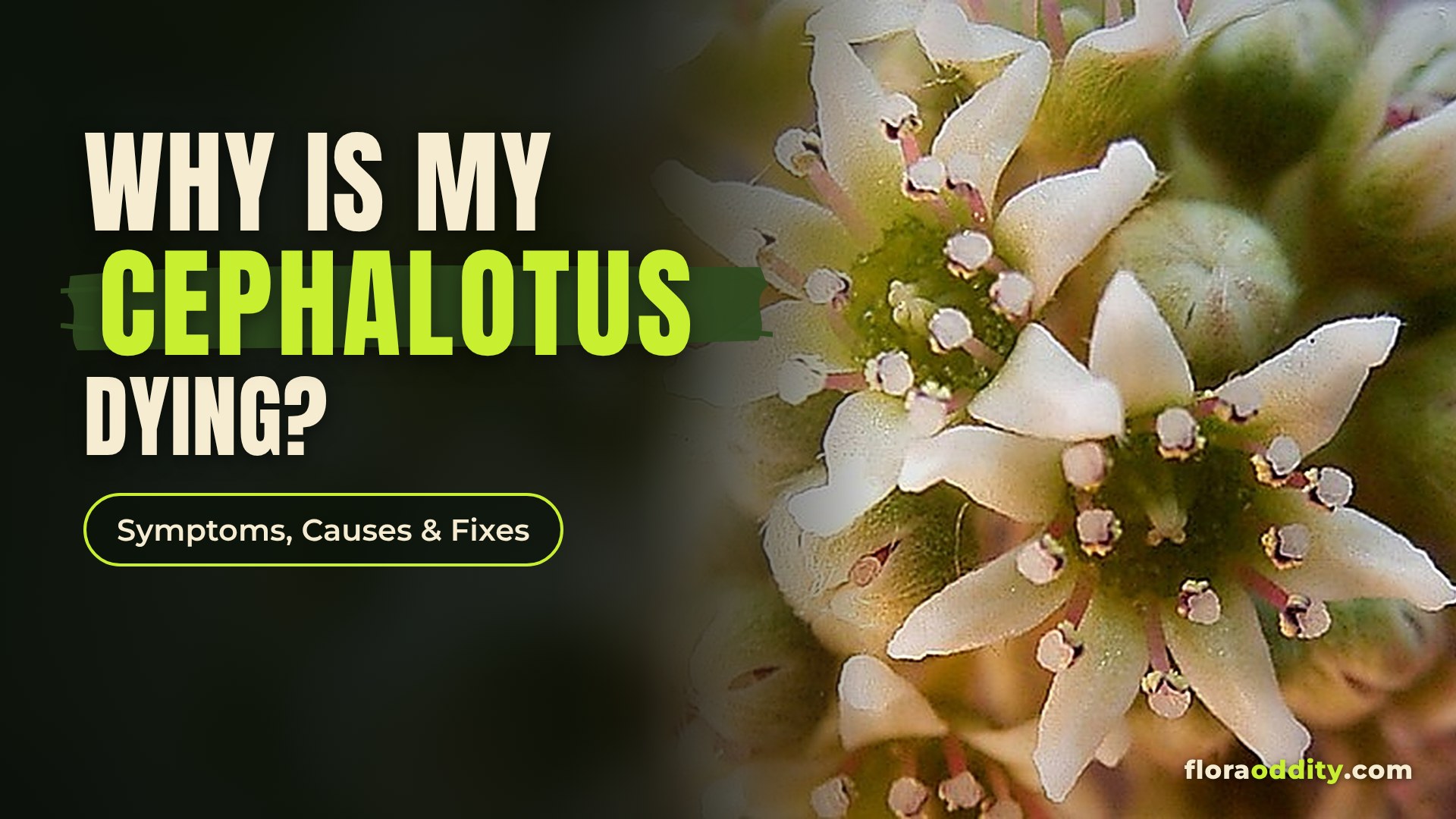
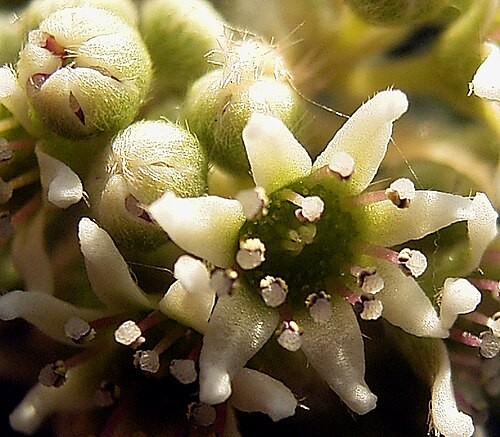
Featured image based on a photo of Cephalotus follicularis flowers by Denis Barthel via Wikimedia Commons, CC BY-SA 3.0, cropped and enlarged, with a dark gradient and typography added by FloraOddity; the adapted image is offered under the same licence.
Final articles are editorially reviewed and factual claims are checked against cited sources. Last reviewed: October 2026.

One Comment