
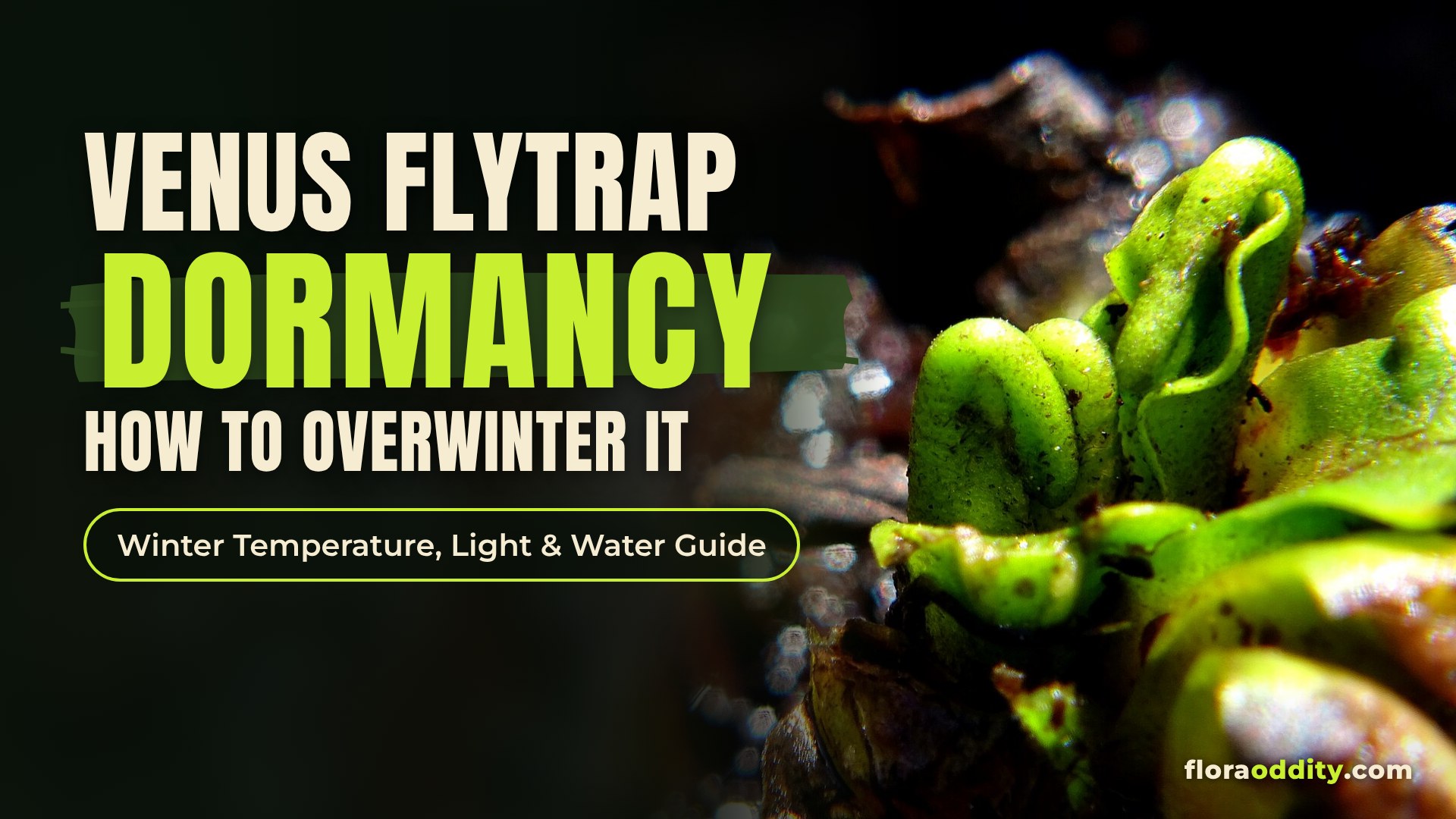
Every autumn, someone looks at their Venus flytrap, sees black traps and a plant shrunk to a few flat leaves, and assumes it is dying. N.C. Cooperative Extension’s answer is that it “probably hasn’t”. In most cases the plant is entering winter dormancy, the same rest it takes every year in the wild in coastal North Carolina.
This guide covers what triggers Venus flytrap dormancy, when it starts and ends, how cold, bright and wet a dormant plant should be, the main ways to overwinter it, and how to tell dormancy from real trouble. Expert sources disagree on several of these points, so we show you who says what.
The Short Answer
Venus flytraps (Dionaea muscipula) are temperate perennials, not tropical plants. Shorter days and cooler weather in autumn trigger a winter rest: traps blacken, new leaves stay small and low, and the plant lives off the energy stored in its underground rhizome. NC State Extension recommends at least 10 weeks of dormancy at 35 to 50 °F (2 to 10 °C). Keep the soil moist, keep the plant cool and stop feeding; growth resumes around March. The big exception: the International Carnivorous Plant Society (ICPS) says flytraps grown indoors under strong grow lights all year do not need dormancy at all.
Why Venus Flytraps Go Dormant
NC State Extension says wild flytraps occur only within about 70 miles (113 km) of Wilmington, North Carolina, in wet, sandy, nutrient-poor soils, and stresses that this “isn’t a tropical plant from some steamy jungle.” Carnivorous Plant Nursery puts the mean winter temperature there at 47 °F (8 °C), with extremes from 0 to 104 °F (-18 to 40 °C), and Sarracenia Northwest notes that winter can bring “freezing temperatures and occasional snow.”
The plant gets through winter by letting its leaves die back while it survives underground in its rhizome, a bulb-like structure that, in NC State Extension’s words, “stores energy until spring.” That rest matters because catching prey is costly: the extension article cites research showing that photosynthesis in a trap drops while respiration rises after it closes on prey. Over winter the rhizome rebuilds its starch reserves, the same reserves that let wild plants resprout quickly after fire.
Day Length First, Then Cold
NC State Extension names photoperiod (day length) as the primary trigger, with cool temperatures of roughly 35 to 50 °F (2 to 10 °C) reinforcing it. California Carnivores describes “a combination of exposure to shorter photo-periods and cooler temperatures” in the 40s to 60s °F (about 4 to 21 °C). Tom’s Carnivores, a UK specialist grower, adds that shorter days and slightly lower temperatures can start dormancy even in a flytrap kept indoors as a houseplant.
When Dormancy Starts and Ends
In the wild, NC State Extension says dormancy typically runs from November through early spring and lasts three to five months. The New York Botanical Garden (NYBG) expects leaves to start dying back around November and growth to resume around March, and Tom’s Carnivores gives late October to March. Sarracenia Northwest’s October notes describe the first sign: flytraps “begin replacing upright summer traps with shorter traps that sit closer to the soil.” In the Southern Hemisphere the calendar flips; South African nursery Cultivo Carnivores gives the dormant season there as roughly April to September.
Is My Venus Flytrap Dormant or Dying?
A dormant flytrap can look alarming. Carnivorous Plant Nursery warns that the plant “may appear to be dying, and lose all of its traps, however, it is likely only beginning to go dormant and dying back to the corm.”
Normal Signs of Dormancy
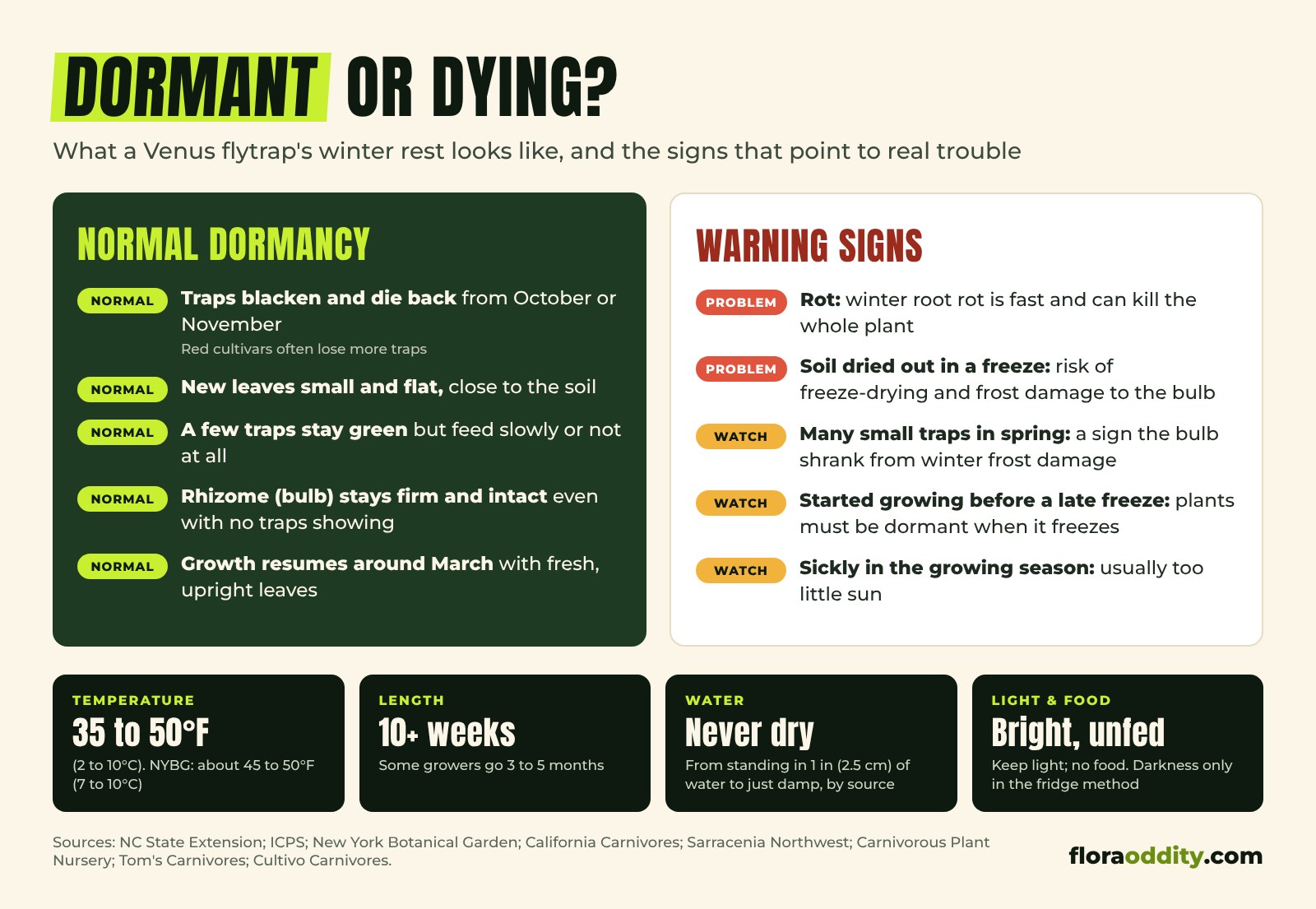
- Traps blacken and die back. Sarracenia Northwest says some varieties lose most of their visible leaves in winter, and Tom’s Carnivores notes that all-red cultivars tend to lose more traps than green ones.
- New leaves are small and low. California Carnivores describes fall traps “growing lower to the ground and smaller,” with “many or all of the traps gone” by winter.
- A few traps stay green. Carnivorous Plant Nursery says these will be “slow or ineffective feeders.”
- The rhizome stays intact. California Carnivores says it “remains healthy and intact throughout winter dormancy even if you cannot see any traps growing,” and Cultivo describes dormant plants as winter bulbs “with a firm body (rhizome).”
Black leaves are not only a winter thing: the ICPS points out that individual leaves last only a few months, so healthy plants shed old leaves all year.
Warning Signs
- Rot. Sarracenia Northwest’s Jacob Farin says winter root rot is “very quick and without mercy. It will kill the entire plant.”
- Small traps the next spring. Farin links a shrinking bulb and lots of small spring traps to frost damage caused by soil kept too dry in winter.
- A sickly plant in the growing season. The NYBG says this usually means too little sunlight, with salt build-up, soggy mix and roots drying out as other common causes.
How Cold Should a Dormant Flytrap Be?
The sources give overlapping ranges rather than one number:
| Source | Temperature guidance |
|---|---|
| NC State Extension | 35 to 50 °F (2 to 10 °C) for at least 10 weeks; protect outdoor plants from hard freezes below about 20 °F (-7 °C) |
| New York Botanical Garden | Gradually reduce to about 45 to 50 °F (7 to 10 °C); its Ask a Plant Expert answer suggests a cold window around 50 °F (10 °C) |
| California Carnivores | Thrives from 20 to 90 °F (-7 to 32 °C); fine outside if nights drop below 20 °F but days rise above 40 °F (4 °C) |
| Carnivorous Plant Nursery | Fridge method: 45 days at 45 °F (7 °C) |
| ICPS | Fully dormant plants survive being frozen solid for a week if protected from drying out |
The NC State Extension Plant Toolbox rates the species hardy in USDA zones 7 to 10, and growable in zones 5 and 6 with winter protection. The ICPS is more cautious, calling outdoor growing in zones 7 and 8 “problematic” without a greenhouse because of occasional very cold winters and early and late freezes. ICPS guide author John Brittnacher stresses that outdoor plants “MUST be dormant when it freezes”: he lost plants that had survived being frozen solid twice in one winter, because they had already started growing when a late spring freeze hit.
Light During Dormancy
Most sources keep dormant flytraps bright. The NYBG says “although the plant is dormant, it still needs light,” Sarracenia Northwest advises as much direct sunlight as possible, California Carnivores uses a sunny windowsill, and the ICPS suggests a south-facing garage window, ideally with supplemental light. The exception is Carnivorous Plant Nursery’s general advice for temperate carnivorous plants, which says they “do not require light during dormancy and darkness will not harm them,” which fits the refrigerator method.
If you use grow lights, the ICPS warns against moving outdoor plants under indoor lights for winter unless the timer follows your local day length, because it throws them out of sync with the seasons. NC State Extension puts it simply: “don’t switch back and forth.” For more on lights in general, see our grow light guide for carnivorous plants.
Watering During Dormancy
Everyone agrees a dormant flytrap must never dry out completely. How wet it should stay is where opinions split:
- Standing in water. Sarracenia Northwest keeps about 1 inch (2.5 cm) of water in the tray all winter and says that as long as the water stays below the halfway mark of the pot, root rot is not a worry. Wet soil insulates the bulb, Farin explains, while dry soil risks freeze-drying during long freezes. The ICPS agrees for outdoor plants: “the biggest danger is freeze-drying.”
- A little drier. California Carnivores lets outdoor plants “dry out a bit between rain storms” but not so far that the soil pulls away from the pot. Carnivorous Plant Nursery lets the tray go dry between waterings, and the NYBG and Tom’s Carnivores keep the mix just barely moist or “just damp rather than wet.”
Use the same pure water as in summer; California Carnivores recommends distilled, reverse osmosis or rain water, and our guide to water types for carnivorous plants explains why minerals matter. Stop feeding: the NYBG says to, and Tom’s Carnivores says flytraps do not require feeding in winter.
How to Overwinter a Venus Flytrap
Outdoors
California Carnivores says flytraps should live outdoors all year where winters are mild. NC State Extension’s advice: let nature take its course, keep the soil moist but not waterlogged, protect from hard freezes below about 20 °F (-7 °C), and don’t bring the plant inside to “save” it.
In colder areas, Sarracenia Northwest says the main danger for potted plants is dehydration from cold, drying winds and repeated freezing and thawing, not frost itself. California Carnivores’ mulch method packs at least 4 inches (10 cm) of mulch over and around the plants, or sinks the pots into the ground first. The ICPS suggests an in-ground bog covered with pine needles or row cover in zones 7 and 8, and in zone 6 and colder a heated greenhouse, a south-facing garage window, or a foot (30 cm) of straw or pine needles.
Unheated Room, Garage or Windowsill
California Carnivores’ garage method moves the plant to a sunny windowsill in an unheated room or garage where nights dip to 50 to 60 °F (10 to 16 °C), keeps it well watered, and returns it outside once nights stay above 20 °F (-7 °C). Tom’s Carnivores suggests an unheated greenhouse or a window in a garage or shed. The NYBG’s indoor version is to let the light dwindle naturally and gradually lower the temperature to about 45 to 50 °F (7 to 10 °C).
The Refrigerator Method
California Carnivores’ steps:
- Unpot the plant and gently clean the soil off the roots.
- Wrap the roots in a little damp long-fibered sphagnum moss.
- Seal it in a resealable bag and refrigerate it from October to February.
- Check regularly that it is still moist and not growing mold or fungus.
- Pot it up in February, or time it to your outdoor night temperatures.
Carnivorous Plant Nursery also removes the leaves and stores the bare-root corm in a vented bag with slightly damp peat and “a bit of sulfur powder or other fungicide,” aiming for 45 days at 45 °F (7 °C). Mold is the risk both nurseries guard against. The ICPS is unimpressed: “Putting an indoor plant in the refrigerator to encourage dormancy is a waste.”
How Long Should Dormancy Last?
To check whether your climate gives a natural winter rest, try our dormancy checker.
NC State Extension recommends at least 10 weeks, and says some growers keep plants dormant for three to five months without issue. Carnivorous Plant Nursery’s fridge target is 45 days, while its general advice for temperate carnivorous plants is 3 to 6 months depending on their native area. A photo caption in the ICPS guide shows outdoor flytraps that look dormant for “at least 3 month of the year.”
What Happens If You Skip Dormancy?
The NYBG says it plainly: “There are differences of opinion regarding whether winter dormancy is necessary among Venus flytrap experts.”
California Carnivores tells indoor growers to “be sure to provide them with a winter dormancy” and warns you can skip it once or twice, but in the long term the plant “will begin to do poorly and will eventually die.” NC State Extension cites professional growers who say repeated skipping makes plants less vigorous, more prone to disease and liable to flower at the wrong time.
The ICPS takes the other side for plants under lights: flytraps need neither a terrarium “nor do they require dormancy to survive long term indoors.” Its guide shows plants grown under a constant light period for over 10 years, and Brittnacher wrote in Carnivorous Plant Newsletter (2019) that his house plants get 15 hours of LED light daily and “do not slow down during the winter.”
The catch is light and food. The ICPS recommends 15,000 to 25,000 lux of white LED light for about 14 hours a day plus regular feeding, which NC State Extension says “isn’t practical” for most home growers. The same article adds that trying to force a windowsill plant to keep growing through winter “usually results in weak, stressed specimens.”
Tropical and Frost-Free Climates
None of the sources we checked gives detailed tropical instructions. The ICPS recommends growing mature plants outdoors in USDA zone 9 and warmer, in full sun where summers are humid or cool, or with morning sun and afternoon shade where they are hot and dry. Where winters never get cold, the documented options are the ICPS route (strong lights and regular feeding all year) or the refrigerator method, which California Carnivores says can be timed to local conditions.
Waking Your Flytrap Up in Spring
The NYBG says a dormant plant “will be ready to resume growth around March,” after which you can ease it back into its normal routine. Don’t rush cold-climate plants outside: Brittnacher’s losses came from plants that had started growing before a late freeze.
The NYBG says you can cut off leaves once they are completely black, and Tom’s Carnivores snips dead leaves throughout winter “to help prevent mould or disease.” The ICPS adds that about 0.4 inch (1 cm) of pure sand on the soil surface makes older leaves less likely to rot completely.
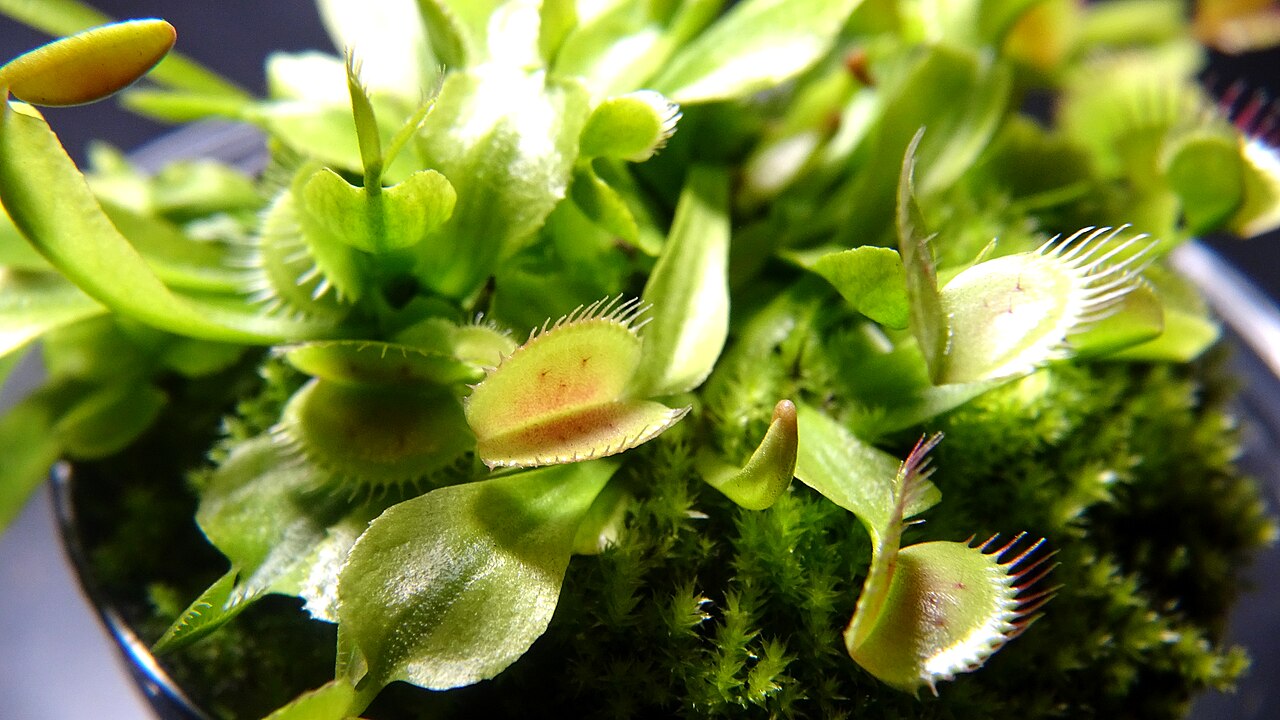
Spring is also repotting time for many growers. The ICPS says some repot every spring just as growth starts, and Carnivorous Plant Nursery prefers dividing in spring before active growth. California Carnivores instead repots in January or winter and advises against spring and summer. As flower stalks emerge, the ICPS notes that plants often put up tall leaves on long, narrow petioles; both the ICPS and the NYBG suggest cutting flower stalks early to save the plant’s energy.
Where Sources Differ
| Question | One view | Another view |
|---|---|---|
| Is dormancy essential? | Yes, every year, even indoors: California Carnivores (“if you grow them indoors be sure to provide them with a winter dormancy”); also Sarracenia Northwest, NC State Extension (for most home growers) | Not for plants under strong indoor lights: ICPS; optional but “may benefit the plant”: NYBG |
| Winter watering | Stand in about 1 in (2.5 cm) of water: Sarracenia Northwest | Slightly drier or just damp: California Carnivores, Carnivorous Plant Nursery, NYBG, Tom’s Carnivores |
| Light | Keep it bright: NYBG, Sarracenia Northwest, California Carnivores, ICPS | Darkness will not harm dormant plants: Carnivorous Plant Nursery |
| Refrigerator method | Valid, with mold checks or fungicide: California Carnivores, Carnivorous Plant Nursery | “A waste” for indoor plants: ICPS |
| Length | At least 10 weeks: NC State Extension | 45 days at 45 °F (7 °C) in the fridge: Carnivorous Plant Nursery |
| When to repot | Spring: ICPS growers, Carnivorous Plant Nursery | January or winter: California Carnivores |
Most of these splits reflect different setups. Sarracenia Northwest grows outdoors through wet Pacific Northwest winters, the ICPS guide’s author grows indoors under LEDs, and the NYBG writes for houseplant owners in USDA zone 7 and colder.
FAQ: Venus Flytrap Dormancy
Do Venus flytraps need dormancy indoors?
On a windowsill, the plant will likely go dormant as days shorten, and NC State Extension advises letting it. Under strong grow lights all year with regular feeding, the ICPS says dormancy is not needed.
What temperature is best for Venus flytrap dormancy?
NC State Extension recommends 35 to 50 °F (2 to 10 °C) and the NYBG about 45 to 50 °F (7 to 10 °C). California Carnivores says outdoor plants are fine on nights below 20 °F (-7 °C) if days rise above 40 °F (4 °C).
Should I cut the black leaves off?
Yes, once they are completely black, says the NYBG. Tom’s Carnivores trims dead leaves through winter to help prevent mold.
The Bottom Line
Venus flytrap dormancy is a normal winter rest for a plant from the cool winters of coastal Carolina. When the traps blacken in autumn, keep the plant cool (most sources point to roughly 35 to 50 °F, or 2 to 10 °C), keep the soil moist, give it light unless you use the fridge, stop feeding, and wait at least 10 weeks. Trim dead leaves, watch for rot and late freezes, and expect new growth around March. You can skip dormancy, the ICPS shows, but only with strong grow lights, regular feeding and no switching between the two approaches.
Sources & Further Reading
- N.C. Cooperative Extension, New Hanover County Center: Venus Flytrap Dormancy (Gabriella de Souza, 2026)
- NC State Extension Gardener Plant Toolbox: Dionaea muscipula
- International Carnivorous Plant Society: Growing Dionaea muscipula (John Brittnacher)
- International Carnivorous Plant Society: Check List for Growing Dionaea muscipula
- Brittnacher, J. (2019). Grow Venus flytraps indoors. Carnivorous Plant Newsletter 48(4): 178 to 182
- New York Botanical Garden: Venus Flytrap Houseplants, Carnivorous Plant Care
- New York Botanical Garden, Ask a Plant Expert: Advice on growing and caring for a Venus flytrap
- California Carnivores: Venus Flytrap (Dionaea muscipula) Growing Tips
- California Carnivores: Venus Flytrap Care
- Sarracenia Northwest: Venus Flytrap Care
- Sarracenia Northwest: Should Venus Flytrap Trays Be Dry in Winter? (Q/A #149)
- Sarracenia Northwest: Monthly Carnivorous Plant Care (October)
- Carnivorous Plant Nursery: Growing Tips for Venus Flytraps
- Carnivorous Plant Nursery: Carnivorous Plants Growing and Care
- Tom’s Carnivores: What is winter dormancy in carnivorous plants? (Tom Bennet, 2022)
- Cultivo Carnivores: What does Venus flytrap dormancy look like, and is my plant dying?
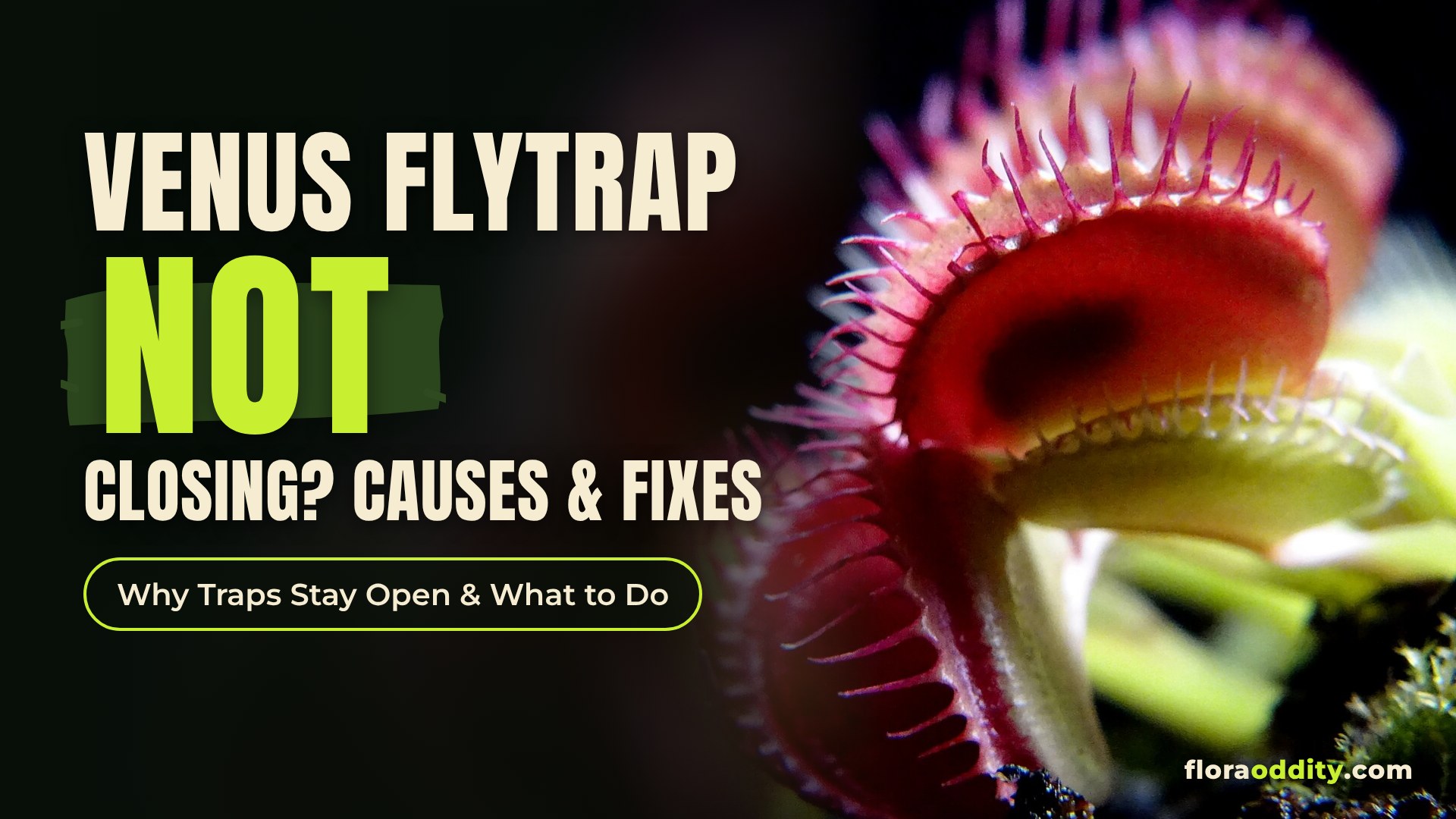
Featured image based on a photo of a Venus flytrap emerging from dormancy by Tippitiwichet via Wikimedia Commons, CC BY 2.0, with a dark gradient and typography added by FloraOddity.
Final articles are editorially reviewed and factual claims are checked against cited sources. Last reviewed: October 2026.
5 Comments