
The swollen tuber is the whole point of an ant plant, so it is natural to worry about it. It is full of holes, it grows roots in odd places, it can feel strangely light, and it sometimes wrinkles. Most of that is exactly how Hydnophytum and Myrmecodia are built. A few changes, though, are real warning signs, and ant plant caudex rot is the one that can kill a plant quickly.
This guide covers what a healthy caudex looks like, then each common problem: soft spots, wrinkling, cracks, discoloration, roots on the tuber and leaf drop. Good information is thin. Botanical revisions describe wild tubers, care guides mention rot in a sentence or two, and we found no study of sick ant plants in cultivation. So we name the source for every claim and say where the sources are silent.
The Short Answer
Holes, tunnels, hollow chambers, spines, wart-like bumps and roots growing from the tuber are all normal. A caudex that wrinkles while the mix is dry is usually short of water or humidity. One that goes soft, mushy or dark, especially while the mix stays wet, is the real danger: PLNTS warns that water on the caudex can make it rot, and Paraíso Plant Studio describes the plant as susceptible to rot. Unpot it, look at the roots and the soft area, cut out rotten tissue as the University of Maryland Extension advises for houseplants, and replant in a well-drained mix. Keep most of the caudex above the mix and water the mix, not the tuber.
What a Healthy Caudex Looks Like
Before you diagnose anything, it helps to know how strange a normal tuber is.
Holes and chambers are built in
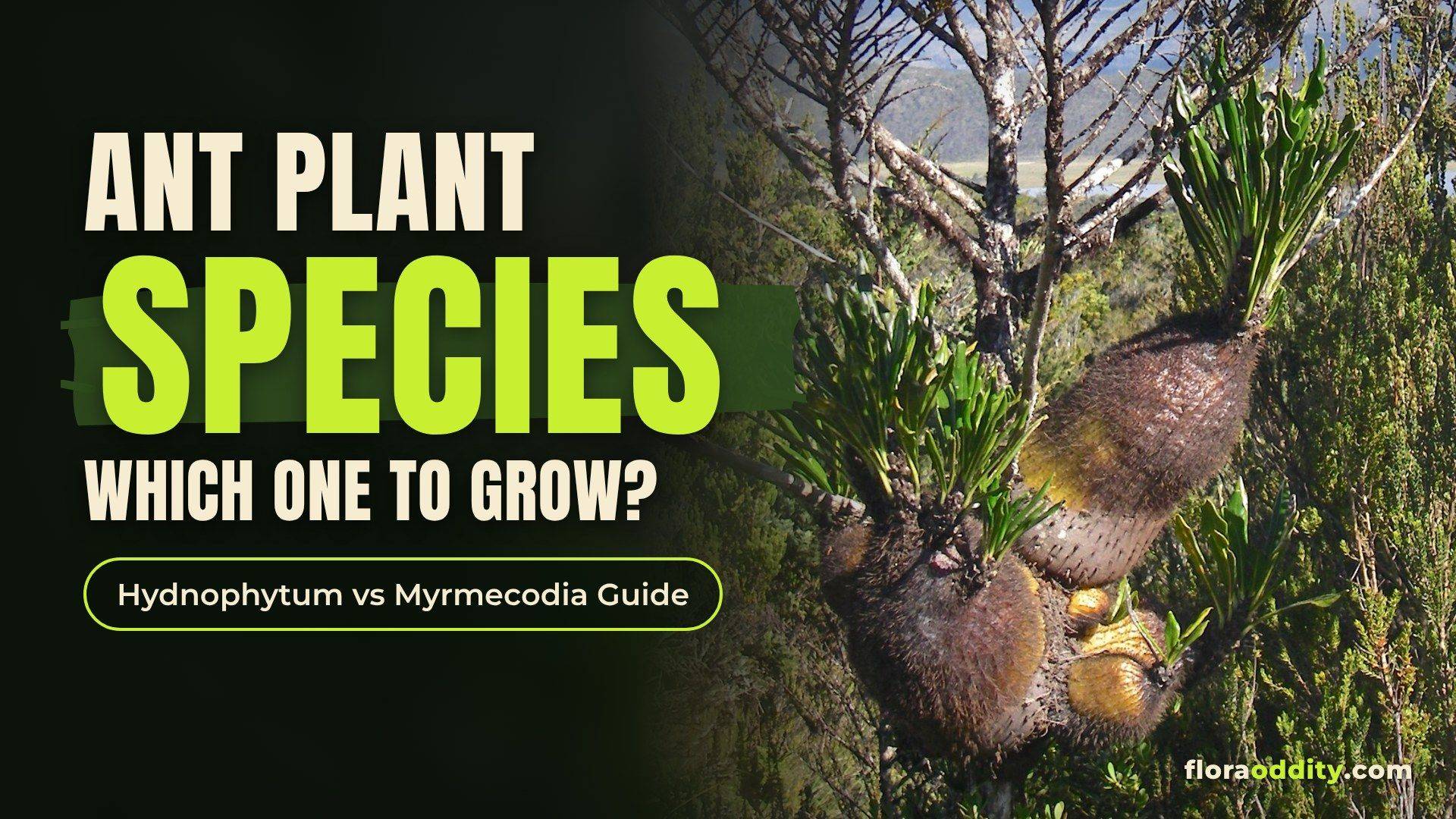
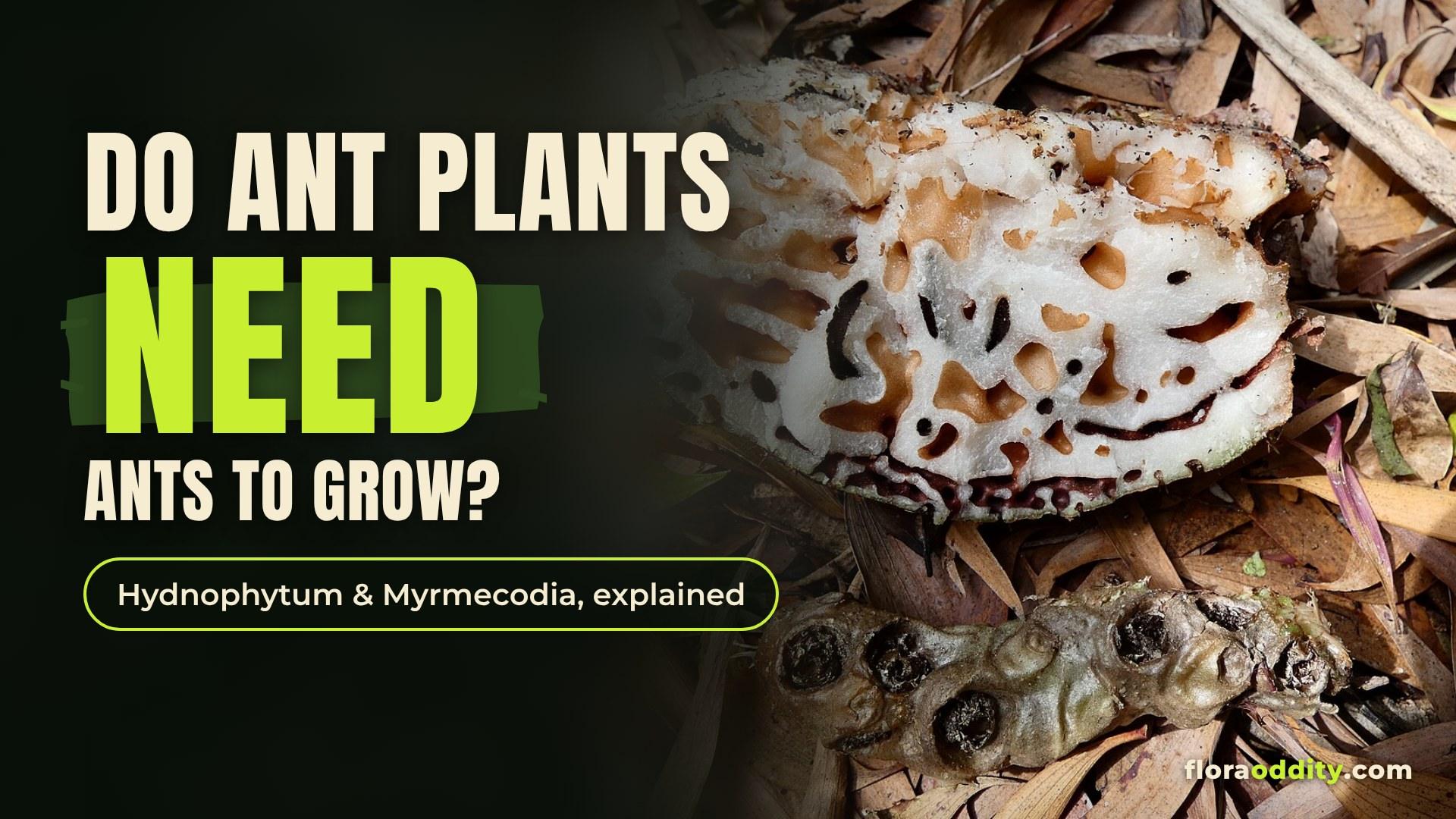
According to Lok and Tan’s review of Singapore’s ant plants, the tuber starts as a swollen seedling stem, and tissue inside it dies to form the first cavity. More cavities are added as the plant grows, which gives Hydnophytum formicarum its lobed shape. The Australian National Botanic Gardens (ANBG) describes the same thing for Myrmecodia beccarii: “tissue within the tuber dies back and hollow chambers form.”
Ants are not needed for any of this. Huxley and Jebb, in their revision of Myrmecodia, note that the plants “can be cultivated readily without the ants, and form apparently normal, chambered tubers.” The specialist nursery Jungle Leaves adds that the chambers and entrances “are formed solely by the plant, regardless of whether ants are present or not.”
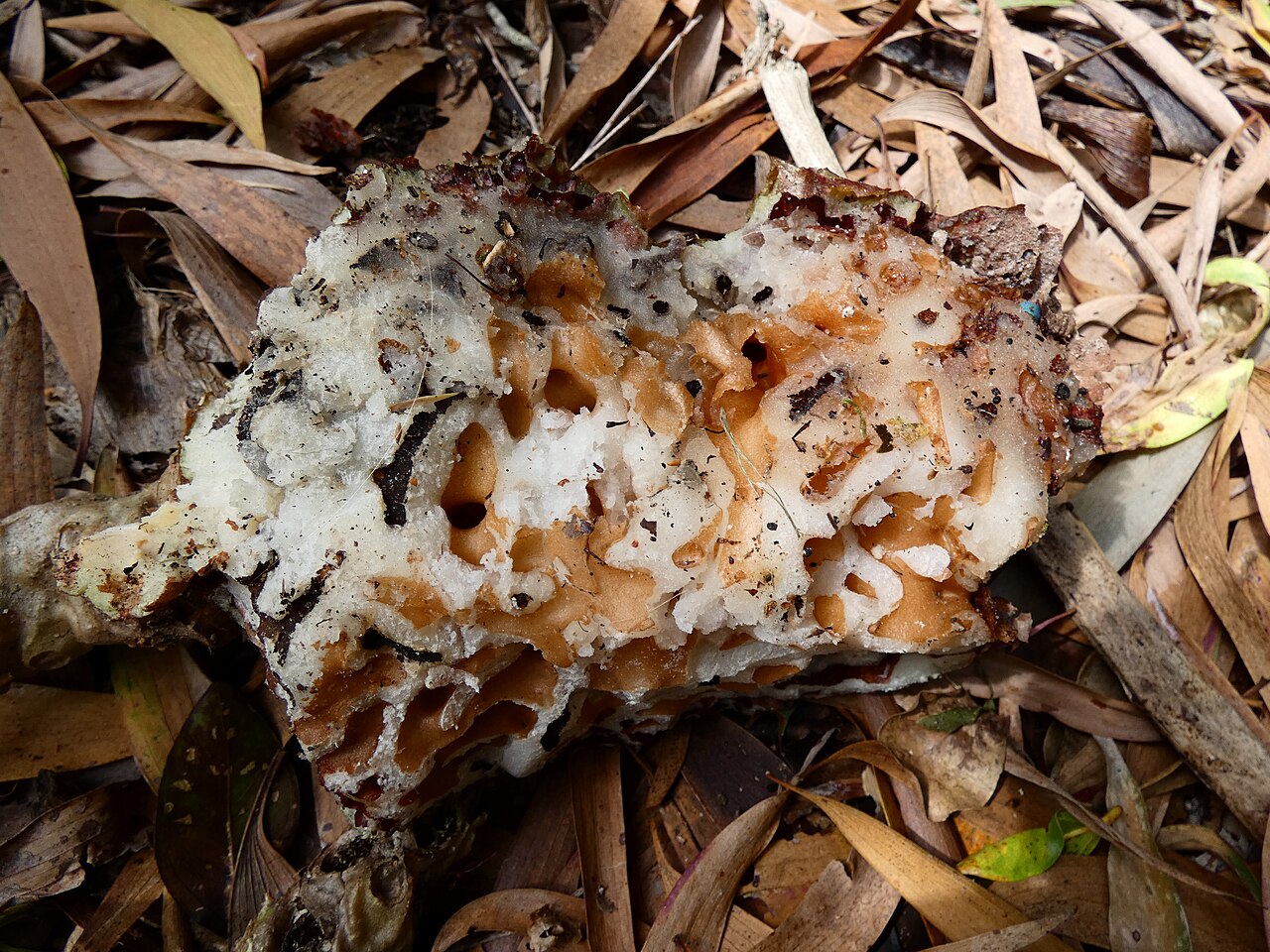
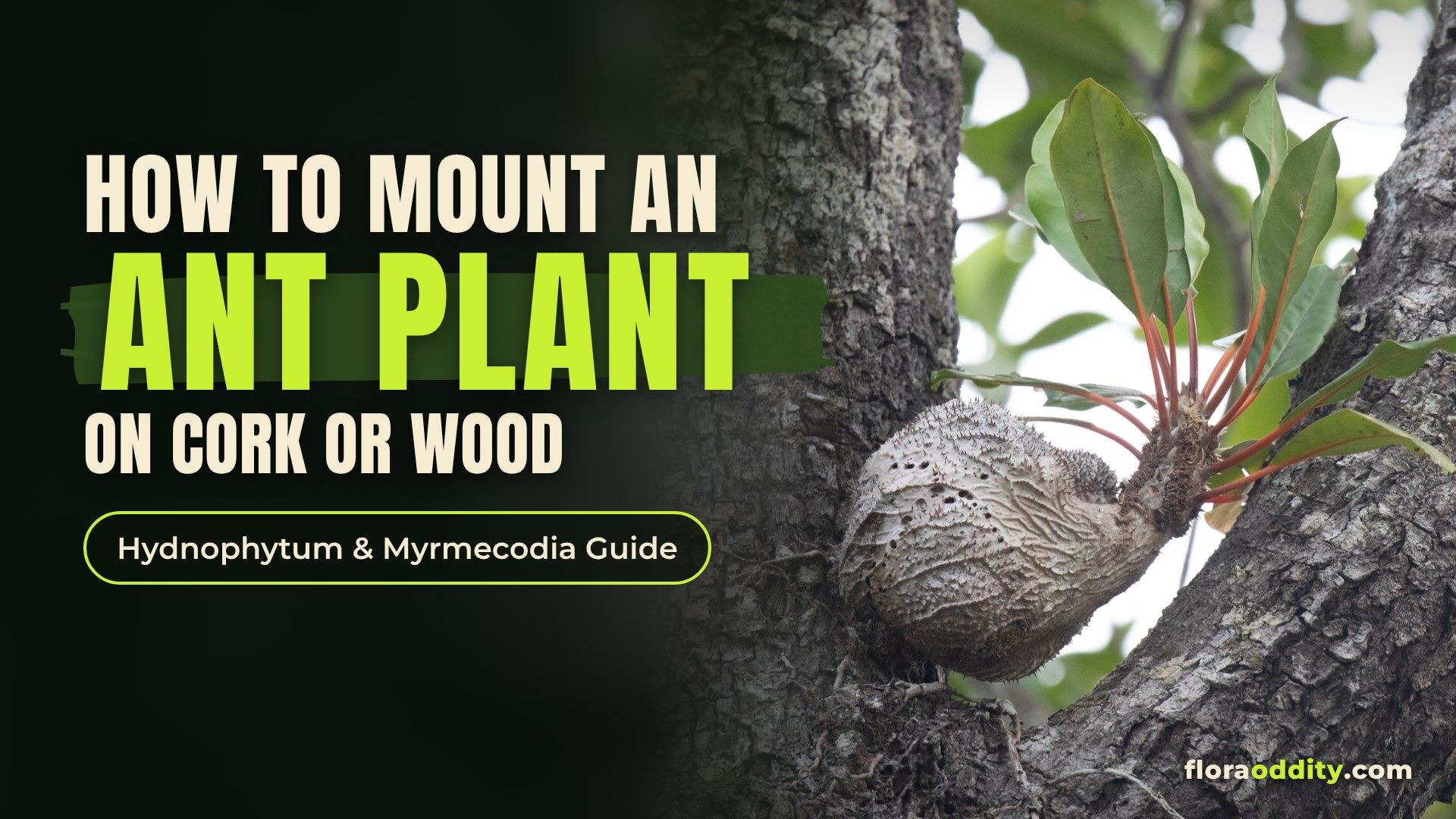
The same revision records small pores, usually about 1/50 to 1/16 inch (0.5 to 1.5 mm) across, above the surface chambers in Myrmecodia, and larger entrance holes of about 1/6 to 1/3 inch (4 to 8 mm) in species such as M. tuberosa. A tuber covered in holes is a tuber doing its job.
Spines, warts and a light feel
Huxley and Jebb describe Myrmecodia tubers as “almost always spiney”, with spines that are root-derived. They add that the surface of M. tuberosa may have protrusions that look like lenticels but are built like the warts on the walls of the inner chambers. Hydnophytum formicarum is different: LLIFLE describes its tuber as “not spiny and truffle-like”.
A big tuber can also feel lighter than it looks. Jungle Leaves notes that very old Myrmecodia tuberosa can weigh over 22 pounds (10 kg), “although they naturally have many air-filled chambers inside.” No source we found gives a weight test for health, so firmness is a better guide than weight.
Inside the tuber
In their revision of Hydnophytum, Jebb and Huxley describe the tuber tissue as similar to a potato in consistency, with a grey, silvery or brown surface and flesh that is “green towards the periphery and white within.” Montane species have drier, more leathery tissue that can be brown or reddish when cut, and one group of species has red to purple-red tissue when freshly cut. So if you ever cut into a tuber, red or brown flesh is not automatically rot. Texture matters more than color.
Roots on the tuber are normal
Roots sprouting from the caudex worry many growers, but they are expected. Jebb and Huxley write that “in high-humidity conditions, or when sunken under moss-cushions, many species will develop roots on their tubers.” LLIFLE agrees that the plants “seem capable of producing new roots from any part of the tuber that is in contact with a moist substrate.” It also warns that the roots are “very brittle,” so leave them in place and move the plant gently.
Quick Diagnosis: Ant Plant Caudex Problems
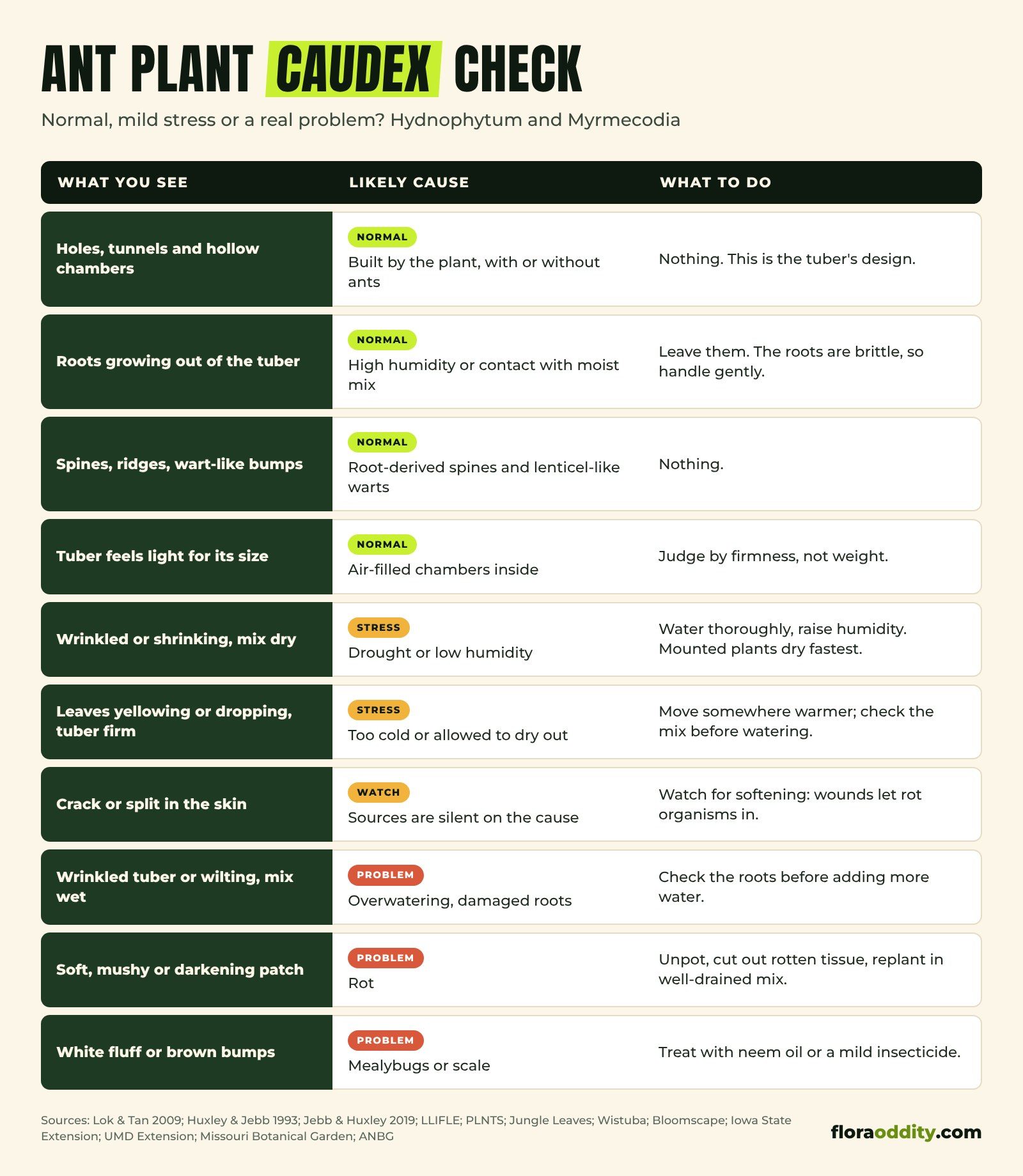
| What you see | Status | Likely cause | What to do | Source |
|---|---|---|---|---|
| Holes, tunnels, hollow chambers | Normal | Built by the plant, with or without ants | Nothing | Lok & Tan; Huxley & Jebb; Jungle Leaves |
| Roots growing from the tuber | Normal | High humidity or contact with moist mix | Leave them; handle gently | Jebb & Huxley; LLIFLE |
| Spines, ridges, wart-like bumps | Normal | Root-derived spines, lenticel-like warts | Nothing | Huxley & Jebb |
| Tuber feels light for its size | Normal | Air-filled chambers | Judge by firmness, not weight | Jungle Leaves; Iowa State Extension |
| Wrinkled or shrinking, mix dry | Stress | Drought or low humidity | Water thoroughly; raise humidity | Wistuba; Bloomscape; LLIFLE |
| Leaves yellowing or dropping, tuber firm | Stress | Too cold or allowed to dry out | Warmer spot; check the mix | LLIFLE; TerraForums (single case) |
| Crack or split | Watch | Sources silent on the cause | Watch for softening around the wound | Missouri Botanical Garden |
| Wrinkled tuber or wilting, mix wet | Problem | Overwatering, damaged roots | Check roots before adding water | Bloomscape; Iowa State Extension |
| Soft, mushy or darkening patch | Problem | Rot | Unpot, cut out rotten tissue, replant in well-drained mix | PLNTS; Missouri Botanical Garden; UMD Extension |
| White fluff or brown bumps | Problem | Mealybugs or scale | Neem oil or a mild insecticide | LLIFLE; PLNTS |
Problem by Problem
Soft, mushy or rotting spots
PLNTS tells growers to “always water directly into the soil, avoiding the caudex to prevent it from rotting,” and Paraíso Plant Studio lists the plant as “susceptible to rot.” In the wild, Jebb and Huxley note that one Hydnophytum species is found with its tuber buried in leaf litter at the base of trees, and remark that “most species rot rapidly in such situations.”
No ant plant source we found describes what caudex rot looks like or how to treat it, so the details come from general plant disease guidance. The Missouri Botanical Garden explains that rots can be caused by fungi, bacteria or nematodes, that affected tissue “may turn brown to black,” and that “often a foul smell accompanies a bacterial soft rot infection.” It also warns that symptoms often show up late, once the infection is extensive.
For treatment, the University of Maryland Extension advises taking diseased houseplants out of their pots, cutting out the rotten portions and replanting the healthy sections in a well-drained, soilless mix. It adds that severely damaged plants should be discarded. UMD also suggests rooting cuttings, but that is a poor backup for ant plants: LLIFLE notes that stem cuttings “will root and grow but do not produce a tuber.”
What to do:
- Take the plant out of the pot and check the roots. Iowa State Extension describes healthy roots as “firm, white” and rotted roots as “mushy” with “a brown or reddish color.”
- Press the soft area gently. Jebb and Huxley compare healthy tuber tissue to a potato in consistency, so tissue that gives way under a finger is suspect.
- Cut out the rotten tissue, as UMD advises for houseplants.
- Replant in a fast-draining epiphyte mix with most of the caudex above the surface. PLNTS says the caudex “should primarily remain above the soil surface.”
- Water the mix, not the tuber, and, as PLNTS suggests, only when the top layer feels dry.
No source we read reports how often a rotting ant plant tuber recovers.
Wrinkled or shriveled caudex
A wrinkled tuber is the most common worry after rot, and the cause depends on the mix. Bloomscape says a wrinkled base “can be caused by a few issues such as underwatering, overwatering, or low humidity.” Note that Bloomscape’s ant plant is Myrmephytum selebicum, a close relative of Hydnophytum and Myrmecodia with the same kind of swollen base, not one of those two genera.
Some ant plants shrink on purpose. The specialist grower Wistuba describes one form of Hydnophytum radicans whose “caudex shrinks drastically during drought, so that the plant appears almost dead.” That is one form of one species, but shrinking is not always dying.
If the mix is dry, water thoroughly. Bloomscape suggests soaking a bone-dry pot in 2 to 4 inches (5 to 10 cm) of water for at least 30 minutes, then draining it. Mounted plants dry out fastest: LLIFLE notes they “require more frequent watering,” and the ANBG waters its slab-mounted Myrmecodia beccarii daily.
If the mix is wet and the tuber still wrinkles, do not add more water. Iowa State Extension explains in its guide to root rots of houseplants that root rot symptoms “can be commonly mistaken for lack of water,” so examine the roots and the moisture in the mix first.
Cracks and splits
Here the sources are silent. None of the botanical revisions or care guides we read mentions cracks or splits in an ant plant tuber, so we cannot tell you what causes them.
What the general guidance does say is that wounds matter. The Missouri Botanical Garden notes that “when wounds are produced, fungi and bacteria can invade the host tissue,” and that bacteria “can only enter the host tissue through wounds.” So a crack is worth watching. If the edges turn soft, dark or smelly, treat it as rot.
Discoloration and corky patches
Color alone is a weak clue. Jebb and Huxley describe Hydnophytum tuber surfaces as grey, silvery or brown, and cut tissue can be green, white, brown or even red depending on the species. A dark patch that is also soft is a different matter; see the rot section above.
Corky patches on the leaves are covered below, because the sources disagree.
Leaf drop linked to the caudex
LLIFLE says these plants “are quick to shed their leaves if they are allowed to dry out or become too cold.” PLNTS lists “yellow leaves or browning and wilting” as possible signs of overwatering, and Iowa State Extension says root rot often begins with wilting of the lower leaves.
A 2018 TerraForums thread is a useful single case. One grower’s seed-raised plants, kept at 65 to 70 °F (18 to 21 °C) and 30 to 40% humidity, were losing their largest leaves, but “the base is still firm so I don’t think it rotting.” Replies blamed temperature and humidity; one member suggested 68 to 86 °F (20 to 30 °C) all year. The botanical garden in Lausanne, Switzerland, calls Hydnophytum sensitive to cold, with a minimum of 50 °F (10 °C).
So: leaves dropping while the tuber stays firm points to cold or dry conditions. Leaves dropping while the tuber softens points to rot.
Pests on the tuber and stems
LLIFLE notes that ant plants “are susceptible to scale and mealybugs,” and PLNTS adds spider mites and suggests “neem oil or a mild insecticide.” Our Nepenthes pests guide shows how to recognize mealybugs and scale, which look the same on any host.
Where the Sources Differ
Wrinkling: a warning or a strategy? Bloomscape treats a wrinkled base as a care problem to fix. Wistuba describes a Hydnophytum radicans form that shrinks drastically in drought as an adaptation. Both can be true: Paraíso notes that the plant “stores water in caudex”, so a shrunken tuber on a dry plant may simply be drawing on that store, while a wrinkled tuber in a wet pot is a different story.
Misting near the caudex. Bloomscape’s wrinkled-base page suggests “misting regularly, adding a pebble tray, or placing a humidifier nearby.” Its own ant plant care guide says the opposite, advising growers to “avoid misting or using a humidifier to protect the caudex from excessive moisture.” PLNTS recommends a humidifier or pebble tray. If you raise humidity, keeping water droplets off the tuber itself fits PLNTS’s advice to keep water off the caudex.
Corky leaf patches. The ANBG writes that in cooler weather “watering must be reduced, otherwise brown and corky patches will appear on the leaves.” Jungle Leaves says the corky growths on Myrmecodia leaves are normal: “These are not pests!” The two sources describe different situations, young Myrmecodia tuberosa sold by a nursery and M. beccarii grown at the ANBG, so neither applies to every plant. If brown, corky patches appear as the weather cools, the ANBG’s advice is to water less.
How dry between waterings. The ANBG says Myrmecodia beccarii “should dry out between waterings, however not too much otherwise they will wilt,” and Araflora also advises letting the mix dry out. In the TerraForums thread, one grower lets the substrate dry because “these are plants that rot fairly quickly,” while another grows his plants wet: single cases, not rules.
Common Mistakes
- Treating holes and chambers as damage. They are built by the plant, with or without ants.
- Pulling off roots that grow from the tuber. They are normal in humid conditions, and the roots are brittle.
- Watering a wrinkled tuber in a wet pot. Check the roots and the mix first.
- Pouring water over the caudex. Water the mix around it.
- Burying the tuber deep in the mix. Keep most of it above the surface.
FAQ: Ant Plant Caudex Problems
Is it normal for my ant plant caudex to have holes?
Yes. Lok and Tan, Huxley and Jebb and the ANBG all describe chambers and entrance holes as part of normal tuber growth, with or without ants.
Why is my ant plant growing roots from the caudex?
Jebb and Huxley report that many species develop roots on their tubers in high humidity, and LLIFLE says new roots can form wherever the tuber touches a moist substrate. It is a normal response, not a symptom.
Can a rotting ant plant caudex be saved?
Possibly. UMD Extension’s advice for houseplants is to cut out rotten tissue and replant the healthy part, and to discard severely damaged plants. No source we found reports success rates for ant plants.
Why does my ant plant caudex feel so light?
Because much of it is air. Jungle Leaves notes that even very large Myrmecodia tubers have “many air-filled chambers inside.” Firmness tells you more than weight.
Should I worry about a crack in the caudex?
Watch it. No ant plant source explains cracks, but the Missouri Botanical Garden notes that wounds let fungi and bacteria in. Treat a crack that turns soft or dark as rot.
The Bottom Line
An ant plant caudex looks alarming even when it is perfectly healthy. Holes, chambers, spines, warts, a light feel and roots growing from the tuber are all part of its design. The two changes worth acting on are wrinkling, which you diagnose by checking the mix and the roots, and softening, which points to rot. Keep the tuber above the mix, water the mix rather than the caudex, and keep the plant warm. Firm is good; soft is not. For everything else about light, mix and watering, our ant plant care guide covers the routine, and if you want a backup plant with its own tuber, grow ant plants from seed rather than from cuttings.
Sources & Further Reading
- Lok, A. F. S. L. and Tan, H. T. W. (2009). Tuberous, epiphytic, rubiaceous myrmecophytes of Singapore. Nature in Singapore 2: 231 to 236
- Huxley, C. R. and Jebb, M. H. P. (1993). The tuberous epiphytes of the Rubiaceae 5: A revision of Myrmecodia. Blumea 37: 271 to 334
- Jebb, M. H. P. and Huxley, C. R. (2019). The tuberous epiphytes of the Rubiaceae 7: A revision of the genus Hydnophytum. Blumea 64: 23 to 91
- LLIFLE Encyclopedia: Hydnophytum formicarum
- Australian National Botanic Gardens: Myrmecodia beccarii, Growing Native Plants
- PLNTS: Hydnophytum care
- Paraíso Plant Studio: Ant plant (Hydnophytum) care
- Jungle Leaves: Myrmecodia tuberosa
- Araflora: Myrmecodia beccarii
- Wistuba: Hydnophytum radicans (Timika, Irian Jaya)
- Bloomscape: Why is my Ant Plant’s base wrinkly?
- Bloomscape: Ant Plant care guide
- Iowa State University Extension and Outreach: Root Rots of Houseplants (2014)
- University of Maryland Extension: Diagnose Indoor Plant Problems
- Missouri Botanical Garden: Root, stem, crown, and collar rot
- Musée et jardins botaniques cantonaux, Lausanne: Plante du mois, Hydnophytum (2023)
- TerraForums: ant plant help pleas (2018)
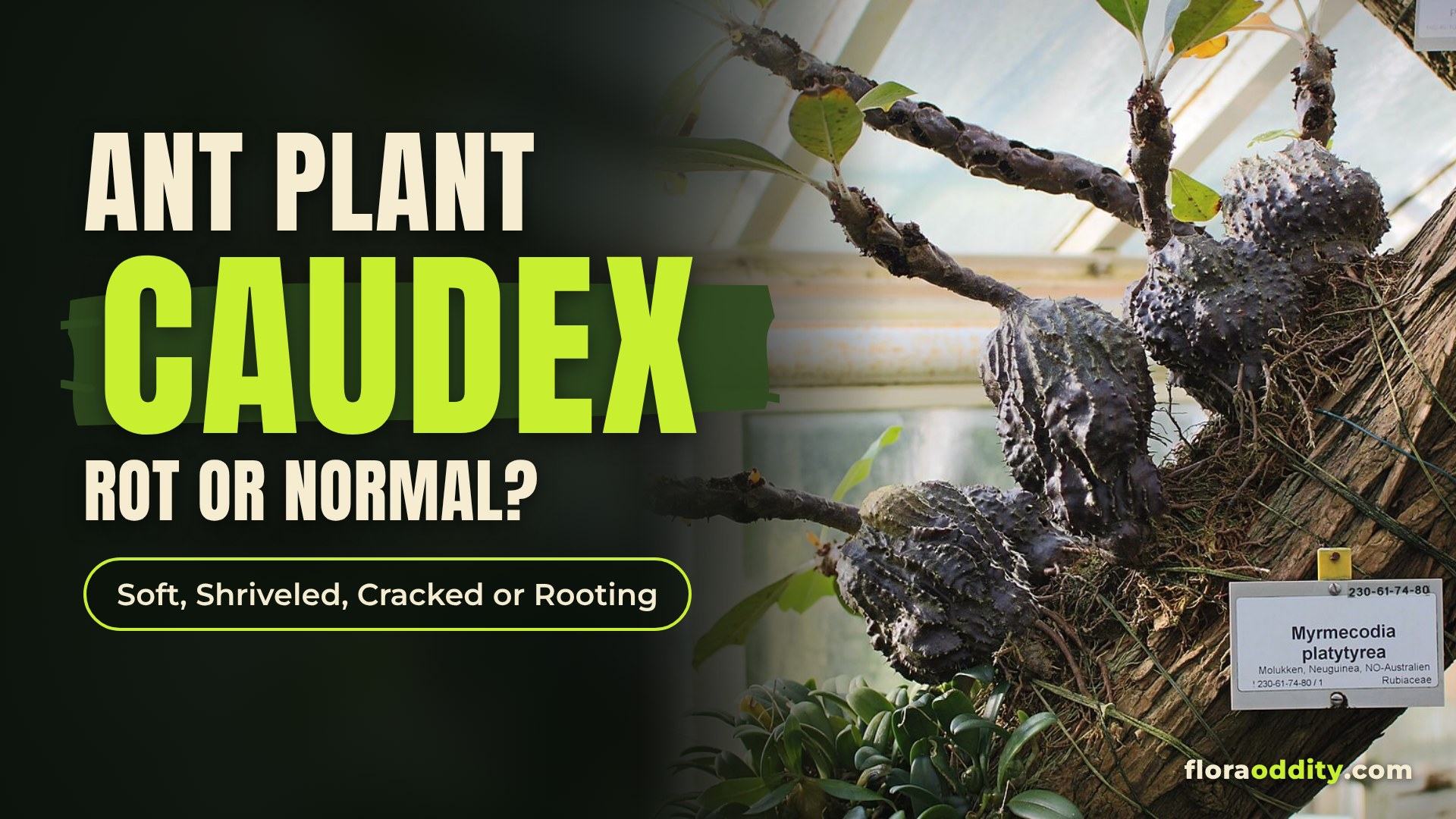
Featured image based on a photo of Myrmecodia platytyrea at the Berlin-Dahlem Botanical Garden by Poecilotheria36 via Wikimedia Commons, CC BY-SA 4.0, with cropping and typography added by FloraOddity; the featured image is shared under the same license.
Final articles are editorially reviewed and factual claims are checked against cited sources. Last reviewed: October 2026.
3 Comments