
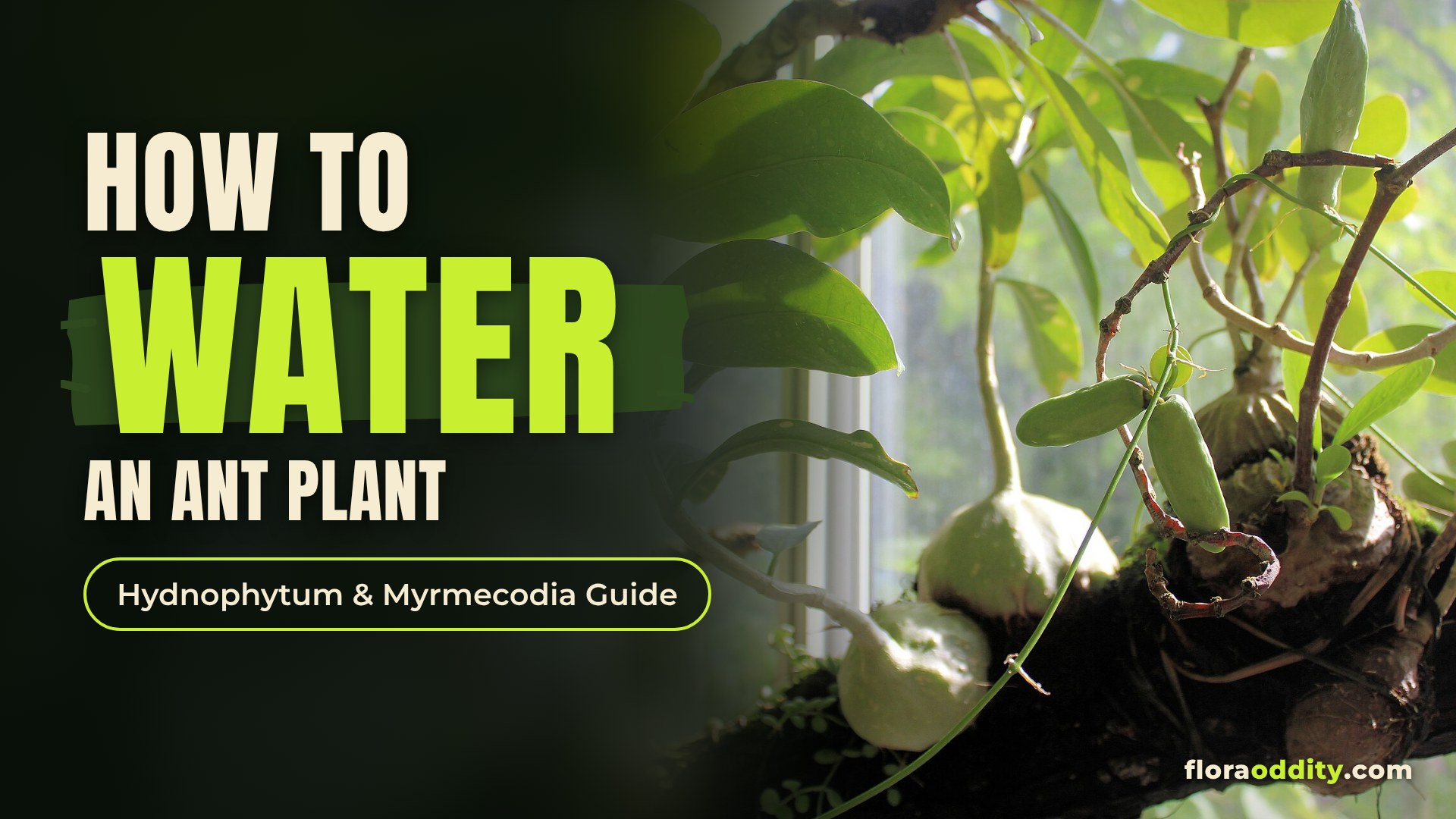
Ant plants look tough. The swollen tuber at the base of a Hydnophytum or Myrmecodia stores water, and in one Hydnophytum radicans form sold by the nursery Wistuba the tuber can shrink drastically in a drought until the plant looks almost dead. Yet the care sheets warn about watering mistakes in both directions: too much, and the caudex rots; too little, and the plant sheds its leaves.
This guide goes deeper than the watering section of our ant plant care guide: when to water, how to water around the tuber, how pots, mounts, terrariums and winter change the routine, and how to read the warning signs.
The Short Answer
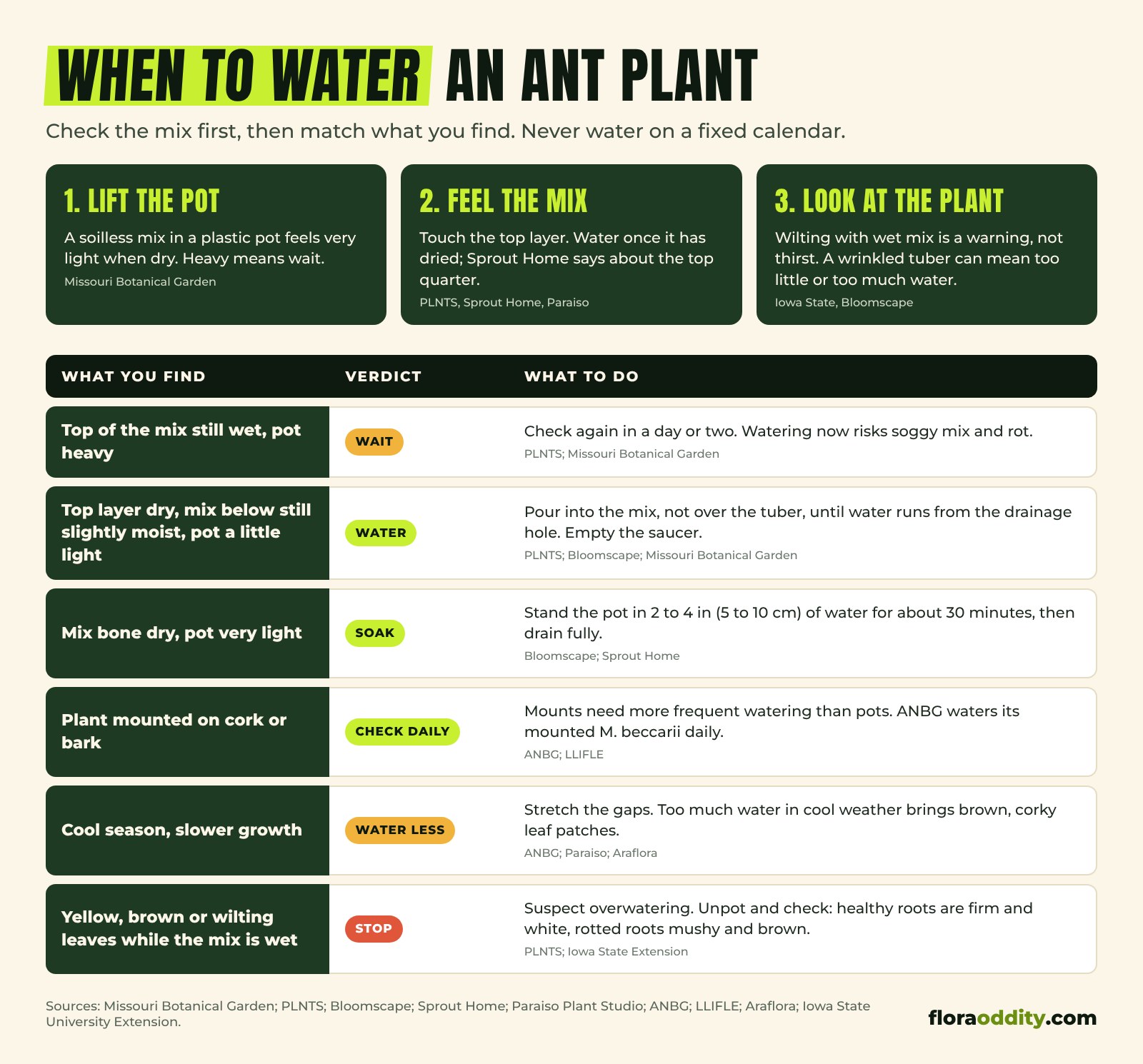
Water an ant plant when the top layer of the mix has dried but the mix below is still slightly moist, and the pot feels lighter than it did after the last watering. Pour water into the mix, not over the tuber, until it runs out of the drainage hole, then empty the saucer. If the mix has gone bone dry, soak the pot from below for about 30 minutes. Mounted plants need water far more often than potted ones, and every plant needs less in cool weather. Check the plant each time instead of following a fixed schedule.
Why Ant Plants Need a Different Watering Approach
Hydnophytum and Myrmecodia are epiphytes: as PLNTS puts it, “These species grow on trunks and tree branches.” Jungle Leaves says that, “like orchids and other epiphytic plants”, they “depend on regular rain”, and that “The caudex also serves as a water reservoir for dry days.” The 2019 revision of Hydnophytum by Jebb and Huxley describes the tuber cavities as “an efficient nutrient and or water-gathering organ and the tissues as a storage organ”, whether ants live in them or not. Paraiso Plant Studio’s care card puts the same point in two lines: “Stores water in caudex” and “Susceptible to rot”.
That combination explains the whole watering problem. The tuber buffers short dry spells, so the plant does not need constant wetness, but the tuber and roots rot if they stay wet. PLNTS sums it up: “It’s always better to be underwater than overwater this plant species.”
The two genera are not identical, either. A 2009 paper by Lok and Tan in Nature in Singapore, citing Huxley (1978), says Hydnophytum “is much more xeromorphic than Myrmecodia, being able to withstand much more desiccating (xeric) conditions.” Within Myrmecodia, Jungle Leaves notes that M. beccarii “tolerates dry conditions better than other members of the genus.” So a Hydnophytum or an M. beccarii forgives a missed watering more readily than most other Myrmecodia.
How to Tell When Your Ant Plant Needs Water
The watering frequencies in care sheets depend on conditions (see the table further down), so treat them as rough guides. Iowa State University Extension’s advice on root rot is to “water plants based on their specific needs rather than following a watering schedule.” Use these three checks instead.
Lift the pot
The Missouri Botanical Garden calls lifting the pot “one of the very best ways to quickly gauge the amount of water in the soil.” A plant in a soilless mix in a plastic pot “will be very light when it is dry.” The garden adds that “a pot that feels a little light is about right for most house plants, but if the pot feels heavy, watering now may result in soggy soil, root rot, a wilting plant and even death of the plant.”
Feel the mix
Most ant plant care sheets judge by the top of the mix. PLNTS says the best time to water a Hydnophytum “is when the top layer of soil feels dry to the touch”, and “If the soil is still very moist on the upper half, wait a day or two before watering it again.” Sprout Home gives a more exact mark: water “when you feel the top portion of the medium is dry, about the top quarter is typical.” Bloomscape, whose ant plant is Myrmephytum selebicum (Myrmephytum is another genus of tuberous ant plants), waits longer: “when 50-75% of the soil volume is dry.”
Look at the plant
Leaves and tuber give the last clue, but read them carefully. Iowa State Extension warns that root rot begins with wilting of the lower leaves, and that “these symptoms can be commonly mistaken for lack of water, so it is very important to examine the root system and potting mix moisture level before adding more water.” A wilting ant plant in wet mix needs less water, not more.
How to Water an Ant Plant, Step by Step
Water the mix, not the caudex
The care sheets that discuss technique agree on this. PLNTS: “Always water directly into the soil, avoiding the caudex to prevent it from rotting.” Bloomscape: “water directly into the soil away from the caudex since it’s prone to rot.” PLNTS also recommends keeping the caudex mostly above the surface when repotting: “It can be partially buried, but a significant portion should be exposed.” If the tuber is already soft or discolored, see our guide to ant plant caudex problems.
Top watering: water thoroughly, then drain
Bloomscape says to “Water thoroughly and evenly around the pot until you see water flow out of the drainage hole. Be sure to discard any excess water after a few minutes.” The Missouri Botanical Garden gives the reasoning: “you will generally have fewer root problems if you avoid watering frequently with small amounts of water.” It also says not to let the pot sit in the saucer: “After the pot has drained, dispose of the excess water.”
Soaking: for a mix that has dried out completely
Sphagnum-based mixes can be hard to rewet once they dry completely. Top Tropicals notes that growers water “when the mix is just barely moist, because sphagnum is difficult to re-wet if it is allowed to become bone dry.” If it happens anyway, soak the pot.
Bloomscape’s method for a bone-dry ant plant:
- Fill a sink or tub with 2 to 4 inches (5 to 10 cm) of water, depending on the size of the plant.
- Stand the pot in the water without its saucer for at least 30 minutes.
- Feel the top of the mix. If it is still dry, leave it for another 15 to 30 minutes, or water a little from the top.
- Drain the sink and let the pot drip before putting it back on an empty saucer.
Sprout Home suggests a similar routine for bark mixes: when the medium is dry to the touch, “submerge the container in water until air bubbles are gone or run under the sink/shower until all of the medium is saturated.”
Pot and mix: drainage comes first
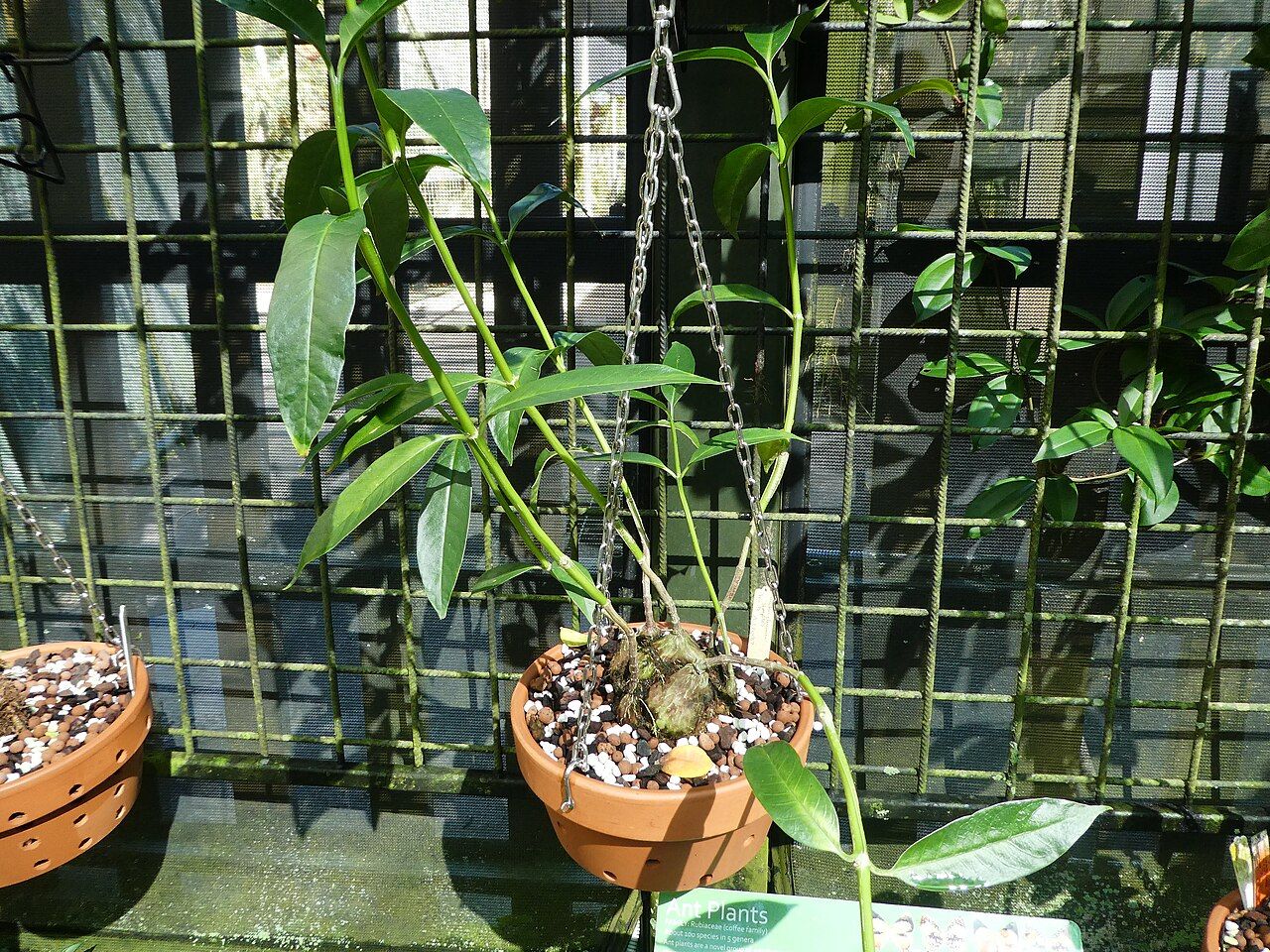
The Australian National Botanic Gardens (ANBG), writing about Myrmecodia beccarii, says that “free draining terracotta or open mesh pots (used for orchids)” are ideal. The Missouri Botanical Garden notes that “plastic and glazed pottery will dry out more slowly than clay”, that a drainage hole is “the most important point”, and that decorative pot covers “can retain excess water.”
The mix matters as much as the pot. LLIFLE recommends “an open orchids substrate (sphagnum moss, chopped fir bark, and perlite)”, and Paraiso calls for a mix “that doesn’t allow for water to collect.” Pot size plays a part too: PLNTS says ant plants “love to be a little bit rootbound and do not like too big pots”, and the Missouri Botanical Garden explains that an oversized pot can lead to root rot because the extra mix “does not dry out sufficiently between waterings.”
How Often to Water: Potted, Mounted and Terrarium Plants
The figures below come from specific growers and conditions, so use them as rough guides, not as a schedule.
| Setup | How often sources water | Source and context |
|---|---|---|
| Pot, indoors | Usually once or twice a week, “depending on how hot it is and how fast it dries out” | PLNTS, Hydnophytum houseplants |
| Pot, botanic garden | About every second or third day | ANBG, M. beccarii kept at “low 20°s to low 30°s” (no unit given; read as Celsius, roughly 70 to 90 °F) |
| Mounted on cork or bark | Daily (ANBG); “more frequent watering” than potted plants (LLIFLE) | ANBG cork slabs; LLIFLE |
| Terrarium or display case | No frequency given by any source we found | Jungle Leaves, Araflora |
Mounted plants
LLIFLE says mounting suits plants “If humidity is high”, and adds: “Mounted plants will, of course, require more frequent watering.” The ANBG’s mounted M. beccarii “need daily watering.” Expect to check a mounted plant far more often than a potted one.
Terrarium plants
Jungle Leaves says its young Myrmecodia tuberosa is “best kept in a terrarium or plant display case”, and Araflora reminds growers to “ensure sufficient air circulation when placing it in a terrarium.” Neither gives a watering frequency, and we did not find a source that does, so we do not give one here.
Watering Through the Seasons
Ant plants need less water when it is cooler. The ANBG is direct about the reason: “In cooler weather, watering must be reduced, otherwise brown and corky patches will appear on the leaves.” Paraiso’s care card says “Cut back watering routine during winter months”, and Araflora says that in winter Hydnophytum papuanum “could handle several days of dry medium without many problems.” The Missouri Botanical Garden notes that many houseplants go through a resting period, “usually in fall or winter”, when they want less water.
Cold is a risk in its own right. LLIFLE says these plants “are quick to shed their leaves if they are allowed to dry out or become too cold.” Paraiso says Hydnophytum “Prefers warm conditions above 60 degrees”, that is 60 °F (16 °C), close to Araflora’s minimum of 61 °F (16 °C) for H. papuanum. PLNTS gives an ideal range of 64 to 75 °F (18 to 24 °C). The Missouri Botanical Garden adds that in winter, plants “should not touch cold window panes.” Watering less in winter is not the same as letting the mix go bone dry: the ANBG warns that plants dried “too much” will wilt, and Sprout Home says never to let the plant “dry entirely.”
Water Quality: Rainwater, Tap Water or Distilled?
Ant plant care sheets say little about water type, but two nurseries do. Araflora tells Myrmecodia tuberosa growers to let the mix “more or less dry out before adding more rainwater or distilled water.” Tesselaar, an Australian nursery, says of the same species: “Ideally use rainwater or let the tap water sit overnight.”
The Missouri Botanical Garden’s general advice fills in the rest. Ordinary tap water is “okay to use if warmed to room temperature”, and letting it stand in an open container for 24 hours lets chlorine evaporate. Softened water is different: the salt it contains “is deadly to plants over time. It should not be used.” Distilled water, dehumidifier water and rainwater are described as “wise choices for watering carnivorous plants and terrariums.”
Humidity and Watering
Humidity targets vary by source. Araflora recommends about 75% humidity for M. tuberosa and M. beccarii and “above 60%” for H. papuanum, while PLNTS suggests 50 to 70% for Hydnophytum. LLIFLE only suggests mounting “If humidity is high”.
To raise humidity, PLNTS suggests a humidifier or “a tray filled with pebbles and a bit of water”, and Bloomscape a pebble tray. Misting is disputed (see below).
Signs of Overwatering and Underwatering
| Sign | Overwatering | Underwatering |
|---|---|---|
| Leaves | “yellow leaves or browning and wilting” (PLNTS); “yellow leaves, leaf curl, and leaf drop” (Bloomscape) | Leaves shed quickly when plants “dry out” (LLIFLE); “If it gets too dry it may also drop its leaves” (Tesselaar) |
| Leaf patches | Brown, corky patches in cool weather (ANBG) | Not reported |
| Tuber | Rot: PLNTS and Bloomscape both warn the caudex is prone to it | Wrinkled base (Bloomscape); one H. radicans form’s caudex “shrinks drastically during drought” (Wistuba) |
| Roots | “mushy and have a brown or reddish color” (Iowa State Extension) | “Extended periods of dryness will cause the roots to start to shrivel and die back” (Bloomscape) |
| Mix | Stays wet, pot heavy | Bone dry, pot very light, hard to rewet |
Two of these need care. First, a wrinkled tuber is not always thirst. Bloomscape says “A wrinkled base can be caused by a few issues such as underwatering, overwatering, or low humidity”, so check the mix before you water. Second, dryness damages roots: Bloomscape explains that once roots shrivel, “once the plant is thoroughly watered, it cannot take up the moisture properly.”
If you suspect rot, Iowa State Extension’s test is simple: “A healthy root tissue should be firm, white, and show numerous feeder roots. In contrast, rotted roots are mushy and have a brown or reddish color.”
Where Sources Differ
How dry to let the mix get. This is the biggest split. LLIFLE and Top Tropicals water “when the mix is just barely moist.” PLNTS and Paraiso water when the top layer is dry, and Sprout Home at about the top quarter, adding “Never allow the plant to sit in water for long periods of time or dry entirely.” Bloomscape waits until 50 to 75% of the mix is dry, and Tesselaar says “allow to dry out before watering again.” The ANBG takes the middle: “dry out between waterings, however not too much otherwise they will wilt.” Part of the gap is species: LLIFLE says Myrmecodia tuberosa “needs lots of water”, while Hydnophytum and M. beccarii are described as more tolerant of dry conditions. But sources on the same species still disagree: Tesselaar’s “allow to dry out” advice is also for M. tuberosa.
How often. PLNTS’s once or twice a week and the ANBG’s every two to three days describe different settings: Hydnophytum as houseplants versus M. beccarii at a botanic garden kept at what the ANBG calls “a night/day range of low 20°s to low 30°s”, roughly 70 to 90 °F (the page gives no unit; read as Celsius).
Misting. Bloomscape’s own pages disagree. Its ant plant care guide says to “avoid misting or using a humidifier to protect the caudex from excessive moisture”, while its page on wrinkled bases suggests “misting regularly, adding a pebble tray, or placing a humidifier nearby.” Sprout Home says “Misting regularly is beneficial”, and Top Tropicals says the plants need “light, frequent misting or soaking to stay hydrated.”
Corky leaf patches. The ANBG links brown, corky leaf patches to overwatering in cool weather. Jungle Leaves, on the other hand, says “Myrmecodia plants develop corky growths on their leaves. These are not pests!” A few corky spots on a Myrmecodia are not proof of overwatering on their own; look at the mix and the season too.
FAQ: How to Water Ant Plants
Should I bottom water an ant plant?
Soaking from below is useful when the mix has dried out completely. Bloomscape suggests standing the pot in 2 to 4 inches (5 to 10 cm) of water for at least 30 minutes. If you bottom water routinely, the Missouri Botanical Garden recommends watering from the top every 3 to 4 months to flush out salts.
Can I water into the holes in the tuber?
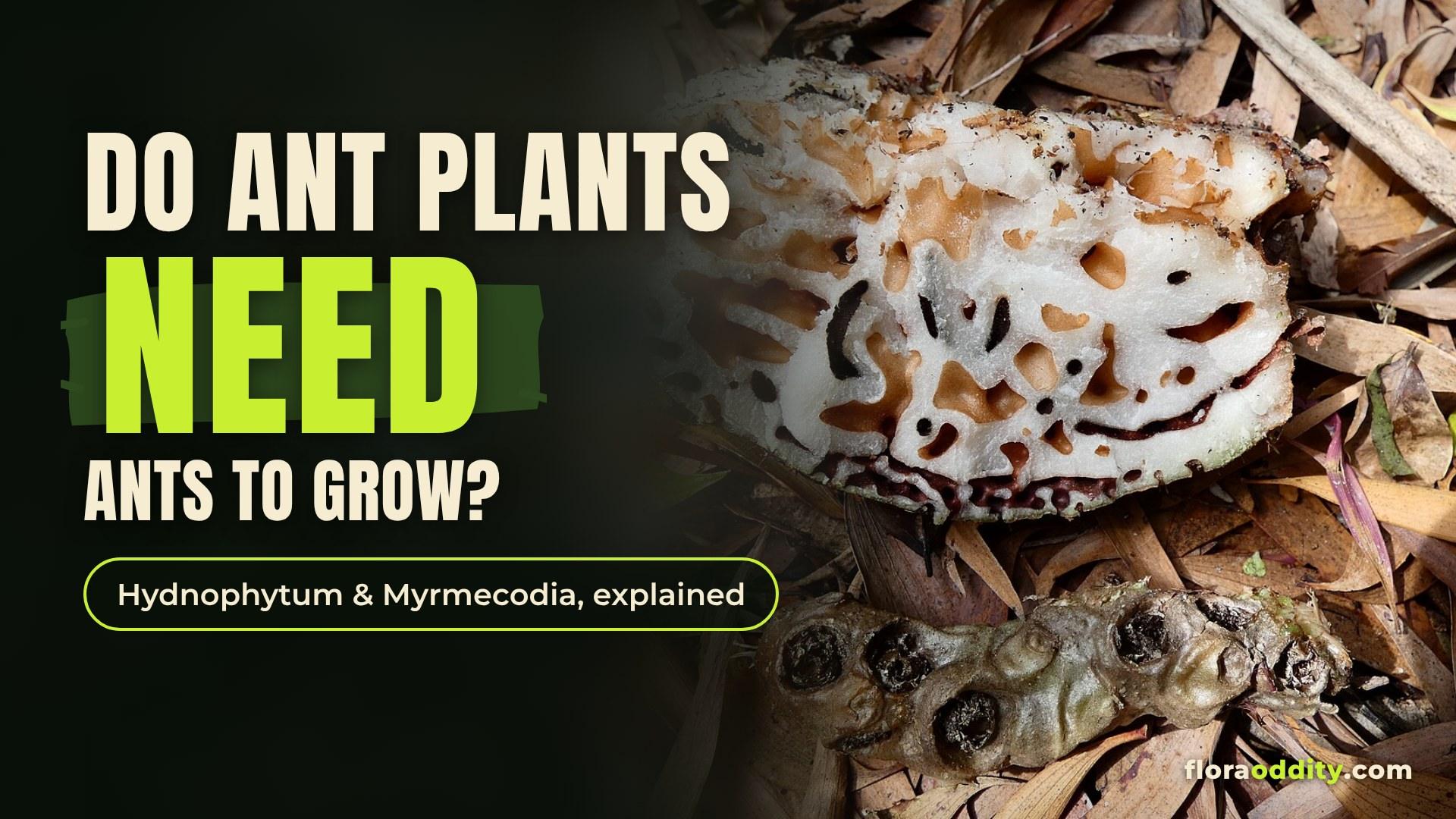
No source we found recommends it. Both PLNTS and Bloomscape say to water into the mix and keep water off the caudex because it is prone to rot. If you are curious about what lives in those cavities, see do ant plants need ants?
Why is my ant plant’s tuber wrinkled?
Bloomscape lists underwatering, overwatering and low humidity as causes. Check the mix: if it is bone dry, soak the plant; if it is wet, suspect rot and check the roots.
Do seedlings need different watering?
Yes. LLIFLE says seedlings “grow rapidly if kept constantly moist”, unlike adult plants. Our guide to growing ant plants from seed covers the early stages.
The Bottom Line
Watering an ant plant comes down to one habit: check before you water. Lift the pot, feel the top of the mix, and water only when the top layer has dried. When you do water, pour into the mix and not over the tuber, let it run through, and empty the saucer. Soak a pot that has dried out completely, check mounted plants daily, and cut back in cool weather while keeping the plant warm. Hydnophytum and M. beccarii cope with drier spells better than most Myrmecodia, but no ant plant does well sitting wet.
Sources & Further Reading
- Jebb, M. H. P. and Huxley, C. R. (2019). The tuberous epiphytes of the Rubiaceae 7: A revision of the genus Hydnophytum. Blumea 64: 23 to 91
- Lok, A. F. S. L. and Tan, H. T. W. (2009). Tuberous, epiphytic, rubiaceous myrmecophytes of Singapore. Nature in Singapore 2: 231 to 236
- Australian National Botanic Gardens: Myrmecodia beccarii, Growing Native Plants
- Missouri Botanical Garden: How to Water Indoor Plants
- Iowa State University Extension: Root Rots of Houseplants
- LLIFLE Encyclopedia: Hydnophytum formicarum
- LLIFLE Encyclopedia: Myrmecodia tuberosa
- PLNTS: Hydnophytum care
- Paraiso Plant Studio: Ant Plant ‘Hydnophytum’ care
- Sprout Home: Hydnophytum and Myrmecodia care sheet
- Bloomscape: Ant Plant care guide (Myrmephytum selebicum)
- Bloomscape: Why is my Ant Plant’s base wrinkly?
- Top Tropicals: Myrmecodia sp. (Ant Plant)
- Tesselaar: Australian Ant Plant (Myrmecodia tuberosa)
- Araflora: Hydnophytum formicarum ‘Starter’
- Araflora: Hydnophytum papuanum ‘Starter’
- Araflora: Myrmecodia tuberosa ‘L’
- Araflora: Myrmecodia beccarii
- Jungle Leaves: Hydnophytum moseleyanum
- Jungle Leaves: Myrmecodia tuberosa
- Jungle Leaves: Myrmecodia beccarii
- Wistuba: Hydnophytum radicans ‘Timika, Irian Jaya’
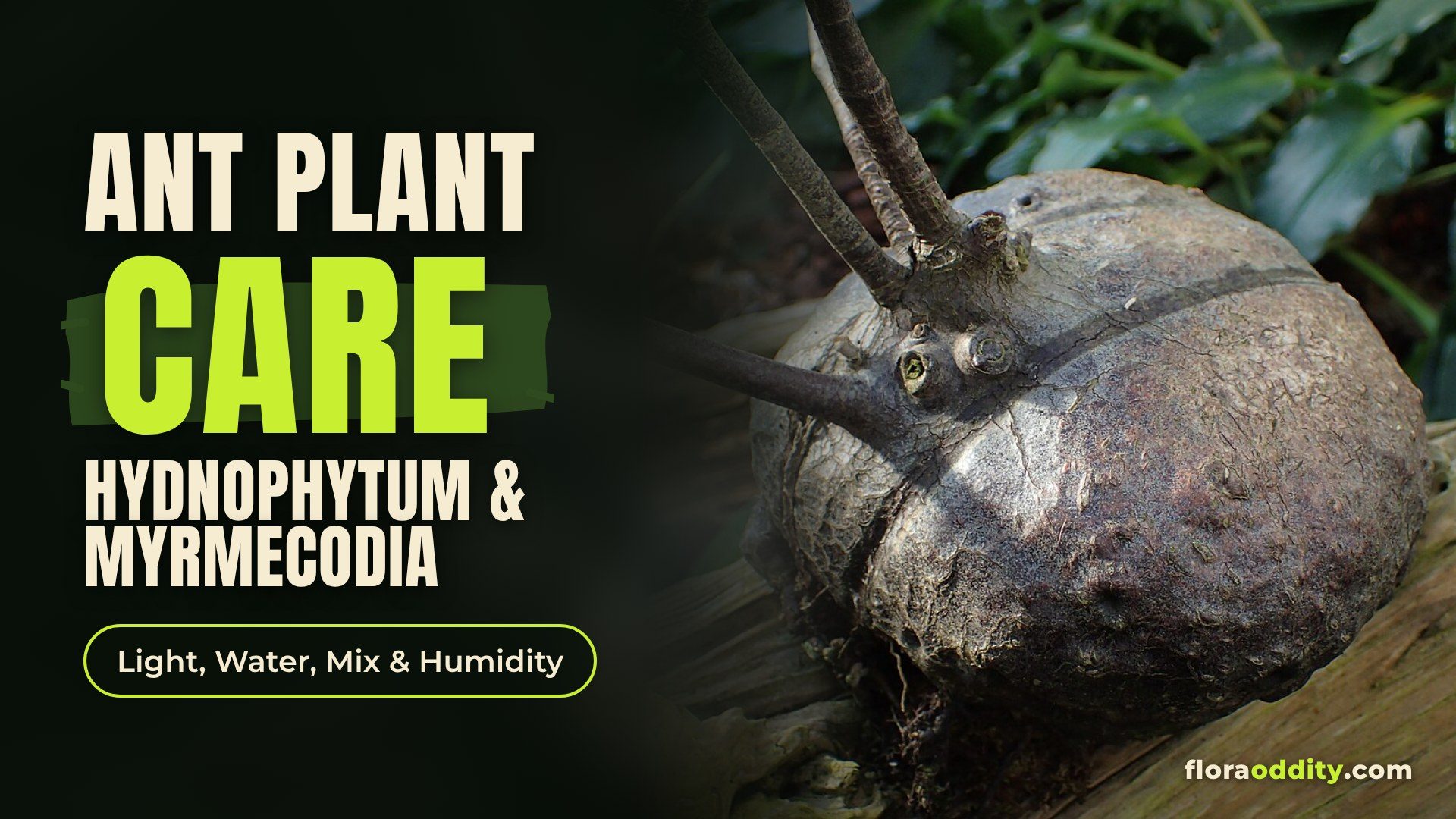
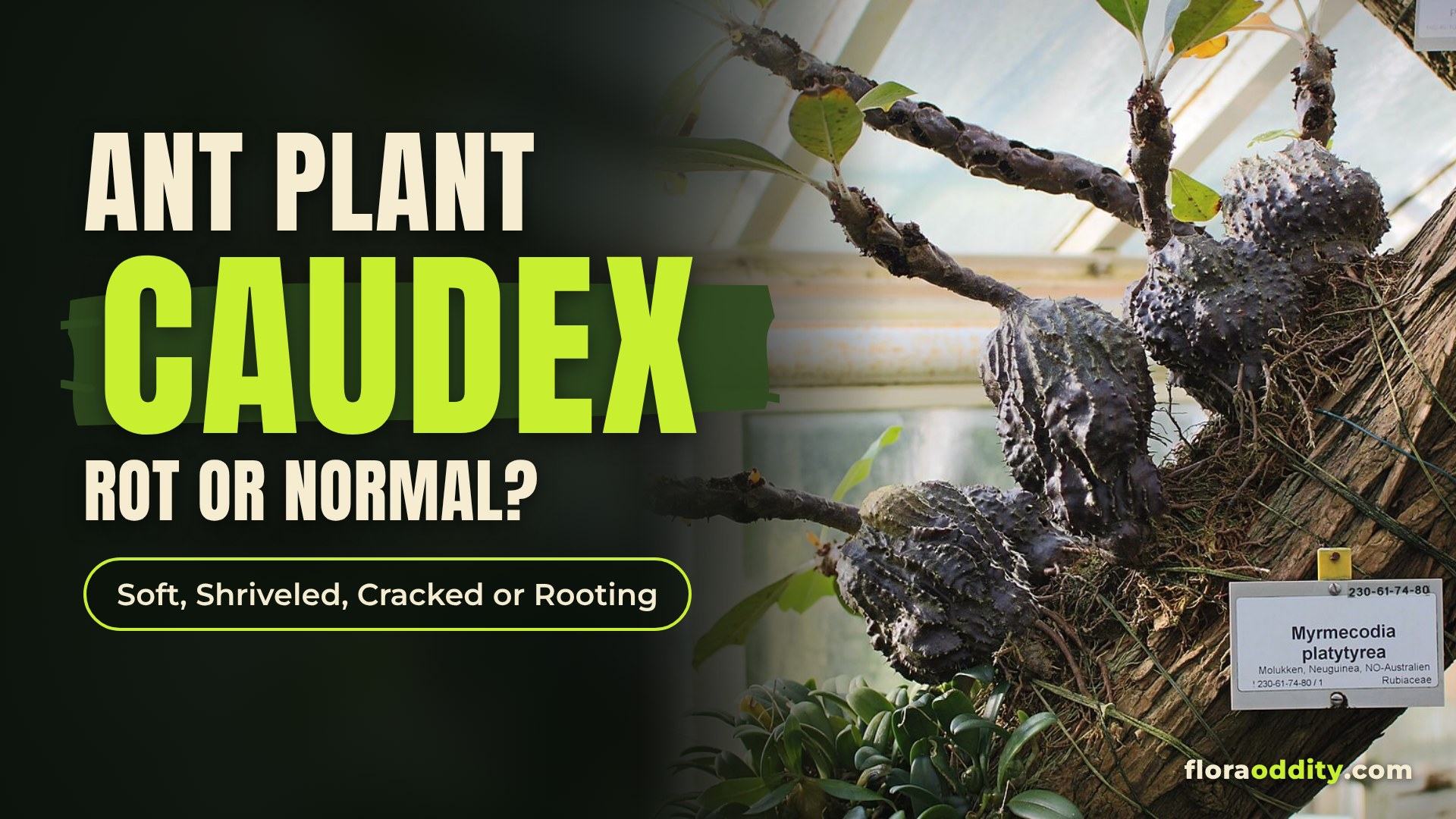
Featured image based on a photo of Hydnophytum simplex at the Botanischer Garten Halle (Saale) by Dguendel via Wikimedia Commons, CC BY 3.0, with cropping and typography added by FloraOddity.
Final articles are editorially reviewed and factual claims are checked against cited sources. Last reviewed: October 2026.
One Comment